
 A SCHOLARLY BOOK REPOSITORY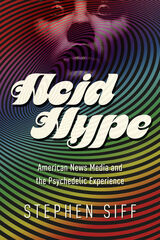
Acid Hype offers the untold tale of LSD's wild journey from Brylcreem and Ivory soap to incense and peppermints. As Stephen Siff shows, the early attention lavished on the drug by the news media glorified its use in treatments for mental illness but also its status as a mystical--yet legitimate--gateway to exploring the unconscious mind. Siff's history takes readers to the center of how popular media hyped psychedelic drugs in a constantly shifting legal and social environment, producing an intricate relationship between drugs and media experience that came to define contemporary pop culture. It also traces how the breathless coverage of LSD gave way to a textbook moral panic, transforming yesterday's refined seeker of truths into an acid casualty splayed out beyond the fringe of polite society.
A vivid analysis of the history and revival of clinical psychedelic science
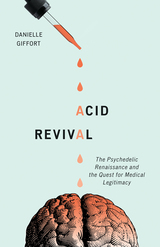
Psychedelic drugs are making a comeback. In the mid-twentieth century, scientists actively studied the potential of drugs like LSD and psilocybin for treating mental health problems. After a decades-long hiatus, researchers are once again testing how effective these drugs are in relieving symptoms for a wide variety of psychiatric conditions, from depression and obsessive–compulsive disorder to posttraumatic stress disorder and substance addiction. In Acid Revival, Danielle Giffort examines how this new generation of researchers and their allies are working to rehabilitate psychedelic drugs and to usher in a new era of psychedelic medicine.
As this team of researchers and mental health professionals revive the field of psychedelic science, they are haunted by the past and by one person in particular: psychedelic evangelist Timothy Leary. Drawing on extensive archival research and interviews with people working on scientific psychedelia, Giffort shows how today’s researchers tell stories about Leary as an “impure” scientist and perform his antithesis to address a series of lingering dilemmas that threaten to rupture their budding legitimacy. Acid Revival presents new information about the so-called psychedelic renaissance and highlights the cultural work involved with the reassembly of dormant areas of medical science.
This colorful and accessible history of the rise, fall, and reemergence of psychedelic medicine is infused with intriguing narratives and personalities—a story for popular science aficionados as well as for scholars of the history of science and medicine.
A bold new approach to racial difference conceived through rave tourism
The village of Anjuna, located in the coastal Indian state of Goa, has been one of the premier destinations on the global rave scene for nearly two decades. The birthplace of Goa trance, the most psychedelic variety of electronic dance music, Anjuna first attracted adventurous Westerners in the 1970s who were drawn there by its tropical beaches, tolerant locals, and readily available drugs. Today, rave tourists travel to Goa to take part in round-the-clock dance parties and lose themselves in the crowds, the music, and the drugs. But do they really escape where they come from and who they are?
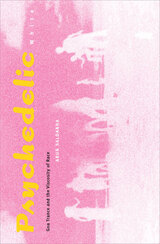
A rich and theoretically sophisticated ethnography, Psychedelic White explains how race plays out in Goa’s white counterculture and grapples with how to make sense of racism when it is not supposed to be there. Goa is a site of particularly revealing forms of interracial collision, and contrary to author Arun Saldanha’s expectations that the nature of rave would create an inclusive atmosphere, he repeatedly witnessed stark segregation between white and Indian tourists. He came to understand race in its creative dimension as a shifting and fuzzy assemblage of practices, environments, sounds, and substances—dance skills, sunlight, conversation, cannabis, and tea. In doing so, his work shows how the rave scene in Goa harbors conflicting tendencies regarding race. The complicated intersection of cultures and phenotypes, Saldanha asserts, helps to consolidate whiteness. Race emerges not through rigid boundaries but rather through what he terms viscosity, the degree to which bodies gather together for pleasure and self-transformation.
Challenging the prevailing conception of racial difference as a purely social construction and offering building on the works of Gilles Deleuze and Félix Guattari, Psychedelic White presents nothing less than a new materialist approach to race.
READERS
Browse our collection.
PUBLISHERS
See BiblioVault's publisher services.
STUDENT SERVICES
Files for college accessibility offices.
RECENTLY PUBLISHED





UChicago Accessibility Resources
home | accessibility | search | about | contact us
BiblioVault ® 2001 - 2026
The University of Chicago Press