
 A SCHOLARLY BOOK REPOSITORY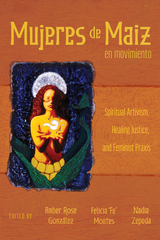
MdM’s political-ethical-spiritual commitments, cultural production, and everyday practices are informed by Indigenous and transnational feminist of color artistic, ceremonial, activist, and intellectual legacies. Contributors fuse stories of celebration, love, and spirit-work with an incisive critique of interlocking oppressions, both intimate and structural, encouraging movement toward “a world where many worlds fit.”
The multidisciplinary, intergenerational, and critical-creative nature of the project coupled with the unique subject matter makes the book a must-have for high school and college students, activist-scholars, artists, community organizers, and others invested in social justice and liberation.

How Latina voices in commercial radio and podcasting subvert cultural norms and bring feminism to the fore of their work.
What does Latina feminism sound like in popular culture? Drawing on case studies of commercial radio programs and podcasts hosted by Latinas and oriented toward Latinx listenership, Esther Díaz Martín explores how Latina voices create female-specific aural spaces that interrupt the misogynist status quo in US mainstream media.
Radiophonic Feminisms focuses on radio/podcasting as a medium in which women find methods for resisting oppressive gendered cultural imaginaries. Through their specific articulations—that is, the quality of their voices—their music choices, and the soundscapes they construct, Latina hosts since the early 1990s have offered feminist responses to a cultural moment marked by the demographic changes brought on by the political economy of migration and the social changes wrought by media in the digital age. Drawing attention to the invisible antisexist work of creating sound, and to its reception, Díaz Martín bridges the epistemic insights of Chicana feminist theory and sound studies, enriching and further decolonizing our thinking about auditory meaning making.
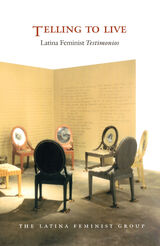
The complex and rich tapestry of narratives that comprises this book introduces us to an intergenerational group of Latina women who negotiate their place in U.S. society at the cusp of the twenty-first century. These are the stories of women who struggled to reach the echelons of higher education, often against great odds, and constructed relationships of sustenance and creativity along the way. The stories, poetry, memoirs, and reflections of this diverse group of Puerto Rican, Chicana, Native American, Mexican, Cuban, Dominican, Sephardic, mixed-heritage, and Central American women provide new perspectives on feminist theorizing, perspectives located in the borderlands of Latino cultures.
This often heart wrenching, sometimes playful, yet always insightful collection will interest those who wish to understand the challenges U.S. society poses for women of complex cultural heritages who strive to carve out their own spaces in the ivory tower.
Contributors. Luz del Alba Acevedo, Norma Alarcón, Celia Alvarez, Ruth Behar, Rina Benmayor, Norma E. Cantú, Daisy Cocco De Filippis, Gloria Holguín Cuádraz, Liza Fiol-Matta, Yvette Flores-Ortiz, Inés Hernández-Avila, Aurora Levins Morales, Clara Lomas, Iris Ofelia López, Mirtha N. Quintanales, Eliana Rivero, Caridad Souza, Patricia Zavella
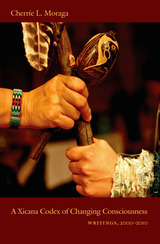
Thirty years after the publication of Anzaldúa and Moraga’s collection This Bridge Called My Back, a landmark of women-of-color feminism, Moraga’s literary and political praxis remains motivated by and intertwined with indigenous spirituality and her identity as Chicana lesbian. Yet aspects of her thinking have changed over time. A Xicana Codex of Changing Consciousness reveals key transformations in Moraga’s thought; the breadth, rigor, and philosophical depth of her work; her views on contemporary debates about citizenship, immigration, and gay marriage; and her deepening involvement in transnational feminist and indigenous activism. It is a major statement from one of our most important public intellectuals.
READERS
Browse our collection.
PUBLISHERS
See BiblioVault's publisher services.
STUDENT SERVICES
Files for college accessibility offices.
RECENTLY PUBLISHED






UChicago Accessibility Resources
home | accessibility | search | about | contact us
BiblioVault ® 2001 - 2025
The University of Chicago Press