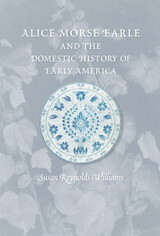
Author, collector, and historian Alice Morse Earle (1851–1911) was among the most important and prolific writers of her day. Between 1890 and 1904, she produced seventeen books as well as numerous articles, pamphlets, and speeches about the life, manners, customs, and material culture of colonial New England. Earle's work coincided with a surge of interest in early American history, genealogy, and antique collecting, and more than a century after the publication of her first book, her contributions still resonate with readers interested in the nation's colonial past.
An intensely private woman, Earle lived in Brooklyn, New York, with her husband and four children and conducted much of her research either by mail or at the newly established Long Island Historical Society. She began writing on the eve of her fortieth birthday, and the impressive body of scholarship she generated over the next fifteen years stimulated new interest in early American social customs, domestic routines, foodways, clothing, and childrearing patterns.
Written in a style calculated to appeal to a wide readership, Earle's richly illustrated books recorded the intimate details of what she described as colonial “home life.” These works reflected her belief that women had played a key historical role, helping to nurture communities by constructing households that both served and shaped their families. It was a vision that spoke eloquently to her contemporaries, who were busily creating exhibitions of early American life in museums, staging historical pageants and other forms of patriotic celebration, and furnishing their own domestic interiors.
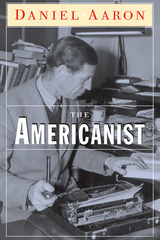
“I have read all of Daniel Aaron’s books, and admired them, but in The Americanist I believe he has composed an intellectual and social memoir for which he will be remembered. His self-portrait is marked by personal tact and admirable restraint: he is and is not its subject. The Americanist is a vision of otherness: literary and academic friends and acquaintances, here and abroad. Eloquently phrased and free of nostalgia, it catches a lost world that yet engendered much of our own.”
—Harold Bloom
“The Americanist is the absorbing intellectual autobiography of Daniel Aaron, who is the leading proponent and practitioner of American Studies. Written with grace and wit, it skillfully blends Daniel Aaron’s personal story with the history of the field he has done so much to create. This is a first-rate book by a first-rate scholar.”
—David Herbert Donald, Professor Emeritus, Harvard University
The Americanist is author and critic Daniel Aaron’s anthem to nearly a century of public and private life in America and abroad. Aaron, who is widely regarded as one of the founders of American Studies, graduated from the University of Michigan, received his Ph.D. from Harvard, and taught for over three decades each at Smith College and Harvard.
Aaron writes with unsentimental nostalgia about his childhood in Los Angeles and Chicago and his later academic career, which took him around the globe, often in the role of America’s accidental yet impartial critic. When Walt Whitman, whom Aaron frequently cites as a touchstone, wrote, “I am large, I contain multitudes,” he could have been describing Daniel Aaron—the consummate erudite and Renaissance individual whose allegiance to the truth always outweighs mere partisan loyalty.
Not only should Aaron’s book stand as a resplendent and summative work from one of the finest thinkers of the last hundred years, it also succeeds on its own as a first-rate piece of literature, on a par with the writings of any of its subjects. The Americanist is a veritable Who’s Who of twentieth-century writers Aaron interviewed, interacted with, or otherwise encountered throughout his life: Ralph Ellison, Robert Frost, Lillian Hellman, Richard Hofstadter, Alfred Kazin, Sinclair Lewis, Malcolm Muggeridge, John Crowe Ransom, Upton Sinclair, Edmund Wilson, Leonard Woolf, and W. B. Yeats, to name only a few.
Aaron’s frank and personal observations of these literary lights make for lively reading. As well, scattered throughout The Americanist are illuminating portraits of American presidents living and passed—miniature masterworks of astute political observation that offer dazzlingly fresh approaches to well-trod subjects.
In this unique collection, the memoirs of eleven historians provide a fascinating portrait of a formative generation of scholars. Born around the time of World War II, these influential historians came of age just before the upheavals of the 1960s and ’70s and helped to transform both their discipline and the broader world of American higher education. The self-inventions they thoughtfully chronicle led, in many cases, to the invention of new fields—including women’s and gender history, social history, and public history—that cleared paths in the academy and made the study of the past more capacious and broadly relevant. In these stories—skillfully compiled and introduced by James Banner and John Gillis—aspiring historians will find inspiration and guidance, experienced scholars will see reflections of their own dilemmas and struggles, and all readers will discover a rare account of how today’s seasoned historians embarked on their intellectual journeys.
As the world went to war in 1941, Time magazine founder Henry Luce coined a term for what was rapidly becoming the establishment view of America’s role in the world: the twentieth century, he argued, was the American Century. Many of the nation’s most eminent historians—nearly all of them from the East Coast—agreed with this vision and its endorsement of the vigorous use of power and persuasion to direct world affairs. But an important concentration of midwestern historians actively dissented. With Beyond the Frontier, David S. Brown tells their little-known story of opposition.
Raised in a cultural landscape that combined agrarian provincialism with reform-minded progressivism, these historians—among them Charles Beard, William Appleman Williams, and Christopher Lasch—argued strenuously against the imperial presidencies, interventionist foreign policies, and Keynesian capitalism that swiftly shaped cold war America. Casting a skeptical eye on the burgeoning military-industrial complex and its domestic counterpart, the welfare state, they warned that both components of the liberal internationalist vision jeopardized the individualistic, republican ethos that had long lain at the heart of American democracy.
Drawing on interviews, personal papers, and correspondence of the imoprtant players in the debate, Brown has written a fascinating follow-up to his critically acclaimed biography of Richard Hofstadter. Illuminating key ideas that link midwestern writers from Frederick Jackson Turner all the way to William Cronon and Thomas Frank, Beyond the Frontier is intellectual history at its best: grounded in real lives and focused on issues that remain salient—and unresolved—even today.
Drawing upon James's observations of his own life as revealed to interviewers and close friends, this volume provides an examination of James's childhood and early years as colonial literatteur and his massive contribution to West Indian political-cultural understanding. Moving beyond previous biographical interpretations, the contributors here take up the problem of reading James's texts in light of poststructuralist criticism, the implications of his texts for Marxist discourse, and for problems of Caribbean development.
Although historians talk about each other's work routinely, they have been reluctant to record their thoughts about the leading practitioners of U.S. history. Robert Allen Rutland attempts to remedy this state of things with this collection named for Clio, the Greek muse vested with the inspirations of history. The volume offers a glimpse of the lives and work of historians who must be considered among the most remarkable from the last half of the twentieth century.
The roll call of excellence for Clio's Favorites was established after Rutland informally polled some twenty-five historians, asking them to name the outstanding workers in the field of U.S. history since the end of World War II. Among the criteria for selection were: quality (not volume) of the historian's work; influence in the field of study; importance of his or her graduate and undergraduate teaching; and the figure's public persona as reflected by awards, honors, and involvement in public service. The historians profiled in Clio's Favorites, most of whom broke new ground, met and surpassed these standards. The list could have gone on, but Rutland believes these twelve represent the cream of the crop. They are: Bernard Bailyn, Merle Curti, David Herbert Donald, John Hope Franklin, Richard Hofstadter, Howard Roberts Lamar, Gerda Lerner, Arthur S. Link, Edmund S. Morgan, David M. Potter, Arthur M. Schlesinger, Jr., and C. Vann Woodward.
Just as the subject of each essay in Clio's Favorites is a remarkably distinguished historian, the authors of these twelve essays are accomplished historians themselves. Good historical writing is never outdated, Rutland argues. The extensive work of the scholars profiled here has endured and will continue to endure. Likewise, the writing in Clio's Favorites, by twelve expert historians, will survive. This book will be a lasting record of the contributions made by the best U.S. historians practicing their craft over the last fifty years.
In this absorbing memoir, Merrill D. Peterson traces his progress from a young Kansas Republican to a "Left Liberal," Democrat by reconstructing how the New Republic singularly influenced his intellectual development and academic career during some of the most turbulent years in American history—the final years of the Great Depression through World War II and the beginnings of the Cold War. Peterson recalls how, as a young man, he was guided to intellectual maturity by such extraordinary individuals as Max Lerner, Archibald MacLeish, Vincent Sheean, Alfred Kazin, Lewis Mumford, and Malcolm Cowley—all contributors to this important magazine. We look back, with Peterson, and see how their views are inextricably reflected in his own developing worldview.
Peterson was introduced to this liberal weekly by one of his teachers during his senior year of high school (1938-1939). For the next ten years, the magazine served as his principal guide to the politics and culture of the times. Now, at seventy-eight years of age, Peterson revisits the magazine that he read so eagerly during those early, impressionable years. With considerable skill and charm, Peterson weaves together the fresh reading, the history of the country during the 1940s, and his own personal history to give us the heart of the book. In addition, he includes brief essays on Vernon L. Parrington, Lewis Mumford, and Max Lerner, the three American writers and intellectuals he believes had the most influence on him.
Peterson discusses several turning points in his young life, but he focuses primarily on his education and the role the magazine played in it. The book concludes when Peterson, with a Ph.D. in the history of American civilization, accepts his first academic appointment, at Brandeis University, and approaches the publication of his first book. Thus, a critical chapter in his life comes to a close.
A Supreme Court historian’s memoir places court events in the larger context of American history.
Legal scholar James F. Simon has written many acclaimed books on the history of the US Supreme Court, but in this memoir, he turns his attention to a more personal subject: himself. Simon, a native of Fort Worth, details what it was like growing up in segregated Texas. He left home for college and law school at Yale, interspersed with travels abroad to build a schoolhouse in Ghana, work at an Israeli kibbutz, and spend a year on a fellowship in India.
Simon worked as a legal journalist for Time magazine before embarking on a career as a Supreme Court historian. He later was appointed professor of constitutional law and served as dean of New York Law School. Meanwhile, he continued his work on what became his specialty, well-researched books on the history of the Supreme Court that place events at the court in the larger context of American history. Much of this research is included in his papers, which are now housed at the Briscoe Center for American History.
In this engaging memoir, Simon describes the challenges of interviewing Supreme Court justices and researching constitutional history for his books and juggling his law school and family responsibilities, all the while reflecting on changing American perspectives on civil rights and liberties.
This superb biography provides for the first time a candid look at the remarkable life of Walter Williams, the man who founded the world's first school of journalism and perhaps contributed more toward the promotion of professional journalism than any other person of his time.
Williams, the youngest of six children, was born in Boonville, Missouri, in 1864. Never an athletic child, he always had a love of books and of learning; yet, he scarcely had a high school education. He began his journalistic career as a printer's devil at seventy cents per week and eventually became editor and part- owner of a weekly in Columbia, Missouri. During his time as an editor, Williams became convinced that journalism would never reach its potential until its practitioners had the opportunity for university training in their field. After years of crusading, he established the first journalism school, on the University of Missouri campus. Later, he was chosen president of the University of Missouri, which he led with distinction during the Great Depression.
Williams was an unwavering advocate of high professional standards. His Journalist's Creed became one of the most widely circulated codes of professional ethics. Williams inspired the confidence of his fellow journalists, and he carried his message to nearly every country in which newspapers were published. Not only did he invent journalism education, he also created global organizations of journalists and spread the gospel of professionalism throughout the world. His death, in 1935, was mourned throughout the United States, and editorial tributes came from around the world. As one British editor succinctly put it, "Williams was not born to greatness. Neither was it thrust upon him. Literally, he achieved greatness."
When Hermann Seele anived in New Braunfels in 1845, the raw colony was plagued by poverty, disease, lack of food, and hostile Indians. This personal record of the Germans in Texas shows their evolution from struggling colonists to prosperous citizens.
From his viewpoint of a hardworking yet imaginative pioneer, Seele presents first a history of German immigration and settlement in Texas during the nineteenth century. Next, his autobiographical writings range from a "sentimental recollection" of his first Christmas Eve in Texas to his first day of teaching in New Braunfels, from accounts of the popular singing society to murder and justice along the Comal River. In addition, Seele's romantic novel, The Cypress, is a delightful though improbable tale of a traveling botanist, a chieftain's daughter, and a savage Indian cult.
Hermann Seele—farmer, lawyer, teacher, lay preacher, mayor, state representative, Civil War major, and editor—epitomizes the best of the German immigrants who established their communities as models of respectability and prosperity.
This is the first biography of Dale L. Morgan, preeminent Western historian of the fur trade, historic trails, and the Latter Day Saint movement. The book explores how, despite personal struggles, Morgan committed his life to tracking down sources and interpreting the past on the strength of documentary evidence. Connecting Morgan’s life with some of the broad cultural changes that shaped his experiences, this book engages with methodological shifts in the historical profession, the mid-twentieth-century collision of interpretations within Latter Day Saint history, and the development of a descriptive, scholarly approach to that history.
Morgan’s body of work and commitment to serious scholarship signaled the start of new ways of understanding, studying, and retelling history, and he motivated a generation of historians from the 1930s to the 1970s to transform their historical approaches. Sounding board, mentor, and close friend to Nels Anderson, Fawn Brodie, Juanita Brooks, Bernard DeVoto, Wallace Stegner, and Leonard Arrington, Dale Morgan is the common factor linking this influential generation of mid-twentieth-century historians of western America.
E. James West's fresh and fascinating exploration of Ebony’s political, social, and historical content illuminates the intellectual role of the iconic magazine and its contribution to African American scholarship. He also uncovers a paradox. Though Ebony provided Bennett with space to promote a militant reading of black history and protest, the magazine’s status as a consumer publication helped to mediate its representation of African American identity in both past and present.
Mixing biography, cultural history, and popular memory, West restores Ebony and Bennett to their rightful place in African American intellectual, commercial, and political history.
An examination and analysis of history education in American colleges and universities
In 1958, the American Historical Association began a study to determine the status and condition of history education in U.S. colleges and universities. Published in 1962 and addressing such issues as the supply and demand for teachers, student recruitment, and training for advanced degrees, that report set a lasting benchmark against which to judge the study of history thereafter. Now, more than forty years later, the AHA has commissioned a new report. The Education of Historians for the Twenty-first Century documents this important new study's remarkable conclusions.
Both the American academy and the study of history have been dramatically transformed since the original study, but doctoral programs in history have barely changed. This report from the AHA explains why and offers concrete, practical recommendations for improving the state of graduate education. The Education of Historians for the
Twenty-first Century stands as the first investigation of graduate training for historians in more than four decades and the best available study of doctoral education in any major academic discipline.
Prepared for the AHA by the Committee on Graduate Education, the report represents the combined efforts of a cross-section of the entire historical profession. It draws upon a detailed review of the existing studies and data on graduate education and builds upon this foundation with an exhaustive survey of history doctoral programs. This included actual visits to history departments across the country and consultations with scores of individual historians, graduate students, deans, academic and non-academic employers of historians, as well as other stakeholders in graduate education.
As the ethnic and gender composition of both graduate students and faculty has changed, methodologies have been refined and the domains of historical inquiry expanded. By addressing these revolutionary intellectual and demographic changes in the historical profession, The Education of Historians for the Twenty-first Century breaks important new ground. Combining a detailed historical snapshot of the profession with a rigorous analysis of these intellectual changes, this volume is ideally positioned as the definitive guide to strategic planning for history departments. It includes practical recommendations for handling institutional challenges as well as advice for everyone involved in the advanced training of historians, from department chairs to their students, and from university administrators to the AHA itself.
Although focused on history, there are lessons here for any department. The Education of Historians for the Twenty-first Century is a model for in-depth analysis of doctoral education, with recommendations and analyses that have implications for the entire academy. This volume is required reading for historians, graduate students, university administrators, or anyone interested in the future of higher education.
Marian Hooper Adams—Clover, as her friends called her—was an accomplished photographer and a witty, irreverent free spirit who moved easily within the cultural circles of nineteenth-century Boston. Why, then, in 1882, at the age of forty-two, did she swallow a lethal dose of potassium cyanide? And why did her husband of thirteen years fail even to mention her in his autobiography, The Education of Henry Adams?
These and other questions are explored in this first paperback edition of Eugenia Kaledin's pathbreaking biography. The book recreates the intense intellectual, cultural, and moral life of Boston and New England before, during, and after the Civil War and helps us to understand what could drive such a gifted, intelligent, and privileged woman to take her own life. Included is a portfolio of Adams's photographs of her husband and his famous circle.
Why should Hudson Strode matter to readers today? Because his life was a masterclass in reinvention and a backstage pass to the Jazz Age’s wittiest salons. Strode wasn’t just a professor in Tuscaloosa; he was a cultural impresario who turned a modest Southern life into a global adventure. He taught generations of writers, staged Shakespeare with bravura, and wrote travel books that earned him a knighthood from the King of Sweden.
But the real allure? The gossip. Strode dined with Lady Astor, traded quips with H. L. Mencken, and sipped cocktails with Zelda and Scott Fitzgerald when they were the incandescent couple of the 1920s. He met Hemingway in Cuba, Robinson Jeffers in Carmel, and Isak Dinesen in Denmark—then wrote about them with candor and charm. His memoir brims with stories of literary giants, royal encounters, and the occasional eyebrow-raising escapade (ask him about the brothel in Birmingham).
For contemporary readers, The Eleventh House is both a captivating autobiography and a time capsule of ambition, art, and audacity. Strode’s world—where Southern gentility collided with European modernism and Jazz Age excess—feels startlingly relevant in an era obsessed with reinvention and celebrity culture. If you’ve ever wondered what it was like to gossip with the Fitzgeralds or watch the devil admire himself in a porch mirror, this memoir delivers.
Step inside Hudson Strode’s The Eleventh House. It’s witty, worldly, and just scandalous enough to keep you turning pages.
Gonzalo Fernández de Oviedo (1478-1557) wrote the first comprehensive history of Spanish America, the Historia general y natural de las Indias, a sprawling, constantly revised work in which Oviedo attempted nothing less than a complete account of the Spanish discovery, conquest, and colonization of the Americas from 1492 to 1547, along with descriptions of the land's flora, fauna, and indigenous peoples. His Historia, which grew to an astounding fifty volumes, includes numerous interviews with the Spanish and indigenous leaders who were literally making history, the first extensive field drawings of America rendered by a European, reports of exotic creatures, ethnographic descriptions of indigenous groups, and detailed reports about the conquest and colonization process.
Fernández de Oviedo's Chronicle of America explores how, in writing his Historia, Oviedo created a new historiographical model that reflected the vastness of the Americas and Spain's enterprise there. Kathleen Myers uses a series of case studies—focusing on Oviedo's self-portraits, drawings of American phenomena, approaches to myth, process of revision, and depictions of Native Americans—to analyze Oviedo's narrative and rhetorical strategies and show how they relate to the politics, history, and discursive practices of his time. Accompanying the case studies are all of Oviedo's extant field drawings and a wide selection of his text in English translation.
The first study to examine the entire Historia and its evolving rhetorical and historical context, this book confirms Oviedo's assertion that "the New World required a different kind of history" as it helps modern readers understand how the discovery of the Americas became a catalyst for European historiographical change.
A historian who lived the kind of history he wrote, Francis Parkman is a major—and controversial—figure in American historiography. His narrative style, while popular with readers wanting a "good story," has raised many questions with professional historians. Was Parkman writing history or historical fiction? Did he color historical figures with his own heroic self-image? Was his objectivity compromised by his "unbending, conservative, Brahmin" values? These are some of the many issues that Wilbur Jacobs treats in this thought-provoking study.
Jacobs carefully considers the "apprenticeship" of Francis Parkman, first spent in facing the rigors of the Oregon Trail and later in struggling to write his histories despite a mysterious, frequently incapacitating illness. He shows how these events allowed Parkman to create a heroic self-image, which impelled his desire for fame as a historian and influenced his treatment of both the "noble" and the "savage" characters of his histories.
In addition to assessing the influence of Parkman's development and personality on his histories, Jacobs comments on Parkman's relationship to basic social and cultural issues of the nineteenth century. These include the slavery question, Native American issues, expansion of the suffrage to new groups, including women, and anti-Catholicism.
Henry Adams - American Writers 93 was first published in 1971. Minnesota Archive Editions uses digital technology to make long-unavailable books once again accessible, and are published unaltered from the original University of Minnesota Press editions.
Social and political history of the modern South.
This collection of essays on the social and political history of the modern South consider the region’s poor, racial mores and race relations, economic opportunity, Protestant activism, political coalitions and interest groups, social justice, and progressive reform. History and Hope in the Heart of Dixie illuminates the dual role of historian and public advocate in modern America. In a time when the nation’s eyes have been focused by Hurricanes Katrina and Rita onto the vulnerability and dire condition of poor people in the South, the applicability of research, teaching, and activism for this voiceless element seems all the more relevant.
Responding to the example of Wayne Flynt, whose fierce devotion to his state of Alabama and its region has not blinded his recognition of the inequities and despair that define southern life for so many, the scholars assembled in this work present contributions to the themes Flynt so passionately explored in his own work.Two seasoned observers of southern history and culture—John Shelton Reed and Dan T. Carter—offer assessments of Flynt’s influence on the history profession as a whole and on the region of the South in particular.
Walter Prescott Webb became one of the best known interpreters of the American West following the publication of The Great Plains in 1931. That book remained one of the outstanding studies of the region for decades and attracted considerable attention over the years for its unusual emphasis on the impact of geographic factors on the process of settlement. Using manuscript sources, some of which had not previously been available, Gregory M. Tobin has traced the elements that went into the planning and writing of The Great Plains and that account for its distinctive approach to the writing of a regional history.
Tobin emphasizes two aspects of Webb's life that molded the historian's outlook: his early family life and community connections in West Texas and his admiration for the ideas of scholar Lindley Miller Keasbey. Webb reacted strongly against the assumption that the only cultural values of any real worth emanated from the urban and sophisticated East; he was determined to write the history of his own people in a way that would reveal the scale of their anonymous contribution to American civilization. By reverting to Keasbey's stress on the relationship between natural environment and social institutions, Webb broadened his study to take in what he believed to be a distinct geographic environment. The result was The Great Plains, an assertion of individual and regional identity by a man with a personal stake in establishing the image of a distinctive Plains civilization.
Although The Making of a History is not a full biography of Walter Prescott Webb, it is the first biographically oriented study of a man regarded as one of the twentieth century's major western historians. It places his development within the framework of his intellectual and social setting and, in a sense, subjects his career to the same type of scrutiny that he advocated as the basis of the study of evolving cultures.
The Man Who Wrote Pancho Villa places Guzman's work in a biographical context, shedding light on the immediate motivations behind his writing in a given moment and the subsequent ways in which he rewrote or repackaged the material. Despite his efforts to establish a definitive reading of his life and literature, Guzman was unable to control that interpretation as audiences became less tolerant of the glaring omissions in his self-portrait.
Mary Lincoln is a lightning rod for controversy. Stories reveal widely different interpretations, and it is impossible to write a definitive version of her life that will suit everyone. The thirteen engaging essays in this collection introduce Mary Lincoln’s complex nature and show how she is viewed today.
The authors’ explanations of her personal and private image stem from a variety of backgrounds, and through these lenses—history, theater, graphic arts, and psychiatry—they present their latest research and assessments. Here they reveal the effects of familial culture and society on her life and give a broader assessment of Mary Lincoln as a woman, wife, and mother. Topics include Mary’s childhood in Kentucky, the early years of her marriage to Abraham, Mary’s love of travel and fashion, the presidential couple’s political partnership, and Mary’s relationship with her son Robert.
The fascinating epilogue meditates on Mary Lincoln’s universal appeal and her enigmatic personality, showcasing the dramatic differences in interpretations. With gripping prose and in-depth documentation, this anthology will capture the imagination of all readers.
University Press Books for Public and Secondary Schools 2013 edition
Historian, author, and intellectual, Ruiz has established himself through such books as Triumphs and Tragedy: A History of the Mexican People and Cuba: The Making of a Revolution, and in 1998 he was awarded the National Humanities Medal by President Clinton. Now he turns his pen on his own life to offer a personal look at what it really means to be American by birth but Mexican by culture.
Little has been written by or about persons of Mexican origin who have achieved the academic stature of Ruiz, and his memoir provides insights not found in the more common biographies of labor leaders and civil rights activists. His early life straddled the social worlds of his parent's Mexico and semi-rural America, where his father's success as an entrepreneur and property owner set his family's experiences apart from those of most other Mexican Americans at the time. His parents reinforced in their children an identity as mexicanos, and that connection with his ancestral roots was for Ruiz a lifejacket in the days of acute bigotry in America.
In making an early, self-conscious commitment to a life of the mind, Ruiz became aware of his unique nature, and while not immune to prejudice he was able to make a name for himself in several endeavors. As a student, he attended college when few Mexican Americans were given that opportunity, and he was one of the first of his generation to earn a Ph.D. As an Army Air Force officer during World War II, he served as a pilot in the Pacific theatre. And as an intellectual, he navigated the currents of the historical profession and charted new directions in Latin American research through his prolific writing.
Ruiz's career teaching took him to Mexico, Massachusetts, Texas, Oregon—often as the lone "Mexican professor," and ultimately back to his native California. While teaching at Smith, he exulted in being "free to interpret Spanish American life and culture to my heart's content," and at the University of California, San Diego, he saw the era of campus racial barrier give way to the birth of affirmative action. While at UCSD, he taught hundreds of Chicanos and trained one of the largest groups of Chicano Ph.D's.
Memories of a Hyphenated Man is the story of a unique individual who, while shaped by his upbringing and drawing on deep cultural roots, steadfastly followed his own compass in life. It tells of a singular man who beat the odds as it poignantly addresses the ambiguities associated with race, class, citizenship, and nationality for Mexicans and Mexican Americans.
Lawyer and journalist, entrepreneur and philanthropist, Louis Houck is often called the “Father of Southeast Missouri” because he brought the railroad to the region and opened this backwater area to industrialization and modernization. Although Houck’s name is little known today outside Missouri, Joel Rhodes shows how his story has relevance for both the state and the nation.
Rhodes presents a more complete picture of Houck than has ever been available: reviewing his life from his German immigrant roots, considering his career from both social and political perspectives, and grounding the story in both state and national history. He especially tells how, from 1880 to the 1920s, this self-taught railroader constructed a network of five hundred miles of track through the wilderness of wetlands known as “Swampeast Missouri”—and how these “Houck Roads” provided a boost for population, agriculture, lumbering, and commerce that transformed Cape Girardeau and the surrounding area.
Rhodes discusses how Houck fits into the era of economic individualism—a time when men with little formal training shaped modern industry—and also gives voice to Houck’s critics and shows that he was not always an easy man to work with. In telling the story of his railroading enterprise, Rhodes chronicles Houck’s battle with the Jay Gould railroad empire and offers key insight into the development of America’s railway system, from the cutthroat practices of ruthless entrepreneurs to the often-comic ineptness of start-up rail lines.
More than simply a biography of a business entrepreneur, the book tells how Houck not only developed the region economically but also followed the lead of Andrew Carnegie by making art, culture, and formal education available to all social classes. Houck also served for thirty-six years as president of the Board of Regents of Southeast Missouri State Teacher’s College, and as a self-taught historian he wrote the first comprehensive accounts of Missouri’s territorial period.
A Missouri Railroad Pioneer chronicles a multifaceted career that transformed a region. Solidly researched, this lively narrative also offers an entertaining read for anyone interested in Missouri history.
When J. Edgar Hoover declared Herbert Aptheker “the most dangerous Communist in the United States,” the notorious FBI director misconstrued his true significance. In this first book-length biography of Aptheker (1915–2003), Gary Murrell provides a balanced yet unflinching assessment of the controversial figure who was at once a leading historian of African America, radical political activist, literary executor of W. E. B. Du Bois, and lifelong member of the American Communist Party. Although blacklisted at U.S. universities, Aptheker published dozens of books, including the groundbreaking American Negro Slave Revolts (1943) and the monumental seven-volume Documentary History of the Negro People (1951–1994). He also edited four volumes of the correspondence and unpublished writings of Du Bois, an achievement that Eric Foner, writing in the New York Times Book Review, called “a milestone in the coming of age of Afro-American history.”
As Murrell shows, Aptheker the historian was inseparable from Aptheker the leading Communist Party intellectual, polemicist, and agitator. During the 1960s, his ability to rouse and inspire both black and white student radicals made him one of the few Old Leftists accepted by the New Left. Aptheker had joined the CPUSA during its heyday in the 1930s, convinced that only through the party's leadership could fascism be defeated and true liberation be achieved: he ended his affiliation five decades later in 1991 after the collapse of socialism in the Soviet Union and Eastern Europe.
In an afterword, Bettina Aptheker adds to Murrell's narrative by illuminating her mother Fay's vital contributions to her father's work and by affirming the particularly devastating challenges of life in a family dedicated to radical political and social change.
Delightfully funny and insightful, Old Blue’s Road links the colorful history and vibrant present from Whiteside’s unique vantage point, recognizing and reflecting on the processes of change that made the West what it is today. The book will interest the general reader and western historian alike, leading to new appreciation for the complex ways in which the American West's past and present come together.
In the 1950s, professional historians claiming to specialize in tropical Africa were no more than a handful. The teaching of world history was confined to high school courses, and even those were focused on European history, with a chapter added to account for the history of East and South Asia. The change over the ensuing decades was revolutionary.
Philip D. Curtin was a leader among a new generation of historians that emerged after the Second World War. Written with characteristic economy and telling detail, On the Fringes of History: A Memoir follows Curtin from his beginnings in central West Virginia in the 1920s, through a distinguished academic career in which Curtin founded African studies at the University of Wisconsin. He began the programs in comparative world history at Wisconsin and Johns Hopkins, producing many of the most influential historians and Africanists from the 1950s to today.
Always an independent thinker and controversial figure, Curtin revived the study of the Atlantic slave trade. His career stands as an example of the kind of dissatisfaction and struggles that brought about a sea change in higher education. On the Fringes of History traces the movement of African history and world history from the fringes of the history profession into the mainstream. This stunningly illustrated memoir illuminates both the career of a leading historian and the history of twentieth-century academia.
Journalist, activist, popular historian, and public intellectual, Lerone Bennett Jr. left an indelible mark on twentieth-century American history and culture. Rooted in his role as senior editor of Ebony magazine, but stretching far beyond the boundaries of the Johnson Publishing headquarters in Chicago, Bennett’s work and activism positioned him as a prominent advocate for Black America and a scholar whose writing reached an unparalleled number of African American readers.
This critical biography—the first in-depth study of Bennett’s life—travels with him from his childhood experiences in Jim Crow Mississippi and his time at Morehouse College in Atlanta to his later participation in a dizzying range of Black intellectual and activist endeavors. Drawing extensively on Bennett’s previously inaccessible archival collections at Emory University and Chicago State, as well as interviews with close relatives, colleagues, and confidantes, Our Kind of Historian celebrates his enormous influence within and unique connection to African American communities across more than half a century of struggle.
The author of Centuries of Childhood and other landmark historical works, Philippe Ariès (1914–1984) was a singular figure in French intellectual life. He was both a political reactionary and a path-breaking scholar, a sectarian royalist who supported the Vichy regime and a founder of the new cultural history—popularly known as l'histoire des mentalités—that developed in the decades following World War II. In this book, Patrick H. Hutton explores the relationship between Ariès's life and thought and evaluates his contribution to modern historiography, in France and abroad.
According to Hutton, the originality of Ariès's work and the power of his appeal derived from the way he drew together the two strands of his own intellectual life: his enduring ties to the old cultural order valued by the right-wing Action Française, and a newfound appreciation for the methodology of the leftist Annales school of historians. A demographer by training, he pioneered a new route into the history of private life that eventually won him a wide readership and in late life an appointment to the faculty of the prestigious École des Hautes Études en Sciences Sociales. At the same time, he fashioned himself as a man of letters in the intellectual tradition of the Action Française and became a perspicacious journalist as well as a stimulating writer of autobiographical memoirs. In Hutton's view, this helps explain why, more than any other historian, Philippe Ariès left his personal signature on his scholarship.
Prior to the mid-nineteenth century, most Americans “heard” rather than “read” national history. They absorbed lessons from the past more readily by attending Patriots' Day orations and anniversary commemorations than by reading expensive, multivolume works of patrician historians. By the 1840s, however, innovations in publishing led to the marketing of inexpensive, mass-produced “popular” histories that had a profound influence on historical literacy and learning in the United States. In this book, Gregory M. Pfitzer charts the rise and fall of this genre, demonstrating how and why it was born, flourished, and then became unpopular over time.
Pfitzer begins by exploring how the emergence of a new literary marketplace in the mid-nineteenth century affected the study of history in America. Publishers of popular works hoped to benefit from economies of scale by selling large numbers of inexpensive books at small profit. They hired authors with substantial literary reputations to make the past accessible to middle-class readers. The ability to write effectively for wide audiences was the only qualification for those who dominated this field. Privileging narration and effusive literary style over dispassionate prose, these artists adapted their favorite fictional and poetic conventions with an ease that suggests the degree to which history was viewed as literary art in the nineteenth century.
Beginning as a small cottage industry, popular histories sold in the hundreds of thousands by the 1890s. In an effort to illuminate the cultural conditions for this boom, Pfitzer focuses on the business of book making and book promotion. He analyzes the subscription sales techniques of book agents as well as the aggressive prepublication advertising campaigns of the publishers, including the pictorial embellishments they employed as marketing devices.
He also examines the reactions of professional historians who rejected the fictionalizing and poetic tendencies of popular history, which they equated with loose and undisciplined scholarship. Pfitzer explains how and why these professionals succeeded in challenging the authority of popular histories, and what the subsequent “unpopularity of popular history” meant for book culture and the study of history in the twentieth century.
This is an auto-narrated audiobook edition of this book.
Popularizing the Past tells the stories of five postwar historians who changed the way ordinary Americans thought about their nation’s history.
What’s the matter with history? For decades, critics of the discipline have argued that the historical profession is dominated by scholars unable, or perhaps even unwilling, to write for the public. In Popularizing the Past, Nick Witham challenges this interpretation by telling the stories of five historians—Richard Hofstadter, Daniel Boorstin, John Hope Franklin, Howard Zinn, and Gerda Lerner—who, in the decades after World War II, published widely read books of national history.
Witham compellingly argues that we should understand historians’ efforts to engage with the reading public as a vital part of their postwar identity and mission. He shows how the lives and writings of these five authors were fundamentally shaped by their desire to write histories that captivated both scholars and the elusive general reader. He also reveals how these authors’ efforts could not have succeeded without a publishing industry and a reading public hungry to engage with the cutting-edge ideas then emerging from American universities. As Witham’s book makes clear, before we can properly understand the heated controversies about American history so prominent in today’s political culture, we must first understand the postwar effort to popularize the past.
This collection of essays examines the contributions of some of the most notable interpreters of southern history and culture, furthering our understanding of the best historical work produced on the region.
Historian Glenn Feldman gathers together a group of essays that examine the efforts of important scholars to discuss and define the South's distinctiveness. The volume includes 18 chapters on such notable historians as John Hope Franklin, Anne Firor Scott, Frank L. Owsley, W. J. Cash, and C. Vann Woodward, written by 19 different researchers, both senior historians and emerging scholars, including Jacquelyn Dowd Hall, John Shelton Reed, Bruce Clayton, and Ted Ownby. The essays examine the major work or works of each scholar under consideration as well as that scholar's overall contribution to the study of southern history.
Reading Southern History will enlighten readers on the more compelling themes currently and traditionally explored by southern historians. It will appeal greatly to professors and students as a valuable multidisciplinary introduction to the study of southern history, since several of the essays are on scholars who are working outside the discipline of history proper, in the fields of political science, sociology, journalism, and economics. Feldman's collection, therefore, sheds light on a broad spectrum of themes important in southern history, including the plight of poor whites, race, debates over race and class, the "reconstruction syndrome," continuity versus discontinuity in relation to blacks and whites, and regional culture and distinctiveness.
Reading Southern History will be valuable to students and scholars of women's studies, African American history, working-class history, and ethnic studies, as well as traditional southern history. Most important, the publication makes a significant contribution to the development and ongoing study of the historiography of the South.
The study of intellectual history in Africa is in its infancy. We know very little about what Africa’s thinkers made of their times. Recasting the Past brings one field of intellectual endeavor into view. The book takes its place alongside a small but growing literature that highlights how, in autobiographies, historical writing, fiction, and other literary genres, African writers intervened creatively in their political world.
The past has already been worked over by the African interpreters that the present volume brings into view. African brokers—pastors, journalists, kingmakers, religious dissidents, politicians, entrepreneurs all—have been doing research, conducting interviews, reading archives, and presenting their results to critical audiences. Their scholarly work makes it impossible to think of African history as an inert entity awaiting the attention of professional historians. Professionals take their place in a broader field of interpretation, where Africans are already reifying, editing, and representing the past.
The essays collected in Recasting the Past study the warp and weft of Africa’s homespun historical work. Contributors trace the strands of discourse from which historical entrepreneurs drew, highlighting the sources of inspiration and reference that enlivened their work. By illuminating the conventions of the past, Africa’s history writers set their contemporary constituents on a path toward a particular future. History writing was a means by which entrepreneurs conjured up constituencies, claimed legitimate authority, and mobilized people around a cause. By illuminating the spheres of debate in which Africa’s own scholars participated, Recasting the Past repositions the practice of modern history.
In the summer of 1930, Lorenzo Johnston Greene, a graduate of Howard University and a doctoral candidate at Columbia University, became a book agent for the man with the undisputed title of "Father of Negro History," Carter G. Woodson. With little more than determination, Greene, along with four Howard University students, traveled throughout the South and Southeast selling books published by Woodson's Associated Publishers. Their dual purpose was to provide needed funds for the Association for the Study of Negro Life and History and to promote the study of African American history. Greene returned east by way of Chicago, and, for a time, he settled in Philadelphia, selling books there and in the nearby cities of Delaware and New Jersey. He left Philadelphia in 1931 to conduct a survey in Washington, D.C., of firms employing and not employing black workers.
From 1930 until 1933, when Greene began teaching at Lincoln University in Jefferson City, Missouri, Selling Black History for Carter G. Woodson provides a unique firsthand account of conditions in African American communities during the Great Depression. Greene describes in the diary, often in lyrical terms, the places and people he visited. He provides poignant descriptions of what was happening to black professional and business people, plus working-class people, along with details of high school facilities, churches, black business enterprises, housing, and general conditions in communities. Greene also gives revealing accounts of how the black colleges were faring in 1930.
Selling Black History for Carter G. Woodson offers important glimpses into the private thoughts of a young man of the 1930s, a developing intellectual and scholar. Greene's diary also provides invaluable insights into the personality of Carter Woodson that are not otherwise available. This fascinating and comprehensive view of black America during the early thirties will be a welcome addition to African American studies.
Featuring interviews with eminent historians, journalists, and writers, Speaking of America brings together nineteen wide-ranging conversations from philanthropist and financier David M. Rubenstein’s long-running Congressional Dialogues series of interviews at the Library of Congress. Highlights include Ken Burns on documenting American history, Stacy Schiff on Samuel Adams, Manisha Sinha on Reconstruction, and David McCullough on the American frontier.
Published in association with the Library of Congress
Featuring interviews with eminent historians, journalists, and writers, Speaking of America brings together nineteen wide-ranging conversations from philanthropist and financier David M. Rubenstein’s long-running Congressional Dialogues series of interviews at the Library of Congress. Rubenstein and his guests bring to life notable figures, events, and trends drawn from American history and culture and beyond.
Highlights include Ken Burns on bringing American history to life, Stacy Schiff on Samuel Adams, Manisha Sinha on Reconstruction, David McCullough on the American frontier, Beverly Gage on J. Edgar Hoover, Chris Wallace on the presidential election of 1960, Evan Thomas on Justice Sandra Day O’Connor, Eric Schmidt on artificial intelligence, Arthur Brooks on happiness, and David Grann on The Wager, his best-selling story of shipwreck and mutiny. Taken together, the conversations in Speaking of America all build toward the same shared message of dialogue, cooperation, and the importance of knowledge and reflection, highlighting how the study of history can enrich our understanding of current-day challenges in politics and policy.
Deftly blending autobiography and history, James Green here reflects on thirty years as an activist, educator, and historian. He recounts how he became deeply immersed in political protest and in recovering and preserving the history of progressive social movements, and how the two are linked. His book, written in an engaging and accessible style, tells powerful stories of people in struggle, framed by the personal account of his own development. As a historian, Green gives voice to generations of Americans who banded together to fight for social justice. His subjects range from the martyrs of the Haymarket tragedy to the Bread and Roses strikers of 1912, from depression-era struggles for democracy to the civil rights crusaders, from recent Rainbow Coalition campaigns to the latest union organizing drives. As an activist, Green describes how his participation in the civil rights and labor movements of our own time has transformed his life, first as a student and radical scholar in the 1960s, then as a public historian and teacher of working-class students. He also describes his efforts to break free from academic confinement and “tell movement stories in public,” in an attempt to offer hope and counsel to those still fighting for equality and fairness. He concludes with a revealing look at how awareness of past social activism has contributed to the revival of the labor movement during the last ten years, an effort in which Green has been vigorously engaged.
When southern women remove their gloves, they speak their minds. The ten timely and provocative essays in Taking Off the White Gloves represent the collective wisdom of some of the finest scholars on women's history in the American South. On the eve of the thirtieth anniversary of the Southern Association for Women Historians, this volume brings together some of the outstanding lectures delivered by distinguished members of the association over the past fifteen years.
Spanning four centuries of women's experiences in the South, the topics featured in Taking Off the White Gloves range from Native American sexuality and European conquest to woman suffrage in the South, from black women's protest history to the status of women in the historical profession at the end of the twentieth century.
Despite diverse subject matter, these rich essays share a number of important qualities. They take an integrative approach, combining literary analysis, social history, cultural interpretation, labor history, popular culture, and oral history. Embracing the distinctiveness of the southern past and women's experiences within that past, they also recognize the inextricability of critical categories such as sexuality and gender, race and gender, and women and work. Finally, these essays emphasize the authors' commitment to the belief that the personal is political; they reveal the subtle and not so subtle ways that women transform theory into practice.
Taking Off the White Gloves invites a new understanding of the complexities that surround the history of southern women across race, class, place, and time. A model of innovative and imaginative scholarly historical writing, this book provides fertile ground for young scholars and is sure to inspire new research. This thought- provoking volume has much to offer scholars and students, as well as the general reader.
This biography of a distinguished historian and man of letters is the first study of William Hickling Prescott (1796–1859) to be written by a historian who has worked with the very themes explored by Prescott. And it is the first to treat him not only as creative historian but also as family man, as traveler and clubman, as investor and humanitarian, and as private citizen with strong political preferences.
Prescott the socialite and Prescott the introvert writer emerge in the round as the magnificent amateur who helped establish canons that have enriched American historical scholarship ever since. Blending history and literature, his multivolume works won Prescott the first significant international reputation to be accorded to an American historian.
Working despite persistent obstacles of health and against a penchant for society and leisure that was always part of his personality, Prescott came to be considered the finest interpreter of the Hispanic world produced by the Anglo-Saxon world. His Conquest of Mexico and Conquest of Peru were pronounced classics.
C. Harvey Gardiner takes the reader back to the nineteenth century in style and in subject to present William Hickling Prescott, gentleman and scholar, firmly fixed in relationship to his community and his times. But Gardiner's Victorian stance and respect for nineteenth-century historiography do not prevent his presenting Prescott as a whole man, viewed in retrospect, stripped of myth, and evaluated for moderns.
The history of the Lone Star state is a narrative dominated by larger-than-life personalities and often-contentious legends, presenting interesting challenges for historians. Perhaps for this reason, Texas has produced a cadre of revered historians who have had a significant impact on the preservation (some would argue creation) of our state’s past. An anthology of biographical essays, Writing the Story of Texas pays tribute to the scholars who shaped our understanding of Texas’s past and, ultimately, the Texan identity.
Edited by esteemed historians Patrick Cox and Kenneth Hendrickson, this collection includes insightful, cross-generational examinations of pivotal individuals who interpreted our history. On these pages, the contributors chart the progression from Eugene C. Barker’s groundbreaking research to his public confrontations with Texas political leaders and his fellow historians. They look at Walter Prescott Webb’s fundamental, innovative vision as a promoter of the past and Ruthe Winegarten’s efforts to shine the spotlight on minorities and women who made history across the state. Other essayists explore Llerena Friend delving into an ambitious study of Sam Houston, Charles Ramsdell courageously addressing delicate issues such as racism and launching his controversial examination of Reconstruction in Texas, Robert Cotner—an Ohio-born product of the Ivy League—bringing a fresh perspective to the field, and Robert Maxwell engaged in early work in environmental history.
READERS
Browse our collection.
PUBLISHERS
See BiblioVault's publisher services.
STUDENT SERVICES
Files for college accessibility offices.
UChicago Accessibility Resources
home | accessibility | search | about | contact us
BiblioVault ® 2001 - 2026
The University of Chicago Press