
 A SCHOLARLY BOOK REPOSITORY
Results by Title
2 books about Hizi, Gil
2 books about Hizi, Gil
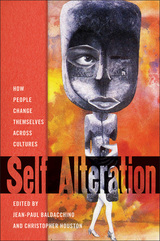
Self-Alteration
How People Change Themselves across Cultures
Jean-Paul Baldacchino
Rutgers University Press, 2024
Many of us feel a pressing desire to be different—to be other than who we are. Self-conscious, we anxiously perceive our shortcomings or insufficiencies, wondering why we are how we are and whether we might be different. Often, we wish to alter ourselves, to change our relationships, and to transform the person we are in those relationships. Not only a philosophical question about how other people change, self-alteration is also a practical care—can I change, and how? Self-Alteration: How People Change Themselves across Cultures explores and analyzes these apparently universal hopes and their related existential dilemmas. The essays here come at the subject of the self and its becoming through case studies of modes of transformation of the self. They do this with social processes and projects that reveal how the self acquires a non-trivial new meaning in and through its very process of alteration. By focusing on ways we are allowed to change ourselves, including through religious and spiritual traditions and innovations, embodied participation in therapeutic programs like psychoanalysis and gendered care services, and political activism or relationships with animals, the authors in this volume create a model for cross-cultural or global analysis of social-self change that leads to fresh ways of addressing the 'self' itself.
[more]
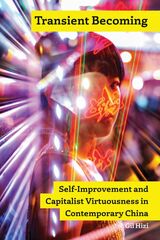
Transient Becoming
Self-improvement and Capitalist Virtuousness in Contemporary China
Gil Hizi
National University of Singapore Press, 2026
An ethnographic study of how self-improvement in China offers fleeting experiences of personal autonomy amid the capitalist dynamics of consumerism, political conformity, and global capitalism.
How do individuals seek to become better people in contemporary China? How do they navigate the complex demands of personal growth within the fragmentation of China's moral landscape, which celebrates rabid consumerism and requires political conformity; where a lively and expressive popular culture coexists with official narratives of nationalism, heteronormativity, and social hierarchy; and where a rigid, exam-driven mass educational system is preparation for an economy of great market disruption and employment uncertainty? Sociocultural anthropologist Gil Hizi's careful ethnography provides nuanced answers to these fraught questions by examining the pursuit and enactment of virtue, termed “capitalist virtuousness,” through the expanding genre of self-improvement.
Transient Becoming reveals how workshops in soft skills create heterotopian spaces—distinct moral imaginaries that offer participants transient optimism and virtue realization in compensation for the perceived futility of their ambitions and the socioeconomic uncertainties of their daily lives. Within these spaces, individuals experientially exceed their social reality and perform an idealized sense of self-worth and autonomy, even if these transformations remain short-lived.
How do individuals seek to become better people in contemporary China? How do they navigate the complex demands of personal growth within the fragmentation of China's moral landscape, which celebrates rabid consumerism and requires political conformity; where a lively and expressive popular culture coexists with official narratives of nationalism, heteronormativity, and social hierarchy; and where a rigid, exam-driven mass educational system is preparation for an economy of great market disruption and employment uncertainty? Sociocultural anthropologist Gil Hizi's careful ethnography provides nuanced answers to these fraught questions by examining the pursuit and enactment of virtue, termed “capitalist virtuousness,” through the expanding genre of self-improvement.
Transient Becoming reveals how workshops in soft skills create heterotopian spaces—distinct moral imaginaries that offer participants transient optimism and virtue realization in compensation for the perceived futility of their ambitions and the socioeconomic uncertainties of their daily lives. Within these spaces, individuals experientially exceed their social reality and perform an idealized sense of self-worth and autonomy, even if these transformations remain short-lived.
[more]
READERS
Browse our collection.
PUBLISHERS
See BiblioVault's publisher services.
STUDENT SERVICES
Files for college accessibility offices.
RECENTLY PUBLISHED





UChicago Accessibility Resources
home | accessibility | search | about | contact us
BiblioVault ® 2001 - 2026
The University of Chicago Press