
 A SCHOLARLY BOOK REPOSITORY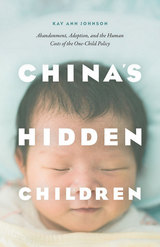
Johnson spent years talking with the Chinese parents driven to relinquish their daughters during the brutal birth-planning campaigns of the 1990s and early 2000s, and, with China’s Hidden Children, she paints a startlingly different picture. The decision to give up a daughter, she shows, is not a facile one, but one almost always fraught with grief and dictated by fear. Were it not for the constant threat of punishment for breaching the country’s stringent birth-planning policies, most Chinese parents would have raised their daughters despite the cultural preference for sons. With clear understanding and compassion for the families, Johnson describes their desperate efforts to conceal the birth of second or third daughters from the authorities. As the Chinese government cracked down on those caught concealing an out-of-plan child, strategies for surrendering children changed—from arranging adoptions or sending them to live with rural family to secret placement at carefully chosen doorsteps and, finally, abandonment in public places. In the twenty-first century, China’s so-called abandoned children have increasingly become “stolen” children, as declining fertility rates have left the dwindling number of children available for adoption more vulnerable to child trafficking. In addition, government seizures of locally—but illegally—adopted children and children hidden within their birth families mean that even legal adopters have unknowingly adopted children taken from parents and sent to orphanages.
The image of the “unwanted daughter” remains commonplace in Western conceptions of China. With China’s Hidden Children, Johnson reveals the complex web of love, secrecy, and pain woven in the coerced decision to give one’s child up for adoption and the profound negative impact China’s birth-planning campaigns have on Chinese families.

For nearly two decades, the US and its allies have prosecuted war and aggression in Iraq. Erasing Iraq shows in unparalleled detail the devastating human cost of the war in Iraq.
Western governments and the mainstream media continue to ignore or play down the human costs of the war on Iraqi citizens This has allowed them to present their role as the benign guardians of Iraqi interests. The authors deconstruct this narrative by presenting a portrait of the total carnage in Iraq today. From Iraqi refugees in Syria, Jordan and the West, to civilians left behind, and other witnesses, this the story of the war told by those who experienced it firsthand.
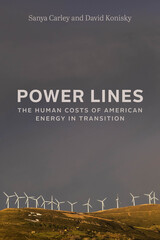
On American energy and its persisting power to destroy.
In the United States, the promise of a green-energy future is complicated by its realities. The country’s legacy energy systems are decrepit; the rollout of new technologies is unequal and piecemeal; households find themselves increasingly without reliable or affordable access; and Americans are excluded from the decisions that shape their energy futures. Having power in America has become an exercise in race, class, and wealth—in more ways than one.
Power Lines is a sweeping portrait of American energy in the twenty-first century, rendered in terms of its increasing—and inevitable—human costs. Coal miners in West Virginia lose their livelihoods as energy markets change; historically marginalized households cannot easily access new technologies; children in “sacrifice zones” adjacent to mineral-mining sites suffer health problems and limited resources; and cities and towns are burdened from the production of alternative energies.
Sanya Carley and David Konisky show current challenges and an uncertain future of America’s greatest policy imperative. The result is not only sobering but also essential for planning and pursuing a clean-energy transition that improves on the errors of the past.
READERS
Browse our collection.
PUBLISHERS
See BiblioVault's publisher services.
STUDENT SERVICES
Files for college accessibility offices.
RECENTLY PUBLISHED


UChicago Accessibility Resources
home | accessibility | search | about | contact us
BiblioVault ® 2001 - 2026
The University of Chicago Press