
 A SCHOLARLY BOOK REPOSITORY
8 start with A start with A
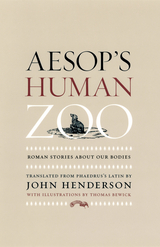
Providing unusual insights into the heart of Roman culture, these clever poems open up odd avenues of ancient lore and life as they explore social types and physical aspects of the body, regularly mocking the limitations of human nature and offering vulgar or promiscuous interpretations of the stuff of social life.
Featuring folksy proverbs and satirical anecdotes, filled with saucy naughtiness and awful puns, Aesop's Human Zoo will amuse you with its eccentricities and hit home with its shrewdly candid and red raw messages. The entertainment offered in this volume of impeccably accurate translations is truly a novelty—a good-hearted and knowing laugh courtesy of classical poetry. Beginning to advanced classicists and Latin scholars will appreciate the original Latin text provided in this bilingual edition. The splash of classic Thomas Bewick wood engravings to accompany the fables renders the collection complete.
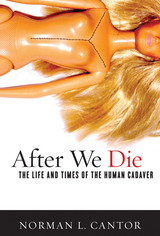
What will become of our earthly remains? What happens to our bodies during and after the various forms of cadaver disposal available? Who controls the fate of human remains? What legal and moral constraints apply? Legal scholar Norman Cantor provides a graphic, informative, and entertaining exploration of these questions. After We Die chronicles not only a corpse’s physical state but also its legal and moral status, including what rights, if any, the corpse possesses.
In a claim sure to be controversial, Cantor argues that a corpse maintains a “quasi-human status" granting it certain protected rights—both legal and moral. One of a corpse’s purported rights is to have its predecessor’s disposal choices upheld. After We Die reviews unconventional ways in which a person can extend a personal legacy via their corpse’s role in medical education, scientific research, or tissue transplantation. This underlines the importance of leaving instructions directing post-mortem disposal. Another cadaveric right is to be treated with respect and dignity. After We Die outlines the limits that “post-mortem human dignity” poses upon disposal options, particularly the use of a cadaver or its parts in educational or artistic displays.
Contemporary illustrations of these complex issues abound. In 2007, the well-publicized death of Anna Nicole Smith highlighted the passions and disputes surrounding the handling of human remains. Similarly, following the 2003 death of baseball great Ted Williams, the family in-fighting and legal proceedings surrounding the corpse’s proposed cryogenic disposal also raised contentious questions about the physical, legal, and ethical issues that emerge after we die. In the tradition of Sherwin Nuland's How We Die, Cantor carefully and sensitively addresses the post-mortem handling of human remains.
In Agency and Embodiment, Carrie Noland examines the ways in which culture is both embodied and challenged through the corporeal performance of gestures. Arguing against the constructivist metaphor of bodily inscription dominant since Foucault, Noland maintains that kinesthetic experience, produced by acts of embodied gesturing, places pressure on the conditioning a body receives, encouraging variations in cultural practice that cannot otherwise be explained.
Drawing on work in disciplines as diverse as dance and movement theory, phenomenology, cognitive science, and literary criticism, Noland argues that kinesthesia—feeling the body move—encourages experiment, modification, and, at times, rejection of the routine. Noland privileges corporeal performance and the sensory experience it affords in order to find a way beyond constructivist theory’s inability to produce a convincing account of agency. She observes that despite the impact of social conditioning, human beings continue to invent surprising new ways of altering the inscribed behaviors they are called on to perform. Through lucid close readings of Marcel Mauss, Maurice Merleau-Ponty, Bill Viola, André Leroi-Gourhan, Henri Michaux, Judith Butler, Frantz Fanon, Jacques Derrida, and contemporary digital artist Camille Utterback, Noland illustrates her provocative thesis, addressing issues of concern to scholars in critical theory, performance studies, anthropology, and visual studies.

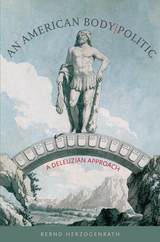
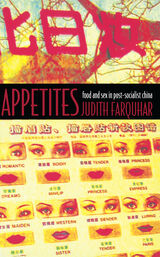
From eating well in improving economic times to memories of the late 1950s famine, from the flavors of traditional Chinese medicine to modernity’s private sexual passions, this book argues that embodiment in all its forms must be invented and sustained in public reflections about personal and national life. As much at home in science studies and social theory as in the details of life in Beijing, this account uses anthropology, cultural studies, and literary criticism to read contemporary Chinese life in a materialist and reflexive mode. For both Maoist and market reform periods, this is a story of high culture in appetites, desire in collective life, and politics in the body and its dispositions.
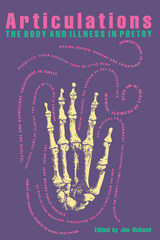
In 1987 poet and physician Jon Mukand published Sutured Words, a volume of contemporary poems to help patients, their families and friends, and all health care professionals embrace the complexity of healing, illness, and death. Robert Coles called the collection “a wonderful source of inspiration and instruction for any of us who are trying to figure out what our work means”; Norman Cousins was impressed by the “discernment and high quality of the selections.” Now, in Articulations, Mukand adds more than a hundred new poems to the strongest poems from Sutured Words to give us a lyrical, enlightened understanding of the human dimensions of suffering and illness
READERS
Browse our collection.
PUBLISHERS
See BiblioVault's publisher services.
STUDENT SERVICES
Files for college accessibility offices.
RECENTLY PUBLISHED



UChicago Accessibility Resources
home | accessibility | search | about | contact us
BiblioVault ® 2001 - 2024
The University of Chicago Press