
 A SCHOLARLY BOOK REPOSITORY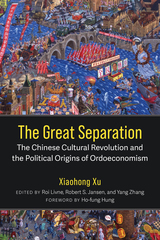
With a keen attention to how culture and elite conflict shape politics, The Great Separation upends deterministic understandings of the Chinese Cultural Revolution and the market reforms that followed. This ambitious posthumous volume by sociologist Xiaohong Xu turns the existing scholarship on China’s “neoliberalism” on its head by demonstrating that the effort to separate mass politics from economic policy had its origins well before the Reform and Opening-up era.
Over the course of the Cultural Revolution, unfolding factional dynamics and interpretive struggles enabled Chairman Mao and his radical colleagues to mobilize workers to advance their own political goals while neutralizing the masses’ economic demands, symbolically separating the political from the economic. This set the stage for a more thoroughgoing depoliticization of the economy after 1989, when China faced challenges from students and workers whose economic grievances had rapidly morphed into political demands for democracy. The result was what Xu calls ordoeconomism: an ideology that valorizes economic development, rejects mass politics, and views the state as the apolitical guardian of the economy. As Xu demonstrates, while ordoeconomism may share some affinities with neoliberalism, it is a distinctively Chinese approach that must be understood on its own terms.
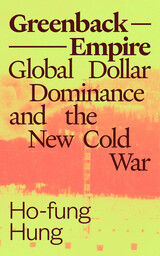
A critical history of the US dollar’s dominance in the world economy—and what has kept China’s currency from overtaking it.
The dollar is the primary currency of the world economy. With China now rivaling the United States on the world stage, a critical question hangs in the balance: will the Chinese renminbi challenge the status of the dollar and, in doing so, deprive America of its “exorbitant privilege”?
In GreenbackEmpire, Ho-fung Hung offers a powerful account of why, even as American shares of global production, ownership, and trade continue to decline, its currency has retained the support of governments and investors around the world. For six decades, Hung shows, the dominance of the dollar has rested on the security umbrella that the US offers to the world’s wealthiest countries—including oil producers. To these countries, support for the value of the dollar is tantamount to maintaining US protection. While China has become a serious geopolitical and economic rival to the US, the Chinese state’s airtight control of its financial system has delayed the free trading of the renminbi, limiting the currency’s internationalization. In short, the same strategy that engineered growth in China’s economy is restraining its currency's rise in opposition to the dollar. Hung’s Greenback Empire is an essential history of the dollar’s prowess, indispensable for understanding the future of the global monetary system.
READERS
Browse our collection.
PUBLISHERS
See BiblioVault's publisher services.
STUDENT SERVICES
Files for college accessibility offices.
RECENTLY PUBLISHED





UChicago Accessibility Resources
home | accessibility | search | about | contact us
BiblioVault ® 2001 - 2026
The University of Chicago Press