
 A SCHOLARLY BOOK REPOSITORY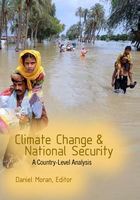
In this unique and innovative contribution to environmental security, an international team of scholars explore and estimate the intermediate-term security risks that climate change may pose for the United States, its allies and partners, and for regional and global order through the year 2030. In profiles of forty-two key countries and regions, each contributor considers the problems that climate change will pose for existing institutions and practices. By focusing on the conduct of individual states or groups of nations, the results add new precision to our understanding of the way environmental stress may be translated into political, social, economic, and military challenges in the future.
Countries and regions covered in the book include China, Vietnam, The Philippines, Indonesia, India, Pakistan, Bangladesh, Central Asia, the European Union, the Persian Gulf, Egypt, Turkey, the Maghreb, West Africa, Southern Africa, the Northern Andes, and Brazil.
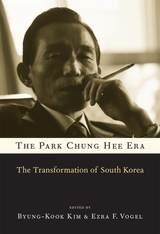
In 1961 South Korea was mired in poverty. By 1979 it had a powerful industrial economy and a vibrant civil society in the making, which would lead to a democratic breakthrough eight years later. The transformation took place during the years of Park Chung Hee's presidency. Park seized power in a coup in 1961 and ruled as a virtual dictator until his assassination in October 1979. He is credited with modernizing South Korea, but at a huge political and social cost.
South Korea's political landscape under Park defies easy categorization. The state was predatory yet technocratic, reform-minded yet quick to crack down on dissidents in the name of political order. The nation was balanced uneasily between opposition forces calling for democratic reforms and the Park government's obsession with economic growth. The chaebol (a powerful conglomerate of multinationals based in South Korea) received massive government support to pioneer new growth industries, even as a nationwide campaign of economic shock therapy-interest hikes, devaluation, and wage cuts-met strong public resistance and caused considerable hardship.
This landmark volume examines South Korea's era of development as a study in the complex politics of modernization. Drawing on an extraordinary range of sources in both English and Korean, these essays recover and contextualize many of the ambiguities in South Korea's trajectory from poverty to a sustainable high rate of economic growth.

As Southeast Asia’s cities continue to swell, this timely volume analyzes urban politics in the region.
Why have some Southeast Asian cities become laboratories of reform while others remain mired in old patterns of patronage politics and substandard public services? This has become an important question now that over half of Southeast Asia’s population lives in urban areas, transforming the politics of the region. Quintessentially urban problems—traffic congestion, sanitation, public transport, housing, and the like—increasingly preoccupy policymakers, while the region’s swelling urban middle classes expect their mayors and city governments to provide ever-better infrastructure and amenities.
Drawing on close case studies of a diverse set of seventeen urban areas across four Southeast Asian countries—Indonesia, Malaysia, the Philippines, and Thailand—this volume offers fresh insights into how the region’s urban politics are changing. It provides a new framework for understanding why some cities are flourishing and others are not. Exploring the factors that shape distinct local governance regimes in these cities, Politics and Governance in Urban Southeast Asia also throws light on how urban residents use community associations, informal networks, and other political mechanisms to access the public services they want and need.
READERS
Browse our collection.
PUBLISHERS
See BiblioVault's publisher services.
STUDENT SERVICES
Files for college accessibility offices.
RECENTLY PUBLISHED



UChicago Accessibility Resources
home | accessibility | search | about | contact us
BiblioVault ® 2001 - 2026
The University of Chicago Press