
 A SCHOLARLY BOOK REPOSITORY
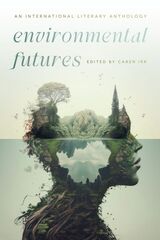
Featuring short stories, poetry, drama, and creative nonfiction from around the world, this anthology showcases contemporary literature to envision the future of the environment. While environmental literature written in English has been dominated by English and American men who make solo explorations into an unspoiled natural world, Environmental Futures emphasizes local and indigenous writers contending with global landscapes that are far from pristine. Their work opens up decolonial perspectives from Anglophone Africa, South Asia, India, China, South America, the peripheries of Europe, and BIPoC North America. Introducing many writers who will be unfamiliar to English-speaking readers, this collection explores resistance to the oil economy, the impact of storms and natural disasters, extinction, and relations between humans and animals, among other themes.
The pieces are organized by geographical area in five sections: Africa, Asia, Europe, Latin America, and North America. Expert scholars and translators—Kurt Cavender, Roberto Forns-Broggi, Cajetan Iheka, Upamanyu (Pablo) Mukherjee, Irina Sadovina, and Shaobo Xie—selected the works and provided critical introductions for each section.

By analyzing African and Caribbean texts on their own terms, Horizontal Comparison articulates new forms of transoceanic solidarity.
The fields of comparative literature and Black Atlantic studies have an Africa problem: despite sustained attempts to decenter Western paradigms, they still privilege the United States and Europe as the primary loci of reference. So argues Cajetan Iheka in Horizontal Comparison, which aims to redirect both fields toward a non-hierarchical, South-South orientation focusing on the links between Africa and the Caribbean.
By analyzing the literary work and real-life trajectories of writers such as Peter Abrahams, Chimamanda Adichie, Maryse Condé, Buchi Emecheta, Jamaica Kincaid, Claude McKay, Dinaw Mengestu, Ferdinand Oyono, Taiye Selasi, and Sam Selvon, Iheka draws our attention to the ways in which African and Caribbean texts inform and mutually constitute each other, bypassing the usual comparisons to Western literary canons. The book challenges not only Western cultural hegemony in the study of global Black writing, but also the very methodologies of comparative literary studies, offering fresh insights into reading, trauma, character, and the “worlding” of literature.
READERS
Browse our collection.
PUBLISHERS
See BiblioVault's publisher services.
STUDENT SERVICES
Files for college accessibility offices.
RECENTLY PUBLISHED


UChicago Accessibility Resources
home | accessibility | search | about | contact us
BiblioVault ® 2001 - 2026
The University of Chicago Press