
 A SCHOLARLY BOOK REPOSITORY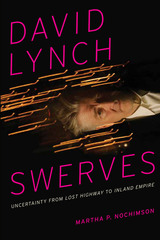
Beginning with Lost Highway, director David Lynch “swerved” in a new direction, one in which very disorienting images of the physical world take center stage in his films. Seeking to understand this unusual emphasis in his work, noted Lynch scholar Martha Nochimson engaged Lynch in a long conversation of unprecedented openness, during which he shared his vision of the physical world as an uncertain place that masks important universal realities. He described how he derives this vision from the Holy Vedas of the Hindu religion, as well as from his layman’s fascination with modern physics.
With this deep insight, Nochimson forges a startlingly original template for analyzing Lynch’s later films—the seemingly unlikely combination of the spiritual landscape envisioned in the Holy Vedas and the material landscape evoked by quantum mechanics and relativity. In David Lynch Swerves, Nochimson navigates the complexities of Lost Highway, The Straight Story, Mulholland Drive, and Inland Empire with uncanny skill, shedding light on the beauty of their organic compositions; their thematic critiques of the immense dangers of modern materialism; and their hopeful conceptions of human potential. She concludes with excerpts from the wide-ranging interview in which Lynch discussed his vision with her, as well as an interview with Columbia University physicist David Albert, who was one of Nochimson’s principal tutors in the discipline of quantum physics.
READERS
Browse our collection.
PUBLISHERS
See BiblioVault's publisher services.
STUDENT SERVICES
Files for college accessibility offices.
RECENTLY PUBLISHED



UChicago Accessibility Resources
home | accessibility | search | about | contact us
BiblioVault ® 2001 - 2026
The University of Chicago Press