
 A SCHOLARLY BOOK REPOSITORY
Heather Jacobson examines these adoptions by focusing on a relatively new social phenomenon, the practice by international adoptive parents, mothers in particular, of incorporating aspects of their children's cultures of origin into their families' lives. "Culture keeping" is now standard in the adoption world, though few adoptive parents, the majority of whom are white and native-born, have experience with the ethnic practices of their children's homelands prior to adopting.
Jacobson follows white adoptive mothers as they navigate culture keeping: from their motivations, to the pressures and constraints they face, to the content of their actual practices concerning names, food, toys, travel, cultural events, and communities of belonging. Through her interviews, she explores how women think about their children, their families, and themselves as mothers as they labor to construct or resist ethnic identities for their children, who may be perceived as birth children (because they are white) or who may be perceived as adopted (because of racial difference).
The choices these women make about culture, Jacobson argues, offer a window into dominant ideas of race and the "American Family," and into how social differences are conceived and negotiated in the United States.
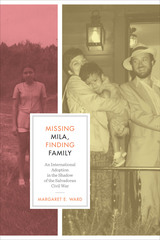
In the spring of 1983, a North American couple who were hoping to adopt a child internationally received word that if they acted quickly, they could become the parents of a boy in an orphanage in Honduras. Layers of red tape dissolved as the American Embassy there smoothed the way for the adoption. Within a few weeks, Margaret Ward and Thomas de Witt were the parents of a toddler they named Nelson—an adorable boy whose prior life seemed as mysterious as the fact that government officials in two countries had inexplicably expedited his adoption.
In Missing Mila, Finding Family, Margaret Ward tells the poignant and compelling story of this international adoption and the astonishing revelations that emerged when Nelson's birth family finally relocated him in 1997. After recounting their early years together, during which she and Tom welcomed the birth of a second son, Derek, and created a family with both boys, Ward vividly recalls the upheaval that occurred when members of Nelson's birth family contacted them and sought a reunion with the boy they knew as Roberto. She describes how their sense of family expanded to include Nelson's Central American relatives, who helped her piece together the lives of her son's birth parents and their clandestine activities as guerrillas in El Salvador's civil war. In particular, Ward develops an internal dialogue with Nelson's deceased mother Mila, an elusive figure whose life and motivations she tries to understand.
READERS
Browse our collection.
PUBLISHERS
See BiblioVault's publisher services.
STUDENT SERVICES
Files for college accessibility offices.
RECENTLY PUBLISHED


UChicago Accessibility Resources
home | accessibility | search | about | contact us
BiblioVault ® 2001 - 2026
The University of Chicago Press