
 A SCHOLARLY BOOK REPOSITORY
10 start with A start with A
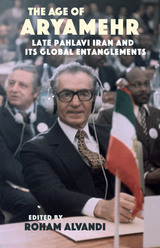
The reign of the last Shah of Iran, Mohammad Reza Pahlavi (1941–79), marked the high point of Iran’s global interconnectedness. Never before had Iranians felt the impact of global political, social, economic, and cultural forces so intimately in their national and daily lives, nor had Iranian actors played such an important global role – on battlefields, barricades, and in board rooms far beyond Iran’s borders. Iranian intellectuals, technocrats, politicians, workers, artists, and students alike were influenced by the global ideas, movements, markets, and conflicts that they also helped to shape.
From the launch of the Shah’s White Revolution in 1963 to his overthrow in the popular revolution of 1978–79, Iran saw the longest period of sustained economic growth that the country had ever experienced. An entire generation took its cue from the shift from oil consumption to oil production to dream of, and aspire to, a modernized Iran, and the history of Iran in this period has tended to be presented as a prologue to the revolution. Those histories usually locate the political, social, and cultural origins of the revolution firmly within a national context, into which global actors intruded as Iranian actors retreated. While engaging with that national narrative, this volume is concerned with Iran’s place in the global history of the 1960s and ’70s. It examines and highlights the transnational threads that connected Pahlavi Iran to the world, from global traffic in modern art and narcotics to the embrace of American social science by Iranian technocrats and the encounter of European intellectuals with the Iranian Revolution.
Essays that explore the rich engagement of the Talmud with its cultural world
The Babylonian Talmud (Bavli), the great compilation of Jewish law edited in the late Sasanian era (sixth–seventh century CE), also incorporates a great deal of aggada, that is, nonlegal material, including interpretations of the Bible, stories, folk sayings, and prayers. The Talmud’s aggadic traditions often echo conversations with the surrounding cultures of the Persians, Eastern Christians, Manichaeans, Mandaeans, and the ancient Babylonians, and others. The essays in this volume analyze Bavli aggada to reveal this rich engagement of the Talmud with its cultural world.
Features:
- A detailed analysis of the different conceptions of martyrdom in the Talmud as opposed to the Eastern Christian martyr accounts
- Illustration of the complex ways rabbinic Judaism absorbed Christian and Zoroastrian theological ideas
- Demonstration of the presence of Persian-Zoroastrian royal and mythological motifs in talmudic sources

Greek mercenaries on the march.
Xenophon (ca. 430 to ca. 354 BC) was a wealthy Athenian and friend of Socrates. He left Athens in 401 and joined an expedition including ten thousand Greeks led by the Persian governor Cyrus against the Persian king. After the defeat of Cyrus, it fell to Xenophon to lead the Greeks from the gates of Babylon back to the coast through inhospitable lands. Later he wrote the famous vivid account of this “March Up-Country” (Anabasis); but meanwhile he entered service under the Spartans against the Persian king, married happily, and joined the staff of the Spartan king, Agesilaus. But Athens was at war with Sparta in 394 and so exiled Xenophon. The Spartans gave him an estate near Elis where he lived for years writing and hunting and educating his sons. Reconciled to Sparta, Athens restored Xenophon to honor, but he preferred to retire to Corinth.
Xenophon’s Anabasis is a true story of remarkable adventures. Hellenica, a history of Greek affairs from 411 to 362, begins as a continuation of Thucydides’ account. There are four works on Socrates (collected in LCL 168). In Memorabilia Xenophon adds to Plato’s picture of Socrates from a different viewpoint. The Apology is an interesting complement to Plato’s account of Socrates’ defense at his trial. Xenophon’s Symposium portrays a dinner party at which Socrates speaks of love; and Oeconomicus has him giving advice on household management and married life. Cyropaedia, a historical romance on the education of Cyrus (the Elder), reflects Xenophon’s ideas about rulers and government; the Loeb edition is in two volumes.
We also have his Hiero, a dialogue on government; Agesilaus, in praise of that king; Constitution of Lacedaemon (on the Spartan system); Ways and Means (on the finances of Athens); Manual for a Cavalry Commander; a good manual of Horsemanship; and a lively Hunting with Hounds. The Constitution of the Athenians, though clearly not by Xenophon, is an interesting document on politics at Athens. These eight books are collected in the last of the seven volumes of the Loeb Classical Library edition of Xenophon.
On the march to greatness.
Arrian (Flavius Arrianus), of the period ca. AD 95–175, was a Greek historian and philosopher of Nicomedia in Bithynia. Both a Roman and an Athenian citizen, he was governor of the Roman province of Cappadocia 132–137, and repelled an invasion of the Alani in 134. He retired then to Athens (where he was archon in 148–149) and later to Nicomedia.
Arrian’s Anabasis of Alexander in seven books is the best account we have of Alexander’s adult life. Indica (a description of India and of Nearchus’ voyage therefrom) was to be a supplement.
A student of Epictetus, Arrian took notes at his lectures and published them (in eight books, of which we have four, The Discourses) and also the Encheiridion or Manual of Epictetus. Both works are available in the Loeb edition of Epictetus (LCL 131, 218).
The Loeb Classical Library edition of Arrian is in two volumes.
On the march to greatness.
Arrian (Flavius Arrianus), of the period ca. AD 95–175, was a Greek historian and philosopher of Nicomedia in Bithynia. Both a Roman and an Athenian citizen, he was governor of the Roman province of Cappadocia 132–137, and repelled an invasion of the Alani in 134. He retired then to Athens (where he was archon in 148–149) and later to Nicomedia.
Arrian’s Anabasis of Alexander in seven books is the best account we have of Alexander’s adult life. Indica (a description of India and of Nearchus’ voyage therefrom) was to be a supplement.
A student of Epictetus, Arrian took notes at his lectures and published them (in eight books, of which we have four, The Discourses) and also the Encheiridion or Manual of Epictetus. Both works are available in the Loeb edition of Epictetus (LCL 131, 218).
The Loeb Classical Library edition of Arrian is in two volumes.
Many spectacular examples of Persianate art survive to the present day, safeguarded in Istanbul and beyond—celebrating the glory of the Persian Empire (and, later, the Ottoman Empire). These include illustrated books, featuring exquisitely painted miniatures artfully embedded in the texts of literary masterpieces, as well as tile decorations in medieval Anatolian architecture.
Because of their beauty, many Persianate books were deliberately disassembled, their illustrations re-used in newer books or possessed as isolated art objects. As fragments found their way to collections around the world, the essential integration of text and image in the original books was lost. Six art historians and a literary historian—instrumental in reconstruction efforts—trace the long journey from the destructive dispersal of fragments to the joys of restoration.
Aspects of History and Epic in Ancient Iran focuses on the content of one of the most important inscriptions of the Ancient Near East: the Bisotun inscription of the Achaemenid king Darius I (6th century BCE), which in essence reports on a suspicious fratricide and subsequent coup d’état. Moreover, the study shows how the inscription’s narrative would decisively influence the Iranian epic, epigraphic, and historiographical traditions well into the Sasanian and early Islamic periods.
Intriguingly, our assessment of the impact of the Bisotun narrative on later literary traditions—in particular, the inscription of the Sasanian king Narseh at Paikuli (3rd–4th centuries CE)—necessarily relies on the reception of the oral rendition of the Bisotun story captured by Greek historians. As Rahim Shayegan argues, this oral tradition had an immeasurable impact upon the historiographical writings and epic compositions of later Iranian empires. It would have otherwise remained unknown to modern scholars, had it not been partially preserved and recorded by Hellanicus of Lesbos, Herodotus, Ctesias, and other Greek authors. The elucidation of Bisotun’s thematic composition therefore not only allows us to solve an ancient murder but also to reevaluate pre-Thucydidean Greek historiography as one of the most important repositories of Iranian epic themes.
READERS
Browse our collection.
PUBLISHERS
See BiblioVault's publisher services.
STUDENT SERVICES
Files for college accessibility offices.
RECENTLY PUBLISHED




UChicago Accessibility Resources
home | accessibility | search | about | contact us
BiblioVault ® 2001 - 2025
The University of Chicago Press