
 A SCHOLARLY BOOK REPOSITORY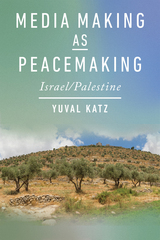
The horrific events of October 7 and the devastating war in Gaza have brought Israel/Palestine to the headlines once again. We have seen this all play out before: another ambitious peace plan, which secured a ceasefire, is imagined as the dawn of a new era of peace in the Middle East. But is it? Critiquing traditional state-centered approaches to peace, which usually highlight the work of diplomats and politicians, and which historically failed miserably in Israel/Palestine, Media Making as Peacemaking shifts our attention to the experiences of ordinary people. Investigating the idea of media encounters, this book shows how the collaboration of Palestinian and Jewish media practitioners and the popular texts they create together in television dramas, digital activism and mainstream journalism offer a new and exciting way to think about peace . A peace which does not maintain a repressive status quo, but seeks to deliver equality and justice to all people, Palestinians and Jews, living between the Jordan River and the Mediterranean Sea.
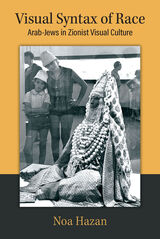
Analyzing the visual syntax and display rhetoric applied in newspaper photos, national historical albums, and museum exhibitions, Noa Hazan shows that although racial thought was and still is verbally suppressed in Israel, it is vividly present in its nonverbal official and public visual sphere. The racist perspective of newspaper editors, book publishers, photographers, and museum curators were morally justified in its time by such patronizing ideals as realistic news coverage or the salvation of Jewish heritage assets. Although their perspectives played a dominant role in establishing a visual syntax of race in Israel, they were not seen as racially discriminating at the time. The racist motifs and actions are revealed here by colligating multiple cases into a coherent narrative in retrospect.
This book points to a direct influence of the anti-Semitic discourse in Europe toward Mizrahim in Israel, highlighting the shared visual stereotypes used in both Europe and the fledgling state of Israel. Engraved in their body, these cultural traits were depicted and understood as racial-biological qualities and were visually manipulated to silo Ashkenazim and Mizrahim in Israel as distinct racial types.
READERS
Browse our collection.
PUBLISHERS
See BiblioVault's publisher services.
STUDENT SERVICES
Files for college accessibility offices.
RECENTLY PUBLISHED




UChicago Accessibility Resources
home | accessibility | search | about | contact us
BiblioVault ® 2001 - 2026
The University of Chicago Press