
 A SCHOLARLY BOOK REPOSITORY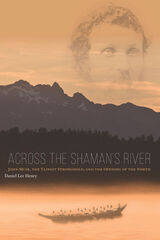
Tucked in the corner of Southeast Alaska, the Tlingits had successfully warded off the Anglo influences that had swept into other corners of the territory. This tribe was viewed by European and American outsiders as the last wild tribe and a frustrating impediment to access. Missionaries and prospectors alike had widely failed to bring the Tlingit into their power. Yet, when John Muir arrived in 1879, accompanied by a fiery preacher, it only took a speech about “brotherhood”—and some encouragement from the revered local shaman Skandoo’o—to finally transform these “hostile heathens.”
Using Muir’s original journal entries, as well as historic writings of explorers juxtaposed with insights from contemporary tribal descendants, Across the Shaman’s River reveals how Muir’s famous canoe journey changed the course of history and had profound consequences on the region’s Native Americans.
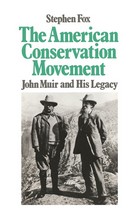
John Muir and His Legacy is at once a biography of this remarkable man—the first work to make unrestricted use of all of Muir’s manuscripts and personal papers—and a history of the century-old fight to save the natural environment. Stephen Fox traces the conservation movement's diverse, colorful, and tumultuous history, from the successful campaign to establish Yosemite National Park in 1890 to the movement's present day concerns of nuclear waste and acid rain.
Conservation has run a cyclical course, Fox contends, from its origins in the 1890s when it was the province of amateurs, to its takeover by professionals with quasi-scientific notions, and back, in the 1960s to its original impetus. Since then man’s view of himself as “the last endangered species” has sparked an explosion of public interest in environmentalism.
First published in 1981 by Little, Brown, this book was warmly received as both a biography of Muir and a history of the American conservation movement. It is now available in this new Wisconsin paperback edition.
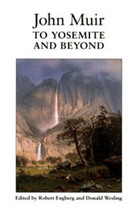
When John Muir died in 1914, the pre-eminent American naturalist, explorer, and conservationist had not yet written the second volume of his autobiography, in which he planned to cover his Yosemite years. Editors Robert Engberg and Donald Wesling have here provided a remedy.
Their account begins in 1863, the year Muir left the University of Wisconsin for what he termed the "University of the Wilderness." Following an accident in 1867 that nearly left him blind, he vowed to turn from machines and continue to study nature. That led, in 1868, to his first visit to Yosemite Valley, where he began his glacier studies. Muir spent much time exploring the Yosemite region, Tuolumne, and both the southern and northern Sierras, publishing articles, and keeping extensive journals through 1875, when he began to write for the San Francisco Bulletin and expanded his travels to areas throughout the west.
Mining a rich vein of sources—Muir’s letters, journals, articles, and unpublished manuscripts, as well as selections drawn from biographical pieces written about Muir by people who met him in Yosemite in the early 1870s—Engberg and Wesling have assembled what they term a "composite autobiography," providing brief interpretive and transitional passages throughout the book. This work is especially valuable because it documents Muir’s formative years, when he is maturing away from "conventional cultural paradigms of work and materialism toward new ways of thinking about nature and its impact on human development."
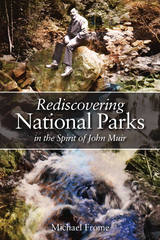
As a journalist, advocate, and professor, Michael Frome has spent decades engaged with conservation topics and has taken particular interest in America’s national parks. He draws on this experience and knowledge to address what remains to be done in order to truly value and preserve these special places. Part memoir, part history, and part broadside against those who would diminish this heritage, Rediscovering National Parks in the Spirit of John Muir, through thoughtful reflections and ruminations, bears witness to the grandeur of our parks and to the need for a renewed sense of appreciation and individual responsibility for their care.
In recollections of his encounters and conversations with key people in national park history, Frome discusses park politics, conflicts between use and preservation, and impacts of commercialization. He proposes a dedicated return to the true spirit in which the parks were established, in the manner of John Muir. He advocates maintaining these lands as wild sanctuaries, places where we can find inspiration, solitude, silence, balance, and simplicity, reminding us why we must preserve our national treasures and why we need to connect with the deeper values they hold.
READERS
Browse our collection.
PUBLISHERS
See BiblioVault's publisher services.
STUDENT SERVICES
Files for college accessibility offices.
RECENTLY PUBLISHED



UChicago Accessibility Resources
home | accessibility | search | about | contact us
BiblioVault ® 2001 - 2026
The University of Chicago Press