front cover of The ABCs of Wisconsin Cheese
The ABCs of Wisconsin Cheese
Susan Apps-Bodilly
Wisconsin Historical Society Press, 2026

A fun A-to-Z journey through the delicious world of Wisconsin cheese! In The ABCs of Wisconsin Cheese, explore the wonderful world of cheese and the stories and makers behind the food that has made Wisconsin famous—one letter at a time! From the milk that comes from family-owned farms to the award-winning varieties produced across the state, this charming picture book introduces children to the state’s cheese-making traditions in a fun and accessible way.

Written by retired elementary and middle school teacher Susan Apps-Bodilly and beautifully illustrated by Renée Graef, an award-winning artist best known for her work on American Girl books and the My First Little House series, this book pairs playful, engaging artwork with an alphabet of cheese-related facts that educate and entertain. Learn how cheese is made, why curds squeak, and what makes Wisconsin cheeses so special.

Designed for readers ages 5–9 (grades K–3), The ABCs of Wisconsin Cheese is a perfect blend of education and entertainment that will delight children, families, and anyone curious about the state’s cheese-making heritage. The book is a tasty celebration of a beloved food tradition and the Dairy State’s most famous product—cheese!

[more]

front cover of Albert Einstein's Bright Ideas
Albert Einstein's Bright Ideas
Frédéric Morlot and Anne-Margot Ramstein
Diaphanes, 2017
At its most basic, philosophy is about learning how to think about the world around us. It should come as no surprise, then, that children make excellent philosophers! Naturally inquisitive, pint-size scholars need little prompting before being willing to consider life’s “big questions,” however strange or impractical. Plato & Co. introduces children—and curious grown-ups—to the lives and work of famous philosophers, from Socrates to Descartes, Einstein, Marx, and Wittgenstein. Each book in the series features an engaging—and often funny—story that presents basic tenets of philosophical thought alongside vibrant color illustrations.
          
In Albert Einstein’s Flashes of Inspiration, the young Albert Einstein has a very important job: he must deliver electricity to the big Oktoberfest celebration in Munich. As he hurries from one merry-go-round to another, nothing seems to be going as planned. With his sister, Maja, Heinrich the dog, and Niels Bohr, a qualified dwarf-thrower, can he win a battle against the laws of the universe? The key just may lie in the question of whether a dumpling can fly faster than light?
 
[more]

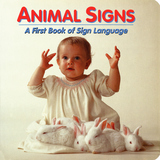
front cover of Animal Signs
Animal Signs
Debbie Slier
Gallaudet University Press, 1995

Charming, full-color photographs of basic animals plus illustrations of their corresponding signs offer children ages 1 to 4 a fun way to learn their first signs and vocabulary words. 

Studies have shown that babies who learn to sign can communicate at an earlier age than those who learn verbal communication alone. Other research indicates that children strengthen their grammar and vocabulary skills by learning sign language.

Animal Signs and its companion book, Word Signs, offer children exciting new worlds describing favorite things and animals while also making learning language skills fun!
[more]

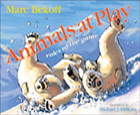
front cover of Animals at Play
Animals at Play
Rules of the Game
Marc Bekoff
Temple University Press, 2008

What can we learn from watching animals play?  Dogs chase each other and wrestle. Cats pounce and bite. These animals may look like they are fighting, but if you pay close attention— as world-renowned biologist Marc Bekoff does—you can see they are playing and learning the rules of their games. In Animals at Play, Bekoff shows us how animals behave when they play, with full-color illustrations showing animals in action and having fun—from squirrels climbing up a tree to polar bears somersaulting in the snow. 

Bekoff emphasizes how animals communicate, cooperate and learn to play fair and what happens when they break the rules. He uses lively illustrations and simple explanations of what it means when a sea lion swims with kelp in its mouth or when two dogs bow to each other. Bekoff also describes what happens when animals become too aggressive and how they apologize, forgive and learn to trust one another.  This entertaining and informative book will delight every child and show readers how animals—and humans—interact when they are having fun.
 

[more]

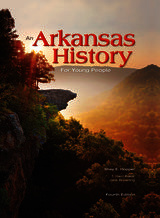
front cover of An Arkansas History for Young People
An Arkansas History for Young People
Fourth Edition
Shay E. Hopper
University of Arkansas Press, 2008
Adopted by the State of Arkansas for 2008 Once again, the State of Arkansas has adopted An Arkansas History for Young People as an official textbook for middle-level and/or junior-high-school Arkansas-history classes. This fourth edition incorporates new research done after extensive consultations with middle-level and junior-high teachers from across the state, curriculum coordinators, literacy coaches, university professors, and students themselves. It includes a multitude of new features and is now full color throughout. This edition has been completely redesigned and now features a modern format and new graphics suitable for many levels of student readers. The completely revised fourth edition includes new unit, chapter, and section divisions as well as five brand-new chapters: an introductory chapter with information on the symbols, flag, and songs of Arkansas; chapter 2, which covers the geography of Arkansas; chapter 3, on state and local government; chapter four, on economics and tourism; and a “modern” chapter on the Arkansas of today and the future, which completes the learning adventure. This edition also has two “special features”: one on the Central High School crisis of 1957 and another on the William J. Clinton Presidential Library. It also has new and interesting features for students like the “Guide to Reading” (at the beginning of each chapter, there is a list of important terms, people, places and events for the student to keep in mind as he or she reads [corresponding to blue vocabulary words in the text, which are define in the margin]), “County Quest,” “I Am an Arkansan,” “Did You Know?” “Only in Arkansas,” “A Day in the Life,” “Chapter Reflection” questions and activities, over forty-five new content maps, and a comprehensive new map atlas.
[more]


Send via email Share on Facebook Share on Twitter