
 A SCHOLARLY BOOK REPOSITORY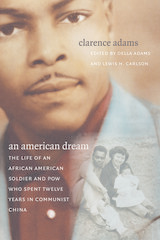
Adams was a seventeen-year-old high school dropout in 1947 when he fled Memphis and the local police to join the U.S. Army. Three years later, after fighting in the Korean War in an all-black artillery unit that he believed to have been sacrificed to save white troops, he was captured by the Chinese. After spending almost three years as a POW, during which he continued to suffer racism at the hands of his fellow Americans, he refused repatriation in 1953, choosing instead the People's Republic of China, where he hoped to find educational and career opportunities not readily available in his own country.
While living in China, Adams earned a university degree, married a Chinese professor of Russian, and worked in Beijing as a translator for the Foreign Languages Press. During the Vietnam War he made a controversial anti-war broadcast over Radio Hanoi, urging black troops not to fight for someone else's political and economic freedoms until they enjoyed these same rights at home.
In 1966, having come under suspicion during the Chinese Cultural Revolution, he returned with his wife and two children to the United States, where he was subpoenaed to appear before the House Committee on Un-American Activities to face charges of "disrupting the morale of American fighting forces in Vietnam and inciting revolution in the United States." After these charges were dropped, he and his family struggled to survive economically. Eventually, through sheer perseverance, they were able to fulfill at least part of the American Dream. By the time he died, the family owned and operated eight successful Chinese restaurants in his native Memphis.

The South Korean warship Cheonan was sunk in mysterious circumstances on 26 March 2010. The remarkable events that followed are analysed by Tim Beal and woven into a larger study of the increasingly volatile relations between North and South Korea and US concern about the rise of China.
South Korea's stance towards the North has hardened significantly since the new conservative government came to power. Beal argues that the South moved quickly to use the sinking of the Cheonan to put international pressure on the North, even before the cause of the sinking had been established. The US followed suit by attempting to pressurise China into condemning North Korea. The media reports at the time presented an open and shut case of unprovoked North Korean aggression, but the evidence points towards the accidental triggering of a South Korean mine as the cause and South Korean fabrication to incriminate the North.
With the South bent on forcing the fall of the North's regime with US help and China unlikely to stand idly by, this book offers an essential guide to the key factors behind the crisis and possible solutions.

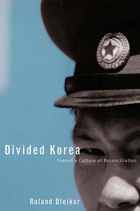
In 2002, North Korea precipitated a major international crisis when it revealed the existence of a secret nuclear weapons program and announced its withdrawal from the Nuclear Nonproliferation Treaty. Earlier in the year, George W. Bush had declared North Korea part of the “axis of evil,” and soon afterward his administration listed the country as a potential target of a preemptive nuclear strike. Pyongyang’s angry reaction ensured the complete deterioration of relations on the Korean peninsula, where only two years before the leaders of North and South Korea had come together in a historic summit meeting.
Few international conflicts are as volatile, protracted, or seemingly insoluble as the one in Korea, where mutual mistrust, hostile Cold War attitudes, and the possibility of a North Korean economic collapse threaten the security of the entire region. For Roland Bleiker, this persistently recurring pattern suggests profound structural problems within and between the two Koreas that have not been acknowledged until now. Expanding the discussion beyond geopolitics and ideology, Bleiker places peninsular tensions in the context of an ongoing struggle over competing forms of Korean identity. Divided Korea examines both domestic and international attitudes toward Korean identity, the legacy of war, and the possibilities for-and anxieties about-unification.
Divided Korea challenges the prevailing logic of confrontation and deterrence, embarking on a fundamental reassessment of both the roots of the conflict and the means to achieve a more stable political environment and, ultimately, peace. In order to realize a lasting solution, Bleiker concludes, the two Koreas and the international community must first show a willingness to accept difference and contemplate forgiveness as part of a broader reconciliation process.
Roland Bleiker is professor of international relations at the University of Queensland. From 1986 to 1988 he served as chief of office for the Swiss delegation to the Neutral Nations Supervisory Commission in Panmunjom.
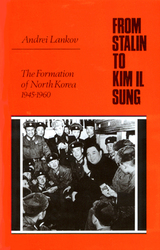
To understand how North Korea has survived as the worlds last Stalinist regime despite international isolationand at enormous human costs to its peopleone must look at how its political system was created. The countrys foundations were laid in the late 1940s and 1950s as a result of interaction between the Soviet Stalinist model, imposed from outside, and local traditions.
Andrei Lankov traces the formation of the North Korean state and the early years of Kim Il Sungs rule, when the future "Great Leader" and his entourage were consolidating their power base. Surveying the situation in North Korea after 1945, Lankov explores the internal composition of the ruling elite, the role of the Soviets, and the uneasy relations between various political groups. He also focuses on how in 1956 Kim Il Sung defeated the only known attempt to oust him and thereby established absolute personal rule beyond either Soviet or Chinese control.
The book is based on previously secret Soviet documents from Russian archives, as well as interviews with Russian and Korean participants.
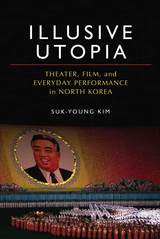
"North Korea is not just a security or human rights problem (although it is those things) but a real society. This book gets us closer to understanding North Korea beyond the usual headlines, and does so in a richly detailed, well-researched, and theoretically contextualized way."
---Charles K. Armstrong, Director, Center for Korean Research, Columbia University
"One of this book's strengths is how it deals at the same time with historical, geographical, political, artistic, and cultural materials. Film and theatre are not the only arts Kim studies---she also offers an excellent analysis of paintings, fashion, and what she calls 'everyday performance.' Her analysis is brilliant, her insights amazing, and her discoveries and conclusions always illuminating."
---Patrice Pavis, University of Kent, Canterbury
No nation stages massive parades and collective performances on the scale of North Korea. Even amid a series of intense political/economic crises and international conflicts, the financially troubled country continues to invest massive amounts of resources to sponsor unflinching displays of patriotism, glorifying its leaders and revolutionary history through state rituals that can involve hundreds of thousands of performers. Author Suk-Young Kim explores how sixty years of state-sponsored propaganda performances---including public spectacles, theater, film, and other visual media such as posters---shape everyday practice such as education, the mobilization of labor, the gendering of social interactions, the organization of national space, tourism, and transnational human rights. Equal parts fascinating and disturbing, Illusive Utopia shows how the country's visual culture and performing arts set the course for the illusionary formation of a distinctive national identity and state legitimacy, illuminating deep-rooted cultural explanations as to why socialism has survived in North Korea despite the fall of the Berlin Wall, the collapse of the Soviet Union, and China's continuing march toward economic prosperity. With over fifty striking color illustrations, Illusive Utopia captures the spectacular illusion within a country where the arts are not only a means of entertainment but also a forceful institution used to regulate, educate, and mobilize the population.
Suk-Young Kim is Associate Professor in the Department of Theater and Dance at the University of California, Santa Barbara, and coauthor with Kim Yong of Long Road Home: A Testimony of a North Korean Camp Survivor.

North Korea is perilously close to developing strategic nuclear weapons capable of hitting the United States and its East Asian allies. Since their first nuclear test in 2006, North Korea has struggled to perfect the required delivery systems. Kim Jong-un’s regime now appears to be close, however. Sung Chull Kim, Michael D. Cohen, and the volume contributors contend that the time to prevent North Korea from achieving this capability is virtually over; scholars and policymakers must turn their attention to how to deter a nuclear North Korea. The United States, South Korea, and Japan must also come to terms with the fact that North Korea will be able to deter them with its nuclear arsenal. How will the erratic Kim Jong-un behave when North Korea develops the capability to hit medium- and long-range targets with nuclear weapons? How will and should the United States, South Korea, Japan, and China respond, and what will this mean for regional stability in the short term and long term? The international group of authors in this volume address these questions and offer a timely analysis of the consequences of an operational North Korean nuclear capability for international security.
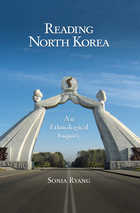
Often depicted as one of the world’s most strictly isolationist and relentlessly authoritarian regimes, North Korea has remained terra incognita to foreign researchers as a site for anthropological fieldwork. Given the difficulty of gaining access to the country and its people, is it possible to examine the cultural logic and social dynamics of the Democratic People’s Republic of Korea?
In this innovative book, Sonia Ryang casts new light onto the study of North Korean culture and society by reading literary texts as sources of ethnographic data. Analyzing and interpreting the rituals and language embodied in a range of literary works published in the 1970s and 1980s, Ryang focuses critical attention on three central themes—love, war, and self—that reflect the nearly complete overlap of the personal, social, and political realms in North Korean society. The ideology embedded in these propagandistic works laid the cultural foundation for the nation as a “perpetual ritual state,” where social structures and personal relations are suspended in tribute to Kim Il Sung, the political and spiritual leader who died in 1994 but lives eternally in the hearts of his people and still weaves the social fabric of present-day North Korea.
This provocative insider’s account blasts apart the myths which paint North Korea as a rogue state run by a mad leader. Informed by extraordinary access to the country's leadership, Glyn Ford investigates the regime from the inside, providing game-changing insights. Acknowledging that North Korea is a deeply flawed and barbaric state, he nonetheless shows that sections of the leadership are desperate to modernize and end their isolation.
With chapters on recent developments including the Trump / Kim summit, Ford supports a dialogue between East and West and provides a road map to avert the looming threat of a war that would threaten the lives of millions.
READERS
Browse our collection.
PUBLISHERS
See BiblioVault's publisher services.
STUDENT SERVICES
Files for college accessibility offices.
RECENTLY PUBLISHED




UChicago Accessibility Resources
home | accessibility | search | about | contact us
BiblioVault ® 2001 - 2025
The University of Chicago Press