
 A SCHOLARLY BOOK REPOSITORY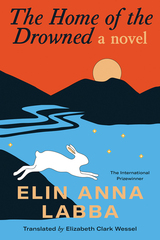
The haunting, multigenerational saga of a family of Sámi women fighting the devastation of their way of life
Nothing is true, and everything is true; poetry will never hurt more than what has happened. Every summer, Iŋgá, her mother Rávdná, and her Aunt Ánne travel west to their village on the lake. But the summer Iŋgá is thirteen, they arrive to find their home and possessions have disappeared under water, the land flooded by a dam built to supply hydropower to a society that has continually stolen from them.
The Home of the Drowned follows these women’s fortunes over forty years—from 1942 to 1982—as the water their people have lived near for centuries is transformed into a menacing force that threatens all they hold dear. Defying the authorities, Rávdná decides to build a proper house on the lake to replace what was lost, becoming an unlikely activist even as her actions isolate her family from the rest of the community. Meanwhile, Ánne’s health is in decline, and a concerned Iŋgá merely longs to live like everyone else—an impossible wish when the Swedish state is relentlessly drowning her world.
Drawing on her own family’s history of forced relocation and violent colonial dispossession, Elin Anna Labba’s debut novel brings Sámi history to the fore through this intimate story. In poetic prose deftly translated by Elizabeth Clark Wessel, she reveals connections between land, water, and people that hauntingly reverberate with the question: what is it that makes a home?
Retail e-book files for this title are screen-reader friendly.
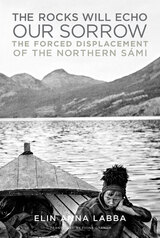
The deep and personal story—told through history, poetry, and images—of the forced displacement of the Sámi people from their homeland in northern Norway and Sweden and its reverberations today
More than a hundred years have passed since the Sámi were forcibly displaced from their homes in northern Norway and Sweden, a hundred years since Elin Anna Labba’s ancestors and relations drove their reindeer over the strait to the mainland for the last time. The place where they lived has remained empty ever since. We carry our homes in our hearts, Labba shares, citing the Sámi poet Áillohaš. How do you bear that weight if you were forced to leave? In a remarkable blend of historical reportage, memoir, and lyrical reimagining, Labba travels to the lost homeland of her ancestors to tell of the forced removal of the Sámi in the early twentieth century and to reclaim a place in history, and in today’s world, for these Indigenous people of northern Scandinavia.
When Norway became a country independent from Sweden in 1905, the two nations came to an agreement that called for the displacement of the Northern Sámi, who spent summers on the Norwegian coast and winters in Sweden. This “dislocation,” as the authorities called it, gave rise to a new word in Sámi language, bággojohtin, forced displacement. The first of the sirdolaččat, or “the displaced,” left their homes fully believing they would soon return. Through stories, photographs, letters, and joik lyrics, Labba gathers a chorus of Sámi expression that resonates across the years, evoking the nomadic life they were required to abandon and the immense hardship and challenges they endured: children left behind with relatives, reindeer lost when they returned to familiar territory, sorrow and estrangement that linger through generations.
Starkly poetic and emotionally heart-wrenching, this dark history is told through the voices of the sirdolaččat, echoing the displacements of other Indigenous people around the world as it depicts the singular experience of the Northern Sámi. For her extraordinary work, Labba was awarded Sweden’s most important national book prize in 2020, the August Prize for Best Nonfiction.
READERS
Browse our collection.
PUBLISHERS
See BiblioVault's publisher services.
STUDENT SERVICES
Files for college accessibility offices.
RECENTLY PUBLISHED



UChicago Accessibility Resources
home | accessibility | search | about | contact us
BiblioVault ® 2001 - 2026
The University of Chicago Press