
 A SCHOLARLY BOOK REPOSITORY
Results by Title
2 books about Lakota women
2 books about Lakota women

Confessions of an Iyeska
Viola Burnette
University of Utah Press, 2018
In this autobiography, Viola Burnette braids the history of the Lakota people with the story of her own life as an Iyeska, or mixed-race Indian. Bringing together her years growing up on a reservation, her work as a lawyer and legal advocate for Native peoples, and her woman’s perspective, she draws the reader into an intelligent and intimate conversation.
The Fort Laramie treaties of 1851 and 1868 changed everything for the Sioux. When Burnette was born on the Rosebud Indian Reservation in the late 1930s, her people were still striving to make sense of how to live under the impoverished conditions created by the imposed land restrictions. Like most Native children at that time, she was forced by federal law to attend boarding school and assimilate into white culture. Her story reveals the resulting internal conflict that she and her people faced in embracing their own identity in a world where those in authority taught that speaking Lakota and being Indian were wrong. After a difficult jump into adulthood, Burnette emerged from an abusive marriage and, while raising four children, enrolled in junior college in her thirties and law school in her forties. She went on to become an advocate for women subjected to domestic violence and the first attorney general for the Rosebud Sioux Tribe.
Borne out under the far-reaching effects of the government-enforced restructuring of her people, Burnette’s inspiring narrative of strength and determination makes clear the importance of understanding history from a Native standpoint.
“I am an Iyeska and I am assimilated, but on my own terms. I choose when, where, and how I use the knowledge and skills I have learned. As long as we continue to teach our children and grandchildren the language, values, and traditions of the Lakota people, we will survive.”—from the book
The Fort Laramie treaties of 1851 and 1868 changed everything for the Sioux. When Burnette was born on the Rosebud Indian Reservation in the late 1930s, her people were still striving to make sense of how to live under the impoverished conditions created by the imposed land restrictions. Like most Native children at that time, she was forced by federal law to attend boarding school and assimilate into white culture. Her story reveals the resulting internal conflict that she and her people faced in embracing their own identity in a world where those in authority taught that speaking Lakota and being Indian were wrong. After a difficult jump into adulthood, Burnette emerged from an abusive marriage and, while raising four children, enrolled in junior college in her thirties and law school in her forties. She went on to become an advocate for women subjected to domestic violence and the first attorney general for the Rosebud Sioux Tribe.
Borne out under the far-reaching effects of the government-enforced restructuring of her people, Burnette’s inspiring narrative of strength and determination makes clear the importance of understanding history from a Native standpoint.
“I am an Iyeska and I am assimilated, but on my own terms. I choose when, where, and how I use the knowledge and skills I have learned. As long as we continue to teach our children and grandchildren the language, values, and traditions of the Lakota people, we will survive.”—from the book
[more]
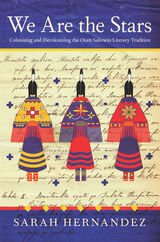
We Are the Stars
Colonizing and Decolonizing the Oceti Sakowin Literary Tradition
Sarah Hernandez
University of Arizona Press, 2023
After centuries of colonization, this important new work recovers the literary record of Oceti Sakowin (historically known to some as the Sioux Nation) women, who served as their tribes’ traditional culture keepers and culture bearers. In so doing, it furthers discussions about settler colonialism, literature, nationalism, and gender.
Women and land form the core themes of the book, which brings tribal and settler colonial narratives into comparative analysis. Divided into two parts, the first section of the work explores how settler colonizers used the printing press and boarding schools to displace Oceti Sakowin women as traditional culture keepers and culture bearers with the goal of internally and externally colonizing the Dakota, Nakota, and Lakota nations. The second section focuses on decolonization and explores how contemporary Oceti Sakowin writers and scholars have started to reclaim Dakota, Nakota, and Lakota literatures to decolonize and heal their families, communities, and nations.
Women and land form the core themes of the book, which brings tribal and settler colonial narratives into comparative analysis. Divided into two parts, the first section of the work explores how settler colonizers used the printing press and boarding schools to displace Oceti Sakowin women as traditional culture keepers and culture bearers with the goal of internally and externally colonizing the Dakota, Nakota, and Lakota nations. The second section focuses on decolonization and explores how contemporary Oceti Sakowin writers and scholars have started to reclaim Dakota, Nakota, and Lakota literatures to decolonize and heal their families, communities, and nations.
[more]
READERS
Browse our collection.
PUBLISHERS
See BiblioVault's publisher services.
STUDENT SERVICES
Files for college accessibility offices.
RECENTLY PUBLISHED




UChicago Accessibility Resources
home | accessibility | search | about | contact us
BiblioVault ® 2001 - 2026
The University of Chicago Press