
 A SCHOLARLY BOOK REPOSITORY
12 start with S start with S
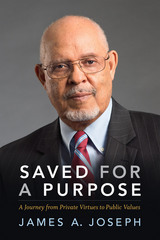
In an engaging and personal style, Joseph shows how his commitment to applying moral and ethical principles to large groups and institutions played out in his work in the civil rights movement in Alabama and as a college chaplain in California in the turbulent 1960s. His time later as vice president of the Cummins Engine Company provided an opportunity to promote corporate ethics, and his tenure as Under Secretary of the Interior in the Carter Administration underscored the difficulty and weight of making the right decisions while balancing good policy analysis with transcendent moral principles.
In 1996 President Clinton selected Joseph to become the United States Ambassador to South Africa. His recollections of working with Nelson Mandela, whom he describes as a noble and practical politician, and his observations about what he learned from Desmond Tutu and others about reconciliation contain some of the book’s most poignant passages.
Saved for a Purpose is unique, as Joseph combines his insights from working to integrate values into America’s public and private sectors with his long engagement with ethics as an academic discipline and as a practical guide for social behavior. Ultimately, it reflects Joseph’s passionate search for values that go beyond the personal to include the ethical imperatives that should be applied to the communal.

Saving Schools traces the story of the rise, decline, and potential resurrection of American public schools through the lives and ideas of six mission-driven reformers: Horace Mann, John Dewey, Martin Luther King Jr., Albert Shanker, William Bennett, and James Coleman. Yet schools did not become the efficient, egalitarian, and high-quality educational institutions these reformers envisioned. Indeed, the unintended consequences of their legacies shaped today’s flawed educational system, in which political control of stagnant American schools has shifted away from families and communities to larger, more centralized entities—initially to bigger districts and eventually to control by states, courts, and the federal government.
Peterson’s tales help to explain how nation building, progressive education, the civil rights movement, unionization, legalization, special education, bilingual teaching, accountability, vouchers, charters, and homeschooling have, each in a different way, set the stage for a new era in American education.
Now, under the impact of rising cost, coupled with the possibilities unleashed by technological innovation, schooling may be transformed through virtual learning. The result could be a personalized, customized system of education in which families have greater choice and control over their children’s education than at any time since our nation was founded.
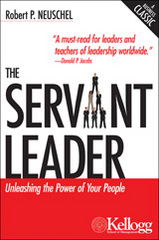
He asks: what steps might we take to revitalize the quality and strength of our leadership? He then forcefully and straightforwardly gives an outline of what he believes are the major changes in leadership we must bring about. As a professor of management and strategy, and earlier, as a director and senior partner at a major consulting firm, and as a captain in the U. S. Army, Neuschel observed the best of leadership, and practiced it. He shares his insights with us in The Servant Leader.

Gallup’s 2019 State of the American Workplace Report found that 70 percent of employees are disengaged at work. Why is worker engagement so important? Engaged workers lead to engaged libraries — vibrant institutions that nurture their workers’ dedication, creativity, and innovation so they can serve their communities most effectively. This guide walks library managers and administrators through concrete steps to change their organization’s culture so that it fosters worker engagement, using first-hand accounts from library staff to illustrate both successes and failures. Readers will discover
- why libraries often fall short at hiring good leadership and ways to develop better recruitment strategies moving forward;
- how lack of trust pushes workplace culture towards incivility, hostility, and lower morale, and what library leaders can do to rebuild it;
- methods for using recognition and praise as tools for sustaining a positive work environment;
- the rationale for eliminating annual performance reviews in favor of less formal one-on-one conversations and “just in time” continuous feedback;
- the secrets behind high performing teams, strategies to support dysfunctional teams, and tips on how to develop remote teamwork; and
- why viewing diversity, equity, and inclusion (DEI) as separate from workplace culture is counterproductive, since it is actually the positive result of a strong foundation, with advice on combating the factors that contribute to low retention rates of BIPOC librarians.
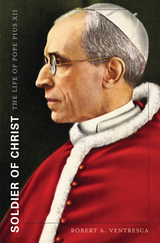
Debates over the legacy of Pope Pius XII and his canonization are so heated they are known as the “Pius wars.” Soldier of Christ moves beyond competing caricatures and considers Pius XII as Eugenio Pacelli, a flawed and gifted man. While offering insight into the pope’s response to Nazism, Robert A. Ventresca argues that it was the Cold War and Pius XII’s manner of engaging with the modern world that defined his pontificate.
Laying the groundwork for the pope’s controversial, contradictory actions from 1939 to 1958, Ventresca begins with the story of Pacelli’s Roman upbringing, his intellectual formation in Rome’s seminaries, and his interwar experience as papal diplomat and Vatican secretary of state. Accused of moral equivocation during the Holocaust, Pius XII later fought the spread of Communism in Western Europe, spoke against the persecution of Catholics in Eastern Europe and Asia, and tackled a range of social and political issues. By appointing the first indigenous cardinals from China and India and expanding missions in Africa while expressing solidarity with independence movements, he internationalized the church’s membership and moved Catholicism beyond the colonial mentality of previous eras.
Drawing from a diversity of international sources, including unexplored documentation from the Vatican, Ventresca reveals a paradoxical figure: a prophetic reformer of limited vision whose leadership both stimulated the emergence of a global Catholicism and sowed doubt and dissension among some of the church’s most faithful servants.
The Sound of Leadership answers these questions and many more. Based on analysis of nearly 10,000 presidential speeches delivered between 1945 and 1985, this book is the first comprehensive examination of the ways in which presidents Truman through Reagan have used the powers of communication to advance their political goals. This communication revolution has produced, Roderick P. Hart argues, a new form of governance, one in which public speech has come to be taken as political action. Using a rhetorical appraoch, Hart details the features of this new American presidency by carefully examining when and where presidents spoke in public during the last four decades and what they said. Even though presidents have been speaking more and more, Hart reveals, they have been saying less and less. Rather than leading the nation, the modern president usually offers only the hollow "sound" of leadership. Written with great flair and acuteness, The Sound of Leadership will become a standard guide to the voices of modern presidential politics.
One of the most important changes in Congress in decades were the extensive congressional reforms of the 1970s, which moved the congressional budget process into the focus of congressional policy making and shifted decision making away from committees. This overwhelming attention to the federal budget allowed party leaders to emerge as central decision makers.
Palazzolo traces the changing nature of the Speaker of the House's role in the congressional budget process from the passage of the Budget and Impoundment Control Act of 1974, through the 100th Congress in 1988. As the deficit grew and budget politics became more partisan in the 1980s, the Speaker became more involved in policy-related functions, such as setting budget priorities and negotiating budget agreements with Senate leaders and the president. Consequently, the Speaker's role as leader of the institution was subordinated to his role as a party leader.

In literature and film the spy chief is an all-knowing, all-powerful figure who masterfully moves spies into action like pieces on a chessboard. How close to reality is that depiction, and what does it really take to be an effective leader in the world of intelligence?
This first volume of Spy Chiefs broadens and deepens our understanding of the role of intelligence leaders in foreign affairs and national security in the United States and United Kingdom from the early 1940s to the present. The figures profiled range from famous spy chiefs such as William Donovan, Richard Helms, and Stewart Menzies to little-known figures such as John Grombach, who ran an intelligence organization so secret that not even President Truman knew of it. The volume tries to answer six questions arising from the spy-chief profiles: how do intelligence leaders operate in different national, institutional, and historical contexts? What role have they played in the conduct of international relations and the making of national security policy? How much power do they possess? What qualities make an effective intelligence leader? How secretive and accountable to the public have they been? Finally, does popular culture (including the media) distort or improve our understanding of them? Many of those profiled in the book served at times of turbulent change, were faced with foreign penetrations of their intelligence service, and wrestled with matters of transparency, accountability to democratically elected overseers, and adherence to the rule of law. This book will appeal to both intelligence specialists and general readers with an interest in the intelligence history of the United States and United Kingdom.
Throughout history and across cultures, the spy chief has been a leader of the state security apparatus and an essential adviser to heads of state. In democracies, the spy chief has become a public figure, and intelligence activities have been brought under the rule of law. In authoritarian regimes, however, the spy chief was and remains a frightening and opaque figure who exercises secret influence abroad and engages in repression at home.
This second volume of Spy Chiefs goes beyond the commonly studied spy chiefs of the United States and the United Kingdom to examine leaders from Renaissance Venice to the Soviet Union, Germany, India, Egypt, and Lebanon in the twentieth century. It provides a close-up look at intelligence leaders, good and bad, in the different political contexts of the regimes they served. The contributors to the volume try to answer the following questions: how do intelligence leaders operate in these different national, institutional and historical contexts? What role have they played in the conduct of domestic affairs and international relations? How much power have they possessed? How have they led their agencies and what qualities make an effective intelligence leader? How has their role differed according to the political character of the regime they have served? The profiles in this book range from some of the most notorious figures in modern history, such as Feliks Dzerzhinsky and Erich Mielke, to spy chiefs in democratic West Germany and India.

Examining public service from the perspective of the worker, this book provides a new framework for understanding the roles and responsibilities of front-line public servants and assessing the appropriateness of their actions.
Public employees who work at street level face some of the most intractable, pervasive, and complex problems in contemporary society. Drawing on more than 1500 hours of observation of police officers and social service workers in four states, this book explores the types of situations they confront, the factors they consider, and the hard choices they make. Presenting numerous cases of how these individuals acted in various situations, the authors show how public servants translate the expectations of administrators and others into legitimate street-level action.
Vinzant and Crothers propose the concept of leadership as a positive and realistic framework for understanding what these public servants do and how they can successfully meet the daily challenges of their very difficult and complex jobs. They show how changing the theory and language we use to describe street-level work can encourage decisions that are responsive both to the needs of the clients being served and to the broader community's need for accountability. They also examine how street-level leadership can change the way agencies recruit, train, and manage these employees and how society defines their role in governance.
This book offers valuable insights for those working in or studying public administration, policy analysis, criminal justice, and social work.
READERS
Browse our collection.
PUBLISHERS
See BiblioVault's publisher services.
STUDENT SERVICES
Files for college accessibility offices.
RECENTLY PUBLISHED






UChicago Accessibility Resources
home | accessibility | search | about | contact us
BiblioVault ® 2001 - 2024
The University of Chicago Press