
 A SCHOLARLY BOOK REPOSITORY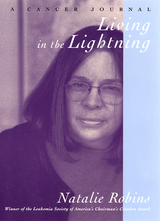
* How should I tell my mother?
* Will my husband remarry after I die?
* What should I wear to chemotherapy?
* What would happen if I jumped off the table during radiation treatment?
* Can I ever forget I have cancer? Robins's warm and sincerely uplifting portrait of quiet courage will give encouragement to the millions of people with cancer, and the millions more who love them.
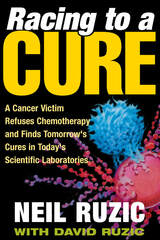
Although chemotherapy harms the immune system and is increasingly demonstrated to be an ineffective long-term cure for the vast majority of cancers, it remains the standard treatment for most cancer patients. Ruzic, a former scientific magazine publisher and originator of a science center, refused to accept this status quo, and instead plunged into the world of cutting-edge treatments, exploring the frontiers of cancer science with revolutionary results.
Ruzic went on the offensive: visiting scores of laboratories, gathering information, talking to researchers, and effectively becoming his own patient-care advocate. This book presents his findings. A scathing critique of the chemotherapy culture as well as unscientific "alternative" therapies, the book endorses state-of-the-art molecularly based technologies, making it an illuminating and necessary read for anyone interested in cancer research, especially patients and their families and physicians.
Neil Ruzic was expected to die within two years of his initial diagnosis. Five years later he has been declared cancer-free and considers himself cured.

In the course of diagnosis, treatment, and recovery, Adams O’Connell lived through theories she had researched and applied her sociological ideas to help make sense of her personal experiences. Remission Quest chronicles how the reality of living with cancer changed her perspective on what she had studied. Adams O’Connell found her knowledge illustrated and enriched her sociological analysis of our medical institutions and that her own illness narrative shone new light on her theories.
With moving prose, Remission Quest captures the emotions of having cancer and dealing with elaborate medical systems, learning how to be a “good patient” while also managing indescribable fear and fatigue, and confronting questions about the meaning of life. Adams O’Connell’s experiences are both personal and universal. They provide inspiration, compassion, and understanding.
READERS
Browse our collection.
PUBLISHERS
See BiblioVault's publisher services.
STUDENT SERVICES
Files for college accessibility offices.
RECENTLY PUBLISHED



UChicago Accessibility Resources
home | accessibility | search | about | contact us
BiblioVault ® 2001 - 2025
The University of Chicago Press