
 A SCHOLARLY BOOK REPOSITORY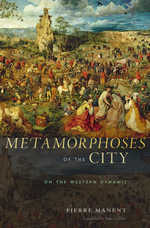
What is the best way to govern ourselves? The history of the West has been shaped by the struggle to answer this question, according to Pierre Manent. A major achievement by one of Europe's most influential political philosophers, Metamorphoses of the City is a sweeping interpretation of Europe's ambition since ancient times to generate ever better forms of collective self-government, and a reflection on what it means to be modern.
Manent's genealogy of the nation-state begins with the Greek city-state, the polis. With its creation, humans ceased to organize themselves solely by family and kinship systems and instead began to live politically. Eventually, as the polis exhausted its possibilities in warfare and civil strife, cities evolved into empires, epitomized by Rome, and empires in turn gave way to the universal Catholic Church and finally the nation-state. Through readings of Aristotle, Augustine, Montaigne, and others, Manent charts an intellectual history of these political forms, allowing us to see that the dynamic of competition among them is a central force in the evolution of Western civilization.
Scarred by the legacy of world wars, submerged in an increasingly technical transnational bureaucracy, indecisive in the face of proliferating crises of representative democracy, the European nation-state, Manent says, is nearing the end of its line. What new metamorphosis of the city will supplant it remains to be seen.

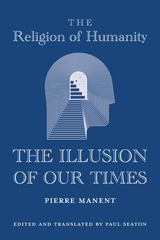
The Religion of Humanity: The Illusion of Our Time is the first anthology in any language of the writings of the contemporary French political philosopher, Pierre Manent, on “the religion of Humanity.” The striking phrase comes from nineteenth-century French thinker, Auguste Comte (1798–1857). Comte coined the phrase and indeed created an atheistic religion of a self-adoring Humanity. In the aftermath of the Cold War, Manent observed victorious democracy interpreting itself in a similar framework. He took it upon himself to track this development, analyze it, and warn his fellow Europeans of its deleterious political, intellectual, moral, and spiritual effects. With conceptual precision and (most often) a sober tone, many contemporary sacred cows were gored. But in addition to cursing the humanitarian darkness, he also lit many candles of judicious political, philosophical, moral, and spiritual analysis. This anthology is thus almost unique in its subject matter, and certainly unique in its treatment of the subject. It is a rarity and gem: a first-rate work of political philosophy.
READERS
Browse our collection.
PUBLISHERS
See BiblioVault's publisher services.
STUDENT SERVICES
Files for college accessibility offices.
RECENTLY PUBLISHED






UChicago Accessibility Resources
home | accessibility | search | about | contact us
BiblioVault ® 2001 - 2025
The University of Chicago Press