
 A SCHOLARLY BOOK REPOSITORY
Igniting political power through the lens of art and the imagination
Postpolitics and the Aesthetic Imagination investigates the erosion of meaningful political action in today’s world. Gathering writings from an array of scholars, editor Juan Meneses asks: can an aesthetic theory of postpolitics help us understand and counteract the most insidious processes of depoliticization?
The contributors to this volume explore how the aesthetic imagination can play a crucial role in reenvisioning key political elements, including governance, agency, rights, and responsibility. With a survey of various artistic mediums—film, dance, music, literature, and digital media—the essays illustrate how the aesthetic can reveal ways to breathe new life into the work of emancipatory politics. Reclaiming the arts and humanities as vital to political life, the contributors revisit but also move beyond the social sciences’ central focus on neoliberalism and public administration to address other topics such as tech-capitalism, race, environmental violence, and patriarchy.
Postpolitics and the Aesthetic Imagination argues for a conscious deployment of aesthetics to resist political anesthesia and promote a more just society, underscoring the role of the imagination in political engagement and change.
Contributors: Jacquelyn Arcy, U of Wisconsin–Parkside; Christopher Breu, Illinois State U; Stephen Charbonneau, Florida Atlantic U; Eric Lemmon, Webster U; Robert P. Marzec, Purdue U; Allison Page, Rutgers U–Camden; Matthew Scully, U of Lausanne; Erik Swyngedouw, U of Manchester; Sherryl Vint, U of California, Riverside.
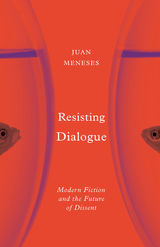
A bold new critique of dialogue as a method of eliminating dissent
Is dialogue always the productive political and communicative tool it is widely conceived to be? Resisting Dialogue reassesses our assumptions about dialogue and, in so doing, about what a politically healthy society should look like. Juan Meneses argues that, far from an unalloyed good, dialogue often serves as a subtle tool of domination, perpetuating the underlying inequalities it is intended to address.
Meneses investigates how “illusory dialogue” (a particular dialogic encounter designed to secure consensus) is employed as an instrument that forestalls—instead of fostering—articulations of dissent that lead to political change. He does so through close readings of novels from the English-speaking world written in the past hundred years—from E. M. Forster’s A Passage to India and Jeanette Winterson’s The Passion to Indra Sinha’s Animal’s People and more. Resisting Dialogue demonstrates how these novels are rhetorical exercises with real political clout capable of restoring the radical potential of dialogue in today’s globalized world. Expanding the boundaries of postpolitical theory, Meneses reveals how these works offer ways to practice disagreement against this regulatory use of dialogue and expose the pitfalls of certain other dialogic interventions in relation to some of the most prominent questions of modern history: cosmopolitanism at the end of empire, the dangers of rewriting the historical record, the affective dimension of neoliberalism, the racial and nationalist underpinnings of the “war on terror,” and the visibility of environmental violence in the Anthropocene.
Ultimately, Resisting Dialogue is a complex, provocative critique that, melding political and literary theory, reveals how fiction can help confront the deployment of dialogue to preempt the emergence of dissent and, thus, revitalize the practice of emancipatory politics.
READERS
Browse our collection.
PUBLISHERS
See BiblioVault's publisher services.
STUDENT SERVICES
Files for college accessibility offices.
RECENTLY PUBLISHED



UChicago Accessibility Resources
home | accessibility | search | about | contact us
BiblioVault ® 2001 - 2026
The University of Chicago Press