
 A SCHOLARLY BOOK REPOSITORY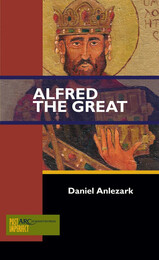

This volume presents new perspectives on the sources, transmission, and reception of Anglo-Latin poetry, ca. 650–1100.
In the wake of recent seminal studies on Aldhelm, these essays collectively explore the wider poetic tradition, spanning the Late Antique inheritance through to the eleventh century. By encompassing select studies of both major and lesser-known authors, sources, and works, the volume can present new understandings of the multifaceted intellectual culture that gave rise to this unique and vibrant literary period. It engages with the medium of poetry, including manuscript culture, historical and intellectual backgrounds, and the epigraphic traditions; and highlights idiosyncratic style, metre, poetic diction, and formulas.
The Anglo-Latin poetic tradition is notoriously and deliberately challenging, but this accessible collection yields rich new insights from emerging and established Anglo-Latin scholars.

From the first centuries of Christianity, believers turned to the perfection modeled by saints for inspiration, and a tradition of recounting saints’ Lives flourished. The Latin narratives followed specific forms, dramatizing a virgin’s heroic resolve or a martyr’s unwavering faith under torture.
In early medieval England, saints’ Lives were eagerly received and translated into the vernacular. The stories collected here by unknown authors are preserved in manuscripts dating from the eleventh and twelfth centuries. They include locally venerated saints like the abbess Seaxburh, as well as universally familiar ones like Nicholas and Michael the Archangel, and are set everywhere from Antioch to Rome, from India to Ephesus. These Lives also explore such topics as the obligations of rulers, marriage and gender roles, private and public devotion, the environment, education, and the sweep of human history. This volume presents new Old English editions and modern English translations of twenty-two unattributed saints’ Lives.
Covering the emergence of English literature from the Old English to the late medieval periods, Arts of Dying argues that the problem of how to designate death produced a long tradition of literature about dying, which continues in the work of Heidegger, Blanchot, and Gillian Rose. Philosophy’s attempt to designate death’s impossibility is part of a literature that imagines a relationship with death, a literature that intensively and self-reflexively supposes that its very terms might solve the problem of the termination of life. A lyrical and elegiac exploration that combines medieval work on the philosophy of language with contemporary theorizing on death and dying, Arts of Dying is an important contribution to medieval studies, literary criticism, phenomenology, and continental philosophy.

Abbatial annals of medieval England.
Bede “the Venerable,” English theologian and historian, was born in AD 672 or 673 in the territory of the single monastery at Wearmouth and Jarrow. He was ordained deacon (691–2) and priest (702–3) of the monastery, where his whole life was spent in devotion, choral singing, study, teaching, discussion, and writing. Besides Latin he knew Greek and possibly Hebrew.
Bede’s theological works were chiefly commentaries, mostly allegorical in method, based with acknowledgment on Jerome, Augustine, Ambrose, Gregory, and others, but bearing his own personality. In another class were works on grammar and one on natural phenomena; special interest in the vexed question of Easter led him to write about the calendar and chronology. But his most admired production is his Ecclesiastical History of the English Nation. Here a clear and simple style united with descriptive powers to produce an elegant work, and the facts diligently collected from good sources make it a valuable account. Historical also are his Lives of the Abbots of his monastery, the less successful accounts (in verse and prose) of Cuthbert, and the Letter (November 734) to Egbert his pupil, so important for our knowledge about the Church in Northumbria.
The Loeb Classical Library edition of Bede’s historical works is in two volumes.
Abbatial annals of medieval England.
Bede “the Venerable,” English theologian and historian, was born in AD 672 or 673 in the territory of the single monastery at Wearmouth and Jarrow. He was ordained deacon (691–2) and priest (702–3) of the monastery, where his whole life was spent in devotion, choral singing, study, teaching, discussion, and writing. Besides Latin he knew Greek and possibly Hebrew.
Bede’s theological works were chiefly commentaries, mostly allegorical in method, based with acknowledgment on Jerome, Augustine, Ambrose, Gregory, and others, but bearing his own personality. In another class were works on grammar and one on natural phenomena; special interest in the vexed question of Easter led him to write about the calendar and chronology. But his most admired production is his Ecclesiastical History of the English Nation. Here a clear and simple style united with descriptive powers to produce an elegant work, and the facts diligently collected from good sources make it a valuable account. Historical also are his Lives of the Abbots of his monastery, the less successful accounts (in verse and prose) of Cuthbert, and the Letter (November 734) to Egbert his pupil, so important for our knowledge about the Church in Northumbria.
The Loeb Classical Library edition of Bede’s historical works is in two volumes.
This book is a study of how ideas drawn from the English Middle Ages have been used to preserve and withhold freedom in the modern world. Broad in scope, it draws on canonical and ephemeral texts, including chronicles, memoirs, novels, political pamphlets, archival material, and works of history by scholars, colonizers, abolitionists, and Lost Cause apologists. Using three generations of a single family to frame its analysis, it reveals an intellectual genealogy that moves from medieval England to modern Africa, the Caribbean, the plantations of the US, and back again, to the academic disciplines of medieval studies and the very fabric of England’s medieval heritage. It argues that England’s medieval past has been a source of tenacious bonds—of family, freedom, slavery, nation, and race—and suggests that better understanding how those bonds were formed and resisted will enable full analysis of their legacy.

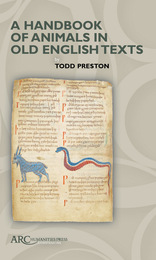
A Handbook of Animals in Old English Texts is the definitive handbook for students, scholars, and observers of the non-human in early medieval England. In this interdisciplinary compendium to the animal inhabitants of medieval Britain, Preston documents each creature mentioned in the Old English literary textual canon and correlates its standard literary interpretation with relevant historical, archaeological, and ecological studies. Beyond its usefulness as a reference work, Preston’s text challenges the reader to move beyond a literary analysis of the figural beast to one that leaves space for the actual animal.
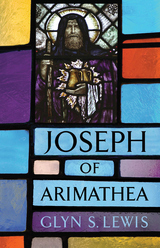
“This author testifieth Joseph of Arimathea to be the first preacher of the word of God within our realms. Long after that, when Austin came from Rome, this our realm had bishops and priests there-in, as is well known to the learned of our realm.”—Elizabeth I, in a 1559 letter to Roman Catholic bishops on the precedence of the Church of England
The name Joseph of Arimathea is generally well known, either from the accounts in each of the New Testament Gospels that tell of his providing a tomb for the burial of Jesus; from his depictions in medieval and Renaissance art; from his associations with the Holy Grail that later found greater expression in medieval Arthurian stories; and even from the story that has endured in western Britain that as a trader in tin, copper, and lead, he had traveled often to the region—and with him came the Christian religion. These stories are strongly rooted, despite the lack of impeccable source material—so much so that Elizabeth I used Joseph of Arimathea as proof that the Church of England predated the Catholic church in her country. In Joseph of Arimathea Glyn S. Lewis brings these fragments together in order to provide as fully as is possible what we can infer about this first-century apostle.
The author first discusses Arimathea, a town that has yet to be positively identified. He then reviews the accounts of Joseph’s entombment of Jesus that appear in each of the four Gospels. From these earliest references, the author next consults the literary and oral tradition evidence of Joseph’s passage by ship to the south of France among a group of fugitives escaping persecution for being Christians, and his early visits to Britain as a trader in precious ores. These voyages are said to have brought him to the area around Glastonbury, which became a flourishing monastery in the Middle Ages. Whether or not Joseph of Arimathea visited Britain, his story remains an enthralling and fascinating mystery.
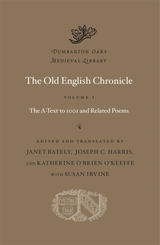
A thousand years of English history, encapsulating invasions, the rise and fall of kings, and religious events
Among the vernacular historical writings of early medieval England, the Old English Chronicle holds a prominent place, providing not only a backbone of English history from the fifth through the twelfth centuries but also a record of language development and geography. The seven texts in the Chronicle, known as manuscripts A through G, offer a brief year-by-year summary of important national events.
The Old English Chronicle: The A-Text to 1001 is the earliest and most interesting of these manuscripts. It covers more than a thousand years, with entries written throughout the tenth century by different scribes. Although many entries are spare, noting only the death of a king or church official, others offer detailed accounts and interpretations of events such as the movement of viking armies against King Alfred or the narrative of treachery, retribution, and loyalty widely known today as “Cynewulf and Cyneheard.” In addition to the A-Text, this edition contains two highly political poems, The Death of Alfred and The Death of Edward, as well as The Battle of Maldon, a brilliant verse rendering of a defeat against Scandinavian invaders in 991.
The Old English Chronicle, Volume I contains newly edited Old English texts and expert translations of key works of medieval historical writing.


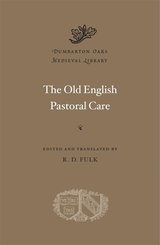
The Book of Pastoral Rule, or Liber regulae pastoralis, by Pope Gregory the Great—the pontiff responsible for the conversion of the English to Christianity beginning in 597—is a guide for aspiring bishops. Pope Gregory explains who ought and who ought not seek such a position and advises on what sort of spiritual guidance a bishop should provide to those under his direction.
The Old English Pastoral Care, a translation of Gregory’s treatise completed between 890 and 896, is described in a prefatory letter by King Alfred the Great as his own work, composed with the assistance of his bishops and chaplains. It appears to be the first of the Alfredian translations into Old English of Latin texts deemed necessary for the revitalization of the English Church, which had been ravaged by the depredations of Scandinavian invaders during the ninth century and by the decline of clerical competence in Latin.
This new edition and translation into modern English is the first to appear in a century and a half.

Alfred the Great's early English kingdom was the only one to resist Viking conquest. His reform program strengthened the kingdom and enabled it to hold fast against the Vikings. But texts are largely silent on the process of reform. There has been a tendency to assume that these reforms would obviously be beneficial, but Alfred’s elites were not to know that in advance. What motivated them to do as their king bid them?
This book analyzes how objects and behaviours shaped aristocratic response to the reform program, using assemblage theory and social practice theory. The Alfred Jewel (as shown on the cover) exercised a powerful persuasive agency in Alfredian reform. Broadening the frame of inquiry beyond textual evidence, giving objects and behaviours their due, permits a richer and more nuanced understanding.

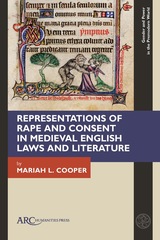
How did legal, literary, and scientific discourses intersect to define sexual non-consent in the Middle Ages? How did popular cultural assumptions about sexuality and gender influence actual medieval criminal proceedings? And how far have we really come today?
This book explores medieval English understandings of rape, consent, and the assumed mind-body dichotomy of rapists and rape victims. It demonstrates how laws, trial records, popular romance, and ecclesiastic and medical texts defined sexual consent and non-consent, and the consequences of such ideologies. By comparing episodes of rape and consent across diverse primary sources, it considers important medieval English rape myths and victim-blaming stereotypes. Significantly, it also highlights the cultural trepidation associated with believing women’s accusations of rape and questions how much “progress” we have made since then.
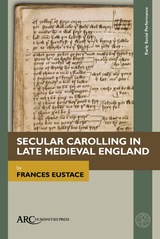
This study shows the importance of carolling in the celebrations and festivities of medieval Britain and demonstrates its longevity from the eleventh century to the sixteenth. It illustrates the flexibility of the English carole form for adaptation to include content in high and low registers and its suitability for use on all occasions and by different communal peer groups. Although the vast majority of extant texts in carol form from the late medieval period are religious in subject content, secular carolling was far more prevalent than the textual record implies. The dance-song elements of the medieval carole were so strongly woven into the vernacular cultural fabric of the British Isles that their threads can be traced through the folk songs and dances of subsequent centuries. This study contextualizes the written evidence and re-integrates the various components of the activity in order to illuminate our understanding of the universally popular medieval, participatory, pastime of carolling.
READERS
Browse our collection.
PUBLISHERS
See BiblioVault's publisher services.
STUDENT SERVICES
Files for college accessibility offices.
RECENTLY PUBLISHED



UChicago Accessibility Resources
home | accessibility | search | about | contact us
BiblioVault ® 2001 - 2025
The University of Chicago Press