
 A SCHOLARLY BOOK REPOSITORY
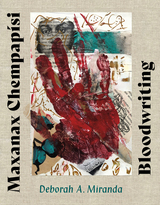
In Maxanax Chempapísi / Bloodwriting lyric poems exploring Esselen words and concepts traverse a supporting cast of prose poems about contemporary life as a queer, Indigenous recovering academic. Deborah A. Miranda witnesses the lives of women who are lovers, mothers, daughters, sisters, and grandmothers caught in a chain of ongoing apocalypse that stretches from the colonization of North America to the current Anthropocene.
These poems are small but potent ceremonies that center relationship as medicinal. They speak of the ugliness of genocide, substance abuse, environmental destruction, and homophobia with searing fury. They linger on the sacred powers found within a river—“A web of fireflies weaving constellations in the alder’s branches”—or the wonder of “The first woman / who stole my heart / rose up / from the earth / like a creation story.” Throughout this collection, images weave connections between women’s bodies and the moon, bodies and earth, bodies and constellations that surround us. Esselen, Miranda’s Indigenous language, acts as a bridge that translates some of these ancient struggles and insights into contemporary images.
This collection resists the separation of the body, the spirit, and the sacred. It seeks a reunion of true relationship in the midst of chaos and uncertainty. Miranda balances praise for the burning—but still beautiful and holy—world and grief for the loss of beings and places that cannot be recovered.
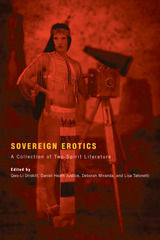
This landmark collection strives to reflect the complexity of identities within Native Gay, Lesbian, Bisexual, Transgender, Queer, and Two-Spirit (GLBTQ2) communities. Gathering together the work of established writers and talented new voices, this anthology spans genres (fiction, nonfiction, poetry, and essay) and themes (memory, history, sexuality, indigeneity, friendship, family, love, and loss) and represents a watershed moment in Native American and Indigenous literatures, Queer studies, and the intersections between the two.
Collaboratively, the pieces in Sovereign Erotics demonstrate not only the radical diversity among the voices of today’s Indigenous GLBTQ2 writers but also the beauty, strength, and resilience of Indigenous GLBTQ2 people in the twenty-first century.
Contributors: Indira Allegra, Louise Esme Cruz, Paula Gunn Allen, Qwo-Li Driskill, Laura Furlan, Janice Gould, Carrie House, Daniel Heath Justice, Maurice Kenny, Michael Koby, M. Carmen Lane, Jaynie Lara, Chip Livingston, Luna Maia, Janet McAdams, Deborah Miranda, Daniel David Moses, D. M. O’Brien, Malea Powell, Cheryl Savageau, Kim Shuck, Sarah Tsigeyu Sharp, James Thomas Stevens, Dan Taulapapa McMullin, William Raymond Taylor, Joel Waters, and Craig Womack
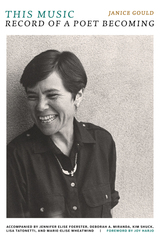
This Music is the final, intimate work of celebrated Koyoonk’auwi (Concow) poet and essayist Janice Gould, completed posthumously by a collective of close friends and literary scholars.
Told through lyrical prose poems and personal photographs, this memoir traces Gould’s life as a queer/Two-Spirit California Native coming of age in the late 1960s, navigating family, identity, activism, and art. With reflections on her mixed-blood heritage, her experiences in lesbian feminist circles, and her journey as a poet and musician, Gould’s voice resonates with clarity, tenderness, and fierce honesty.
The book opens with a foreword by Joy Harjo and an introduction from the editorial collective, including an essay by Gould’s spouse, Marie-Elise Wheatwind, framing the memoir as both a literary achievement and a loving tribute.
This Music is a vital contribution to Indigenous and LGBTQ+ literatures, offering readers a rare and powerful account of gender, sexuality, and Native identity in mid-century and contemporary America. As the one hundredth volume in the Sun Tracks series, this work honors Gould’s legacy while expanding the canon of poetic memoir. Ideal for readers of poetry, memoir, and Indigenous literature, this book will resonate deeply with scholars, students, and anyone drawn to stories of resilience, creativity, and the enduring power of memory.
READERS
Browse our collection.
PUBLISHERS
See BiblioVault's publisher services.
STUDENT SERVICES
Files for college accessibility offices.
RECENTLY PUBLISHED


UChicago Accessibility Resources
home | accessibility | search | about | contact us
BiblioVault ® 2001 - 2026
The University of Chicago Press