logo for University of Alabama Press
The German Turn
Settler Ideology and Racial Education in the Making of Modern Chile, 1882–1920
Romina A. Green Rioja
University of Alabama Press, 2026

The German Turn is the history of Chile’s settler ideological project of the 1880s exemplified in education. Romina A. Green Rioja examines the histories of education, settler colonialism and immigration, Native mission schools, and Mapuche studies at the state and local levels. Green Rioja finds that Chilean society and state policies demarcated the lines of ethnic, national, and racial preference and exclusion, offering inclusion for those of European ancestry and distance for those of Indigenous descent. She also considers global-transnational studies on immigration, settler colonialism, and education, showing that Chilean policies that appear insular actually align with global patterns and shared policy by other forming nations.

This work is a must-read for historians and Latin Americanists to understand Chile’s modernization and its impacts on social structures.

[more]

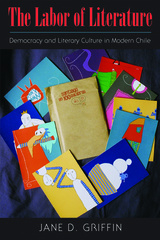
front cover of The Labor of Literature
The Labor of Literature
Democracy and Literary Culture in Modern Chile
Jane D. Griffin
University of Massachusetts Press, 2016
By producing literature in nontraditional forms—books made of cardboard trash, posters in subway stations, miniature shopping bags, digital publications, and even children's toys—Chileans have made and circulated literary objects in defiance of state censorship and independent of capitalist definitions of value. In The Labor of Literature Jane D. Griffin studies amateur and noncommercial forms of literary production in Chile that originated in response to authoritarian state politics and have gained momentum throughout the postdictatorship period. She argues that such forms advance a model of cultural democracy that differs from and sometimes contradicts the model endorsed by the state and the market.

By examining alternative literary publications, Griffin recasts the seventeen-year Pinochet dictatorship as a time of editorial experimentation despite widespread cultural oppression and shows how grassroots cultural activism has challenged government-approved corporate publishing models throughout the postdictatorship period. Griffin's work also points to the growing importance of autogestión, or do-it-yourself cultural production, where individuals combine artisanal forms with new technologies to make and share creative work on a global scale.
[more]


Send via email Share on Facebook Share on Twitter