
 A SCHOLARLY BOOK REPOSITORY
Tracing the development of Berlin as a center of music from the eighteenth century to the present, examining how its music survived despite its turbulent history.
Berlin is a music-lover’s paradise, offering up everything from operas to raves. Yet unlike Vienna, Leipzig, or even Nashville, Berlin does not immediately come to mind as a city of music. Instead, its turbulent history evokes images of industry, commerce, militarism, destruction, division, and resurrection. Over the past three centuries, Berlin was the capital of a kingdom, an empire, a republic, and a dictatorship; it was ravaged by war and occupied by foreign powers; and its division and reunification made it a powerful symbol of the Cold War. Through all these highs and lows, the music played on. Music Metropolis Berlin is the first full-length exploration of how Berlin became a city of music against all odds.
Unlike the other European music centers that stake their reputations on the fame of composers like Bach or Beethoven, Berlin is known for its ensembles, artists, theaters, organizers, intellectuals, and media stars. This is because Berlin took a very different, and almost accidental, route to becoming a city of music. Hampered for centuries by rulers who were more focused on military and industrial expansion than on cultural prestige, Berlin’s musical life prospered thanks to the ambitions of entrepreneurs and politicians who saw the value in serving the ever-changing music public in an expanding urban landscape. By focusing on Berlin as a rapidly developing global capital, Music Metropolis Berlin looks beyond the music, its creators, and its institutions to reveal how political, economic, and social forces fueled the creation of the Berlin metropolis and continue to nurture a vibrant and diverse musical life.
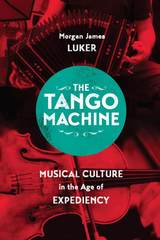
Luker traces the diverse and often contradictory ways tango is used in Argentina in activities ranging from state cultural policy-making to its export abroad as a cultural emblem, from the expanding nonprofit arts sector to tango-themed urban renewal projects. He shows how projects such as these are not peripheral to an otherwise “real” tango—they are the absolutely central means by which the values of this musical culture are cultivated. By richly detailing the interdependence of aesthetic value and the regimes of cultural management, this book sheds light on core conceptual challenges facing critical music scholarship today.
READERS
Browse our collection.
PUBLISHERS
See BiblioVault's publisher services.
STUDENT SERVICES
Files for college accessibility offices.
RECENTLY PUBLISHED




UChicago Accessibility Resources
home | accessibility | search | about | contact us
BiblioVault ® 2001 - 2026
The University of Chicago Press