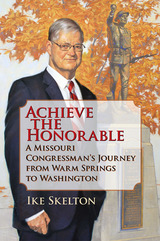
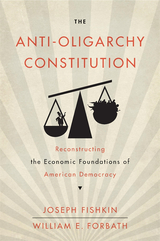
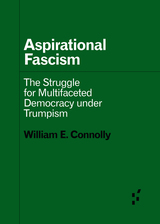
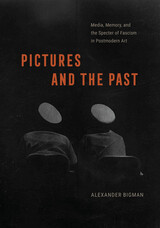
During his years in the U.S. House of Representatives, Skelton became known as a bipartisan negotiator and a champion of the Armed Services. Throughout the decades, he helped steer the nation through its most dangerous challenges, from Communism to terrorism; took a leading role in the reform of the Department of Defense; dedicated himself to fulfilling the interests of his constituents; and eventually rose to become chair of the House Armed Services Committee during such pivotal events as the wars in Iraq and Afghanistan. In addition to detailing Skelton’s political career and its accompanying challenges and triumphs, Achieve the Honorable provides inside glimpses into the lives of political titans like Harry Truman, Richard Nixon, and Bill Clinton. Along the way, we are treated to Skelton’s engaging humor and shrewd insight into twentieth- and twenty-first-century U.S. politics.

Coming to terms with a new period of uncertainty when it is still replete with possibilities
This quick and engaging study clearly lays out the United States’ current democratic crisis. Examining the early stages of the Nazi movement in Germany, William E. Connolly detects synergies with Donald Trump’s rhetorical style. Tapping into a sense of contemporary fragility, Aspirational Fascism pays particular attention to how conflicts between neoliberalism and the pluralizing left have placed the white working class in a bind. Ultimately, Connolly believes a multifaceted democracy constitutes the best antidote to aspirational fascism and rethinks what a politics of the left might look like today.
Forerunners is a thought-in-process series of breakthrough digital works. Written between fresh ideas and finished books, Forerunners draws on scholarly work initiated in notable blogs, social media, conference plenaries, journal articles, and the synergy of academic exchange. This is gray literature publishing: where intense thinking, change, and speculation take place in scholarship.
Twenty-five leading scholars examine the Declaration of Independence on its 250th anniversary.
On July 4, 1776, the Second Continental Congress approved a document that would change the world. Drawing on natural rights, moral philosophy, natural and biblical theology, and classical virtue, the Declaration of Independence did not merely announce a political separation—it established the principles upon which a new republic would stand or fall.
As America marks the 250th anniversary of that founding act, The Civitas Collection 250 brings together 25 of the nation's leading scholars to examine the Declaration in depth. These essays resist the temptation to flatten the founding into a simple story. They probe what the Declaration meant in 1776, what it meant to Abraham Lincoln and Martin Luther King, Jr., and what it demands of us now—on questions of liberty and equality, self-government, executive power, religion, race, and the persistent effort to diminish what the founders established.
To read the Declaration as a whole is to discover not a relic but a living challenge. The Civitas Collection 250, featuring essays by scholars from leading universities and research institutions across the country, including from the newly established schools of civic thought, is essential reading for citizens, students, and scholars who take the American founding seriously.
Several contributors offer wide-ranging accounts of the workings of Congress. They look at lawmakers’ attitudes toward Congress’s role as a constitutional interpreter, the offices within Congress that help lawmakers learn about constitutional issues, Congress’s willingness to use its confirmation power to shape constitutional decisions by both the executive and the courts, and the frequency with which congressional committees take constitutional questions into account. Other contributors address congressional deliberation, paying particular attention to whether Congress’s constitutional interpretations are sound. Still others examine how Congress and the courts should respond to one another’s decisions, suggesting how the courts should evaluate Congress’s work and considering how lawmakers respond to Court decisions that strike down federal legislation. While some essayists are inclined to evaluate Congress’s constitutional interpretation positively, others argue that it could be improved and suggest institutional and procedural reforms toward that end. Whatever their conclusions, all of the essays underscore the pervasive and crucial role that Congress plays in shaping the meaning of the Constitution.
Contributors. David P. Currie, Neal Devins, William N. Eskridge Jr.. John Ferejohn, Louis Fisher, Elizabeth Garrett, Michael J. Gerhardt, Michael J. Klarman, Bruce G. Peabody, J. Mitchell Pickerill, Barbara Sinclair, Mark Tushnet, Adrian Vermeule, Keith E. Whittington, John C. Yoo
A landmark publication of public reports that reveal the founding of the Confederate government
Past publications of the proceedings of the Confederate Congress have focused on the public sessions of the Regular Confederate States Congress that met in Richmond, Virginia from February 1862 to March 1865. Omitted were the formative early sessions of the Montgomery, Alabama and Richmond, Virginia Provisional Congresses of 1861 and 1862. In Congress of States, David Carlson reveals these critical early meetings.
To illuminate this pivot point in American and Southern history, Carlson has drawn on detailed and often verbatim minutes reported in Richmond, Montgomery, Charleston, New Orleans, Savannah, and Augusta newspapers, assembling here a unique set of transcriptions that reveal the birth of the Confederate government.
Congress of States provides an introduction to the Provisional Confederate Congress and the purpose of this work relative to the Southern Historical Society’s landmark 1923 publication “Proceedings of the Confederate Congress,” which detailed the 1862–1865 Regular Confederate Congress. He also includes a chronology outlining the major events of the secession crisis, annotated minutes for the Provisional Confederate Congress’s five sessions, appendices featuring the leadership and committees of the Provisional Congress, and fascinating examples of the proposed Confederate emblem and flags debated by the delegates.
A key set of primary sources that scholars, historians, librarians, and political scientists will value for years to come, Congress of States will also be essential reading for the general reader interested in American and Southern history, the Antebellum South, and the Civil War.
An eye-opening account of how Americans came to revere the Constitution and what this reverence has meant domestically and around the world.
Some Americans today worry that the Federal Constitution is ill-equipped to respond to mounting democratic threats and may even exacerbate the worst features of American politics. Yet for as long as anyone can remember, the Constitution has occupied a quasi-mythical status in American political culture, which ties ideals of liberty and equality to assumptions about the inherent goodness of the text’s design. The Constitutional Bind explores how a flawed document came to be so glorified and how this has impacted American life.
In a pathbreaking retelling of the American experience, Aziz Rana shows that today’s reverential constitutional culture is a distinctively twentieth-century phenomenon. Rana connects this widespread idolization to another relatively recent development: the rise of US global dominance. Ultimately, such veneration has had far-reaching consequences: despite offering a unifying language of reform, it has also unleashed an interventionist national security state abroad while undermining the possibility of deeper change at home.
Revealing how the current constitutional order was forged over the twentieth century, The Constitutional Bind also sheds light on an array of movement activists—in Black, Indigenous, feminist, labor, and immigrant politics—who struggled to imagine different constitutional horizons. As time passed, these voices of opposition were excised from memory. Today, they offer essential insights.
This is an auto-narrated audiobook version of this book.
An eye-opening account of how Americans came to revere the Constitution and what this reverence has meant domestically and around the world.
Some Americans today worry that the Federal Constitution is ill-equipped to respond to mounting democratic threats and may even exacerbate the worst features of American politics. Yet for as long as anyone can remember, the Constitution has occupied a quasi-mythical status in American political culture, which ties ideals of liberty and equality to assumptions about the inherent goodness of the text’s design. The Constitutional Bind explores how a flawed document came to be so glorified and how this has impacted American life.
In a pathbreaking retelling of the American experience, Aziz Rana shows that today’s reverential constitutional culture is a distinctively twentieth-century phenomenon. Rana connects this widespread idolization to another relatively recent development: the rise of US global dominance. Ultimately, such veneration has had far-reaching consequences: despite offering a unifying language of reform, it has also unleashed an interventionist national security state abroad while undermining the possibility of deeper change at home.
Revealing how the current constitutional order was forged over the twentieth century, The Constitutional Bind also sheds light on an array of movement activists—in Black, Indigenous, feminist, labor, and immigrant politics—who struggled to imagine different constitutional horizons. As time passed, these voices of opposition were excised from memory. Today, they offer essential insights.
A dramatic, deeply informed account of one of the most consequential elections and periods in American history
1968—rife with riots, assassinations, anti–Vietnam War protests, and realpolitik—was one of the most tumultuous years in the twentieth century, culminating in one of the most consequential presidential elections in American history. The Contest tells the story of that contentious election and that remarkable year. Bringing a fresh perspective to events that still resonate half a century later, this book is especially timely, giving us the long view of a turning point in American culture and politics.
Author Michael Schumacher sets the stage with a deep look at the people with important roles in the unfolding drama: Lyndon B. Johnson, Robert F. Kennedy, Eugene McCarthy, George Wallace, Richard Nixon, and especially Hubert H. Humphrey, whose papers and journals afford surprising new insights. Following these politicians in the lead-up to the primaries, through the chaotic conventions, and down the home stretch to the general election, The Contest combines biographical and historical details to create a narrative as intimate in human detail as it is momentous in scope and significance.
An election year when the competing forces of law and order and social justice were on the ballot, the Vietnam War divided the country, and the liberal regime begun with Franklin D. Roosevelt was on the defensive, 1968 marked a profound shift in the nation’s culture and sense of itself. Thorough in its research and spellbinding in the telling, Schumacher’s book brings sharp focus to that year and its lessons for our current critical moment in American politics.
An essential look at how and why backlash movements are inherent to US policymaking.
The most successful policies not only solve problems. They also build supportive coalitions. Yet, sometimes, policies trigger backlash and mobilize opposition. Although backlash is not a new phenomenon, today’s political landscape is distinguished by the frequency and pervasiveness of backlash in nearly every area of US policymaking, from abortion rights to the Affordable Care Act.
Eric M. Patashnik develops a policy-centered theory of backlash that illuminates how policies stimulate backlashes by imposing losses, overreaching, or challenging existing arrangements to which people are strongly attached. Drawing on case studies of issues from immigration and trade to healthcare and gun control, Countermobilization shows that backlash politics is fueled by polarization, cultural shifts, and negative feedback from the activist government itself. It also offers crucial insights to help identify and navigate backlash risks.
Winner of the 2024 Society of the Cincinnati Prize from the American Revolution Institute
Winner of the 2023 American Revolution Round Table of Philadelphia book award
In this eye-opening account, Eli Merritt reveals the deep political divisions that almost tore the Union apart during the American Revolution. So fractious were the founders’ political fights that they feared the War of Independence might end in disunion and civil war.
Instead of disbanding into separate regional confederacies, the founders managed to unite for the sake of liberty and self-preservation. In so doing, they succeeded in holding the young nation together. To achieve this, they forged grueling compromises, including Declaration of Independence in 1776, the Mississippi-Fisheries Compromise of 1779, and the ratification of the Articles of Confederation in 1781.
In addition to bringing new insights to the history of the American Revolution, Disunion Among Ourselves has inevitable resonances with our present era of political hyperpolarization and serves as a touchstone for contemporary politics, reminding us that the founders overcame far tougher times than our own through commitment to ethical constitutional democracy and compromise.
Drawing on nearly a century of legislative history, this careful account invites readers to think anew about when, why, and how leaders of divided parties wield power in Congress.
For decades, legislative scholars have viewed party divisions as critical constraints on congressional leadership. The more a party’s rank and file disagree with one another, the weaker their leaders are predicted to be; as member preferences converge, leader power is thought to increase.
In a powerful corrective to this prevailing view, Ruth Bloch Rubin argues that party divisions are not inherently limiting. Divided Parties, Strong Leaders highlights and examines variation in how members of party factions choose to work together. She shows that leaders of divided parties are well positioned to overcome, and even draw strength from, their divided ranks when the collaborative efforts of their coalitions’ competing factions are evenly matched. By contrast, their capacity to get what they want is more limited when one faction has out-collaborated its competition. Presenting detailed case studies of some of the most storied leaders of the postwar Congress, including Speakers Sam Rayburn and Nancy Pelosi, Bloch Rubin analyzes the factional configuration each leader encountered and explains why it mattered for their exercise of power.
Establishing Congress: The Removal to Washington, D.C., and the Election of 1800 focuses on the end of the 1790s, when, in rapid succession, George Washington died, the federal government moved to Washington, D.C., and the election of 1800 put Thomas Jefferson and the Democratic-Republican Party in charge of the federal government.
Establishing Congress dispels the myths and misinformation that surround the federal government’s move to Washington and demonstrates that the election of 1800 changed American party politics forever, establishing the success of the American experiment in government and completing the founding of the Republic. It also contends that the lame-duck session of Congress had far-reaching implications for the governance of the District of Columbia. Later chapters examine aspects of the political iconography of the Capitol—one illuminating Jefferson’s role in turning the building into a temple for the legislature and an instrument for nation-building, another analyzing the fascinating decades-long debate over whether to bury George Washington in the Capitol.
The book considers as well the political implications of social life in early Washington, examining the political lobbying by Washington women within a social context and detailing the social and political life in the city’s homes, hotels, boardinghouses, and eating messes. Establishing Congress is an invaluable reference work for anyone interested in these pivotal moments in American history.
Establishing Congress: The Removal to Washington, D.C., and the Election of 1800 focuses on the end of the 1790s, when, in rapid succession, George Washington died, the federal government moved to Washington, D.C., and the election of 1800 put Thomas Jefferson and the Democratic-Republican Party in charge of the federal government.
Establishing Congress dispels the myths and misinformation that surround the federal government’s move to Washington and demonstrates that the election of 1800 changed American party politics forever, establishing the success of the American experiment in government and completing the founding of the Republic. It also contends that the lame-duck session of Congress had far-reaching implications for the governance of the District of Columbia. Later chapters examine aspects of the political iconography of the Capitol—one illuminating Jefferson’s role in turning the building into a temple for the legislature and an instrument for nation-building, another analyzing the fascinating decades-long debate over whether to bury George Washington in the Capitol.
The book considers as well the political implications of social life in early Washington, examining the political lobbying by Washington women within a social context and detailing the social and political life in the city’s homes, hotels, boardinghouses, and eating messes. Establishing Congress is an invaluable reference work for anyone interested in these pivotal moments in American history.
A provocative new perspective on presidential power.
Border walls, school bathrooms, student loans, gun control, diversity, abortion, climate change—today, nothing seems out of reach for the president's pen. But after all the press releases, ceremonies, and speeches, shockingly little gets done. The American presidency promises to solve America's problems, but presidents' unilateral solutions are often weak, even empty.
Kenneth Lowande argues this is no accident. The US political system is not set up to allow presidents to solve major policy problems, yet it lays these problems at their doorstep, and there is no other elected official better positioned to attract attention by appearing to govern. Like any politician, presidents are strategic actors who seek symbolic wins. They pursue executive actions, even when they know that these will fail, because doing so allows them to put on a compelling show for key constituencies. But these empty presidential actions are not without their costs: they divert energy from effective government—and, over time, undermine public trust. Drawing on thousands of executive actions, news coverage, interviews, and presidential archives, False Front shows that the real root of presidential power is in what presidents can get away with not doing.
Federalism is one of the most influential concepts in modern political discourse as well as the focus of immense controversy resulting from the lack of a single coherent definition. Malcolm M. Feeley and Edward Rubin expose the ambiguities of modern federalism, offering a powerful but generous treatise on the modern salience of the term.
“At last, an insightful examination of federalism stripped of its romance. An absolutely splendid book, rigorous but still accessible.”
—Larry Yackle, Boston University
“Professors Feeley and Rubin clearly define what is and is not federal system. This book should be required for serious students of comparative government and American government.”
—G. Ross Stephens, University of Missouri, Kansas City
“Feeley and Rubin have written a brilliant book that looks at federalism from many different perspectives—historical, political, and constitutional. Significantly expanding on their earlier pathbreaking work, they have explained the need for a theory of federalism and provided one. This is a must read book for all who are interested in the Constitution.”
—Erwin Chemerinsky, Duke University School of Law
The Future Ain’t What It Used to Be details how the 2016 presidential election developed in the eleven states that make up the South. Preeminent scholars of Southern politics analyze this momentous election, including the issues that drove southern voters, the nomination process in early 2016, and where the region may be headed politically in the Trump era. In addition, each state chapter includes analysis on notable congressional races and important patterns within the states.
This new edited volume will be an important tool for scholars, and also journalists and political enthusiasts seeking a deeper understanding of contemporary southern electoral politics.
"I never mean (unless some particular circumstance should compel me to it) to possess another slave by purchase; it being among my first wishes to see some plan adopted, by which slavery in this country may be abolished by slow, sure and imperceptible degrees."—George Washington, September 9, 1786
No history of racism in America can be considered complete without taking into account the role that George Washington—the principal founding father—played in helping to mold the racist cast of the new nation. Because General Washington—the universally acknowledged hero of the Revolutionary War—in the postwar period uniquely combined the moral authority, personal prestige, and political power to influence significantly the course and the outcome of the slavery debate, his opinions on the subject of slaves and slavery are of crucial importance to understanding how racism succeeded in becoming an integral and official part of the national fabric during its formative stages.The successful end of the War for Independence in 1783 brought George Washington face-to-face with a fundamental dilemma: how to reconcile the proclaimed ideals of the revolution with the established institution of slavery. So long as black human beings in America could legally be considered the chattel property of whites, the rhetoric of equality and individual freedom was hollow. Progressive voices urged immediate emancipation as the only way to resolve the contradiction; the Southern slave owners, of course, stood firm for the status quo. Washington was caught squarely in the middle.
As a Virginia plantation proprietor and a lifelong slaveholder, Washington had a substantial private stake in the economic slave system of the South. However, in his role as the acknowledged political leader of the country, his overriding concern was the preservation of the Union. If Washington publicly supported emancipation, he would almost certainly have to set an example and take steps to dispose of his Mount Vernon slaves. If he spoke out on the side of slavery, how could he legitimately and conscientiously expect to uphold and defend the humanistic goals and moral imperatives of the new nation as expressed in the Declaration of Independence and embodied in the Constitution and the Bill of Rights? His was a balancing act that became more and more difficult to sustain with the passing years.
Relying primarily on Washington's own words—his correspondence, diaries, and other written records—supplemented by letters, comments, and eyewitness reports of family members, friends, employees, aides, correspondents, colleagues, and visitors to Mount Vernon, together with contemporary newspaper clippings and official documents pertaining to Washington's relationships with African Americans, Fritz Hirschfeld traces Washington's transition from a conventional slaveholder to a lukewarm abolitionist. George Washington and Slavery will be an essential addition to the historiography of eighteenth-century America and of Washington himself.
Shows how the proliferation of contractors within the federal agencies is fundamentally reshaping American governance.
Much of what the federal government does today is carried out by people the public rarely sees. While debates focus on bureaucrats and political appointees, agencies increasingly rely on a vast contractor workforce to perform functions ranging from tech support to policy analysis to regulatory drafting services. This quiet transformation has altered how the government functions while simultaneously preserving the public-facing image of a bureaucracy run by civil servants. The federal government does not keep reliable data on how many contractors it employs, but many estimates suggest that contractors outnumber career bureaucrats.
In Going Private, Rachel Augustine Potter explains how this shift reshapes the everyday operation of the administrative state and coalesces power within the presidency. Easily hired and easily fired, contractors have strong incentives to please their clients, making them malleable to the president’s will. Presidents from both parties have leveraged these features and learned to rely on contractors to advance political priorities, bypass uncooperative bureaucrats, and gain increased control over agency work.
Drawing on new data and interviews, Going Private argues that outsourcing is not merely an administrative convenience. Rather, it is a defining feature of contemporary governance—one that complicates accountability, blurs the boundaries of the administrative state, and alters the exercise of presidential power.
What might the members of the first Virginia assembly think if they could visit today’s Virginia House of Delegates? The air-conditioning and diversity of the current membership surely would surprise them, but would the legislative process itself strike them as odd?
In his latest work, Peverill Squire demonstrates that the way the modern legislature goes about its work would seem familiar to visitors from the past. Squire traces a nearly uninterrupted path from that first assembly in Virginia in 1619 to the contemporary Virginia General Assembly, and to the U.S. Congress and the other forty-nine state legislatures.
Each chapter examines discrete topics rather than historical eras, distinguishing the book from other studies of American legislatures. Topics covered include the fundamentals of legislative structure and operation, how qualification standards for legislative service became more inclusive, and how legislative professionalization unfolded at both congressional and state levels.
Though covering more than 400 years, Squire manages to present a comprehensive and accessible history of American legislatures that both scholars and students will find valuable.
Despite critical acclaim and a recent surge of popularity with Western audiences, Iranian cinema has been the subject of lamentably few academic studies—and those have by and large been limited to the films and filmmakers most visible on the international film circuit. Iranian Cinema and Globalization seeks to broaden readers’ exposure to other dimensions of Iranian cinema, including the works of the many prolific filmmakers whose films have received little outside attention despite being widely popular within Iran. Combining theories of globalization and national cinema with in-depth, interdisciplinary analyses of individual films, this volume expands the current literature on Iranian cinema with insights into the social, and religious political contexts involved.
Contributors. Jeffrey Belnap, Raúl Fernández, Ada Ferrer, Susan Gillman, George Lipsitz, Oscar Martí, David Noble, Donald E. Pease, Beatrice Pita, Brenda Gayle Plummer, Susana Rotker, José David Saldívar, Rosaura Sánchez, Enrico Mario Santí, Doris Sommer, Brook Thomas
An intimate and revelatory memoir on personal challenges, political turmoil, and the state of American democracy―now in paperback with a new preface
During the past few years, as our country has faced unprecedented challenges, Senator Amy Klobuchar has been in the room where it happens―on the Senate floor for critical votes during the pandemic, at the debate podium during one of the most crucial presidential primaries in U.S. history, and in the Capitol on January 6, 2021, when insurrectionists stormed the building, interrupting the certification of the Electoral College. It was well past midnight when Klobuchar stood beside then–Vice President Pence to officially certify President Biden's victory.
In her candid, honest, and at times bitingly funny memoir, the pragmatic senator shares insider stories from these historic moments, while also inviting readers into her personal life. An underdog in the 2020 Democratic presidential primary campaign, she built surprising early momentum, only to suspend her candidacy in order to support Joe Biden. Within weeks of returning to work in the Senate, the sudden onslaught of Covid-19 hit her family directly: her husband was hospitalized for a week and spent a month in isolation. Klobuchar shares her experience facing a cancer diagnosis while her beloved father succumbs to Alzheimer's. She recounts the dramatic narrative of January 6 and how close we came to losing our democracy. And, with her signature humor, she reveals what it's like to work with some of her more . . . well, interesting . . . colleagues.
At the crux of these stories is a narrative of resilience—of personal resilience and the resilience of a nation—and, improbably, joy.
The George W. Bush administration’s ambitious—even breathtaking—claims of unilateral executive authority raised deep concerns among constitutional scholars, civil libertarians, and ordinary citizens alike. But Bush’s attempts to assert his power are only the culmination of a near-thirty-year assault on the basic checks and balances of the U.S. government—a battle waged by presidents of both parties, and one that, as Peter M. Shane warns in Madison’s Nightmare, threatens to utterly subvert the founders’ vision of representative government.
Tracing this tendency back to the first Reagan administration, Shane shows how this era of "aggressive presidentialism" has seen presidents exerting ever more control over nearly every arena of policy, from military affairs and national security to domestic programs. Driven by political ambition and a growing culture of entitlement in the executive branch—and abetted by a complaisant Congress, riven by partisanship—this presidential aggrandizement has too often undermined wise policy making and led to shallow, ideological, and sometimes outright lawless decisions. The solution, Shane argues, will require a multipronged program of reform, including both specific changes in government practice and broader institutional changes aimed at supporting a renewed culture of government accountability.
From the war on science to the mismanaged war on terror, Madison’s Nightmare outlines the disastrous consequences of the unchecked executive—and issues a stern wake-up call to all who care about the fate of our long democratic experiment.
A political history of the rise and fall of American debt relief.
Americans have a long history with debt. They also have a long history of mobilizing for debt relief. Throughout the nineteenth century, indebted citizens demanded government protection from their financial burdens, challenging readings of the Constitution that exalted property rights at the expense of the vulnerable. Their appeals shaped the country’s periodic experiments with state debt relief and federal bankruptcy law, constituting a pre-industrial safety net. Yet, the twentieth century saw the erosion of debtor politics and the eventual retrenchment of bankruptcy protections.
The Political Development of American Debt Relief traces how geographic, sectoral, and racial politics shaped debtor activism over time, enhancing our understanding of state-building, constitutionalism, and social policy.
This is an auto-narrated audiobook version of this book.
A political history of the rise and fall of American debt relief.
Americans have a long history with debt. They also have a long history of mobilizing for debt relief. Throughout the nineteenth century, indebted citizens demanded government protection from their financial burdens, challenging readings of the Constitution that exalted property rights at the expense of the vulnerable. Their appeals shaped the country’s periodic experiments with state debt relief and federal bankruptcy law, constituting a pre-industrial safety net. Yet, the twentieth century saw the erosion of debtor politics and the eventual retrenchment of bankruptcy protections.
The Political Development of American Debt Relief traces how geographic, sectoral, and racial politics shaped debtor activism over time, enhancing our understanding of state-building, constitutionalism, and social policy.
A clear-eyed study that reveals how politics shapes and often distorts important federal programs, driving inequalities across states.
From Medicaid to Section 8 Housing Choice Vouchers, a large percentage of the annual US federal budget (approximately $1 trillion) is distributed through grants-in-aid, a policy tool that allocates aid to state and local governments rather than to individual Americans. When members of Congress use grants-in-aid to fund healthcare, housing, and other forms of support, they are not solely determining how much assistance one person receives. Instead, they can allot certain localities larger grants, which carry big implications for the quality of public services available to citizens living in different states.
Many reasonably assume that these assistance programs distribute funding to states impartially because they use statistical formulas based on population levels, poverty, and other characteristics that, ostensibly, measure need. However, in Politics by Formula, Leah Rosenstiel shows how this seemingly technocratic aspect of federal policymaking is deeply affected by both the structure of political institutions and the motivations of elected officials. Key congressional committees—and especially their leaders—design formulas to benefit their constituencies. Superficially neutral formulas can shield these political decisions from scrutiny, but formulas also constrain congressmembers. Drawing on formal modeling and quantitative and qualitative evidence, Rosenstiel elucidates how these dynamics shape whose and what needs are met and where.
A vital examination of how social and economic justice organizations overcome resource disadvantages and build political power.
Why do some coalitions triumph while others fall short? In Power to the Partners, Maraam A. Dwidar documents the vital role of social and economic justice organizations in American politics and explores the process by which they strategically build partnerships to advance more effective and equitable advocacy. Using original data tracking the collaboration patterns of more than twenty thousand nationally active advocacy organizations, Dwidar evaluates the micro- and macro-level conditions surrounding these groups’ successful efforts to collectively shape public policy.
Power to the Partners reveals that while organizational advocates for social and economic justice are at a disadvantage in the American lobbying landscape—financially, tactically, and politically—coalition work can help ameliorate these disparities. By building and sustaining coalitions with structures and memberships that facilitate clarity, learning, and diverse perspectives, these advocates can successfully—and uniquely—make their mark on American public policy. Dwidar’s work offers critical insights for scholars and practitioners alike, from groundbreaking academic findings to evidence-based lessons for political organizers.
Drawing on a wealth of historical sources, Lloyd demonstrates that despite the persistent hope that a new technology (from the telegraph to the Internet) will rise to serve the needs of the republic, none has solved the fundamental problems created by corporate domination. After examining failed alternatives to the strong publicly owned communications model, such as antitrust regulation, the public trustee rules of the Federal Communications Commission, and the underfunded public broadcasting service, Lloyd argues that we must re-create a modern version of the Founder’s communications environment, and offers concrete strategies aimed at empowering citizens.
An eye-opening examination of the ties between American gun culture and white male supremacy from the American Revolution to today.
One-third of American adults—approximately 86 million people—own firearms. This is not just for protection or hunting. Although many associate gun-centric ideology with individualist and libertarian traditions in American political culture, Race, Rights, and Rifles shows that it rests on an equally old but different foundation. Instead, Alexandra Filindra shows that American gun culture can be traced back to the American Revolution when republican notions of civic duty were fused with a belief in white male supremacy and a commitment to maintaining racial and gender hierarchies.
Drawing on wide-ranging historical and contemporary evidence, Race, Rights, and Rifles traces how this ideology emerged during the Revolution and became embedded in America’s institutions, from state militias to the National Rifle Association (NRA). Utilizing original survey data, Filindra reveals how many White Americans —including those outside of the NRA’s direct orbit—embrace these beliefs, and as a result, they are more likely than other Americans to value gun rights over voting rights, embrace antidemocratic norms, and justify political violence.
During the past several decades, the twentieth century Holocaust has become a defining event in many histories. This newfound respect for the Judeocide has been cathartic for both individuals and communities, in that it provides evidence that audiences around the world are rethinking the significance of the World War II narratives of bystanders, perpetrators, and victims. Given the complexities of these issues, scholars who are interested in studying Holocaust memory make choices about the questions on which they focus, the artifacts they select for analysis, and the perspectives they want to present.
Hasian reviews how national and international courts have used Holocaust trials as forums for debates about individuated justice, historical record keeping, and pedagogical memory work. He concludes that the trials involving Auschwitz, Demjanjuk, Eichmann, Finta, Nuremberg, Irving, Kastner, Keegstra, Sawoniuk, and Zündel are highly problematic. The author provides a rhetorical analysis of holocaust trials as a way of looking into the question of what role court proceedings play in the creation of Holocaust collective memories.
In recent years, the office of the vice president has become a focal point of presidential politics and governance. From the emergence of the modern vice presidency under Walter Mondale to Mike Pence’s and Kamala Harris’s dramatic influence on the outcome of the 2020 election, Second in Command explores how vice presidents and vice-presidential candidates have shaped the direction of the country and changed American politics. The frenzy of speculation surrounding the “veepstakes” every four years and extensive media coverage of the vice-presidential debate may seem odd, given the vice presidency’s limited constitutional powers and dismal public reputation.
Dispelling the myth that the vice presidency is a powerless or merely ceremonial role, Second in Command draws on the multidisciplinary expertise of more than a dozen leading vice-presidential scholars to reveal the complex, consequential, and often misunderstood nature of the office. With accessible language and vivid examples, it traces the transformation of vice-presidential power over the past half-century, reveals the evolving electoral significance of vice-presidential running mates, and highlights the need for a deeper public understanding of these pivotal figures. Chapters employ a range of qualitative and quantitative methodologies, including elite interviews, archival research, case studies, and advanced statistical modeling to cover topics such as gender and media effects in running mate selection and the representation of vice presidents in popular culture. This book offers a fresh, engaging, and essential perspective on a vital institution at the heart of American democracy.
A pioneering exploration of the unexamined roots and effect of racial sympathy within American politics.
There is racial inequality in America, and some people are distressed over it while others are not. This is a book about white people who feel that distress. For decades, political scientists have studied the effects of white racial prejudice, but Jennifer Chudy shows that white racial sympathy for Black Americans’ suffering is also a potent force in modern American politics. Grounded in the history of Black-white relations in America, racial sympathy is unique. It is not equivalent to a low level of racial prejudice or sympathy for other marginalized groups. Some White Folks reveals how racial sympathy shapes a significant number of white Americans’ opinions on policy areas ranging from the social welfare state to the criminal justice system. Under certain circumstances, it can also spur action—although effects on political behavior are weaker and less consistent, for reasons Chudy examines.
Drawing on diverse quantitative and qualitative evidence and integrating insights from multiple disciplines, Chudy explores the origins, importance, and complexity of racial sympathy, as well as the practical implications for political and movement leaders. A companion to the rich literature on prejudice, Some White Folks demonstrates the multifaceted role of race in American politics and public opinion.
With the dual and often conflicting responsibilities of deterring illegal immigration and providing services to legal immigrants, the U. S. Immigration and Naturalization Service (INS) is a bureaucracy beset with contradictions. Critics fault the agency for failing to stop the entry of undocumented workers from Mexico. Agency staff complain that harsh enforcement policies discourage legal immigrants from seeking INS aid, while ever-changing policy mandates from Congress and a lack of funding hinder both enforcement and service activities.
In this book, Lisa Magaña convincingly argues that a profound disconnection between national-level policymaking and local-level policy implementation prevents the INS from effectively fulfilling either its enforcement or its service mission. She begins with a history and analysis of the making of immigration policy which reveals that federal and state lawmakers respond more to the concerns, fears, and prejudices of the public than to the realities of immigration or the needs of the INS. She then illustrates the effects of shifting and conflicting mandates through case studies of INS implementation of the Immigration Reform and Control Act of 1986, Proposition 187, and the 1996 Welfare Reform and Responsibility Act and their impact on Mexican immigrants. Magaña concludes with fact-based recommendations to improve the agency's performance.
“Keep your government hands off my Medicare!” Such comments spotlight a central question animating Suzanne Mettler’s provocative and timely book: why are many Americans unaware of government social benefits and so hostile to them in principle, even though they receive them? The Obama administration has been roundly criticized for its inability to convey how much it has accomplished for ordinary citizens. Mettler argues that this difficulty is not merely a failure of communication; rather it is endemic to the formidable presence of the “submerged state.”
In recent decades, federal policymakers have increasingly shunned the outright disbursing of benefits to individuals and families and favored instead less visible and more indirect incentives and subsidies, from tax breaks to payments for services to private companies. These submerged policies, Mettler shows, obscure the role of government and exaggerate that of the market. As a result, citizens are unaware not only of the benefits they receive, but of the massive advantages given to powerful interests, such as insurance companies and the financial industry. Neither do they realize that the policies of the submerged state shower their largest benefits on the most affluent Americans, exacerbating inequality. Mettler analyzes three Obama reforms—student aid, tax relief, and health care—to reveal the submerged state and its consequences, demonstrating how structurally difficult it is to enact policy reforms and even to obtain public recognition for achieving them. She concludes with recommendations for reform to help make hidden policies more visible and governance more comprehensible to all Americans.
The sad truth is that many American citizens do not know how major social programs work—or even whether they benefit from them. Suzanne Mettler’s important new book will bring government policies back to the surface and encourage citizens to reclaim their voice in the political process.
The story of how the American South became the most incarcerated region in the world’s most incarcerated nation.
Sunbelt Capitalism and the Making of the Carceral State examines the evolution of southern criminal punishment from Jim Crow to the dawn of mass incarceration, charting this definitive era of carceral transformation and expansion in the southern United States. The demise of the county chain gang, the professionalization of police, and the construction of large-scale prisons were among the sweeping changes that forever altered the southern landscape and bolstered the region’s capacity to punish. What prompted this southern revolution in criminal punishment?
Kirstine Taylor argues that the crisis in the cotton fields and the arrival of Sunbelt capitalism in the south’s rising metropolises prompted lawmakers to build expansive, modern criminal punishment systems in response to Brown v. Board of Education and the Black freedom movements of the 1960s and ‘70s. Taking us inside industry-hunting expeditions, school desegregation battles, the sit-in movement, prisoners’ labor unions, and policy commissions, Taylor tells the story of how a modernizing south became the most incarcerated region in the globe’s most incarcerated nation.
This is an auto-narrated audiobook version of this book.
The story of how the American South became the most incarcerated region in the world’s most incarcerated nation.
Sunbelt Capitalism and the Making of the Carceral State examines the evolution of southern criminal punishment from Jim Crow to the dawn of mass incarceration, charting this definitive era of carceral transformation and expansion in the southern United States. The demise of the county chain gang, the professionalization of police, and the construction of large-scale prisons were among the sweeping changes that forever altered the southern landscape and bolstered the region’s capacity to punish. What prompted this southern revolution in criminal punishment?
Kirstine Taylor argues that the crisis in the cotton fields and the arrival of Sunbelt capitalism in the south’s rising metropolises prompted lawmakers to build expansive, modern criminal punishment systems in response to Brown v. Board of Education and the Black freedom movements of the 1960s and ‘70s. Taking us inside industry-hunting expeditions, school desegregation battles, the sit-in movement, prisoners’ labor unions, and policy commissions, Taylor tells the story of how a modernizing south became the most incarcerated region in the globe’s most incarcerated nation.
A nuanced reassessment of US democratic responsiveness and public opinion on economic policy that explores the real reasons government does not do more to mitigate inequality.
Many believe that the United States’ growing economic inequality is the result of a political system that has been captured by wealthy elites. But is economic capture actually the problem? In A Tolerance for Inequality, Andrew J. Taylor examines this question from multiple angles, drawing on public opinion data and analyses of representation in Congress. Taylor finds that economic policy outcomes are more reflective of public opinion than the common wisdom suggests.
Broadly, less-affluent Americans’ policy preferences are not meaningfully different from the preferences of other Americans, and Washington is responsive to these preferences. Although politicians are more affluent, on average, than most Americans, this does not prevent them from representing the economic views of their poorer constituents. Today’s Democratic Party is more interested in regulation and supplying public goods than redistributing wealth downwards, and political reforms designed to provide more equal outcomes are largely misguided. In short, Americans get the kind of economy they at least say they want.
Warring Factions focuses on the United States Senate’s confirmation process, the constitutional process the Senate uses to approve or reject the president’s choices to fill federal government positions. It is a book about history, the evolution, and, arguably, the decline of the process. Most significantly, it is a book that demonstrates the extent to which interest groups and money have transformed the Senate’s confirmation process into a virtual circus.
Based on in-depth research, including two dozen original interviews with United States senators, former senators and Senate staff members and interest group leaders, this volume demonstrates that today’s confirmation process is nothing more than an extension of the Senate’s legislative work. Changes to internal Senate norms in the 1960s and 1970s, coupled with changes to the external political environment, have allowed interest groups to dominate the Senate confirmation process.
How do women strategically make their mark on state legislatures? Anna Mitchell Mahoney’s book traces the development of women’s state legislative caucuses and the influence both gender and party have on women’s ability to organize collectively. She provides a comprehensive analysis of how and why women organize around their gender identity in state legislatures—or why they do not.
Women Take Their Place in State Legislatures includes a quantitative analysis of institutional-level variables and caucus existence in all 50 states. Case studies of caucus attempts in New Jersey, Colorado, Pennsylvania, and Iowa between 2006 and 2010 examine attempts at creating women’s caucuses that succeeded or failed, and why. Mahoney’s interviews with 180 state legislators and their staff explore the motivations of caucus creators and participants. Ultimately, she finds that women’s organizing is contextual; it demonstrates the dynamic nature of gender.
Mahoney also provides insights into broad questions regarding gendered institutions, collective action, and political party governance. Women Take Their Place in State Legislatures fills a lacuna in the evaluation of women in government.
READERS
Browse our collection.
PUBLISHERS
See BiblioVault's publisher services.
STUDENT SERVICES
Files for college accessibility offices.
UChicago Accessibility Resources
home | accessibility | search | about | contact us
BiblioVault ® 2001 - 2026
The University of Chicago Press