
 A SCHOLARLY BOOK REPOSITORY
The first comprehensive cultural history of Brazil to be written in English, Brazil Imagined: 1500 to the Present captures the role of the artistic imaginary in shaping Brazil's national identity. Analyzing representations of Brazil throughout the world, this ambitious survey demonstrates the ways in which life in one of the world's largest nations has been conceived and revised in visual arts, literature, film, and a variety of other media.
Beginning with the first explorations of Brazil by the Portuguese, Darlene J. Sadlier incorporates extensive source material, including paintings, historiographies, letters, poetry, novels, architecture, and mass media to trace the nation's shifting sense of its own history. Topics include the oscillating themes of Edenic and cannibal encounters, Dutch representations of Brazil, regal constructs, the literary imaginary, Modernist utopias, "good neighbor" protocols, and filmmakers' revolutionary and dystopian images of Brazil. A magnificent panoramic study of race, imperialism, natural resources, and other themes in the Brazilian experience, this landmark work is a boon to the field.
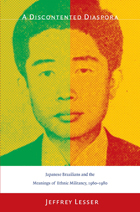
Lesser draws on a wide range of sources, including films, oral histories, wanted posters, advertisements, newspapers, photographs, police reports, government records, and diplomatic correspondence. He focuses on two particular cultural arenas—erotic cinema and political militancy—which highlight the ways that Japanese Brazilians imagined themselves to be Brazilian. As he explains, young Nikkei were sure that their participation in these two realms would be recognized for its Brazilianness. They were mistaken. Whether joining banned political movements, training as guerrilla fighters, or acting in erotic films, the subjects of A Discontented Diaspora militantly asserted their Brazilianness only to find that doing so reinforced their minority status.
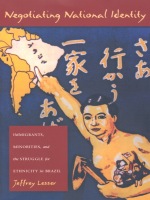
Employing a cross-cultural approach, Lesser examines a variety of acculturating responses by minority groups, from insisting on their own whiteness to becoming ultra-nationalists and even entering secret societies that insisted Japan had won World War II. He discusses how various minority groups engaged in similar, and successful, strategies of integration even as they faced immense discrimination and prejudice. Some believed that their ethnic heritage was too high a price to pay for the “privilege” of being white and created alternative categories for themselves, such as Syrian-Lebanese, Japanese-Brazilian, and so on. By giving voice to the role ethnic minorities have played in weaving a broader definition of national identity, this book challenges the notion that elite discourse is hegemonic and provides the first comprehensive look at Brazilian worlds often ignored by scholars.
Based on extensive research, Negotiating National Identity will be valuable to scholars and students in Brazilian and Latin American studies, as well as those in the fields of immigrant history, ethnic studies, and race relations.
2023 Honorable Mention, Brazil Section Humanities Book Prize, Latin American Studies Association (LASA)
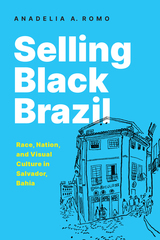
This book explores visual portrayals of blackness in Brazil to reveal the integral role of visual culture in crafting race and nation across Latin America.
In the early twentieth century, Brazil shifted from a nation intent on whitening its population to one billing itself as a racial democracy. Anadelia Romo shows that this shift centered in Salvador, Bahia, where throughout the 1950s, modernist artists and intellectuals forged critical alliances with Afro-Brazilian religious communities of Candomblé to promote their culture and their city. These efforts combined with a growing promotion of tourism to transform what had been one of the busiest slaving depots in the Americas into a popular tourist enclave celebrated for its rich Afro-Brazilian culture. Vibrant illustrations and texts by the likes of Jorge Amado, Pierre Verger, and others contributed to a distinctive iconography of the city, with Afro-Bahians at its center. But these optimistic visions of inclusion, Romo reveals, concealed deep racial inequalities. Illustrating how these visual archetypes laid the foundation for Salvador’s modern racial landscape, this book unveils the ways ethnic and racial populations have been both included and excluded not only in Brazil but in Latin America as a whole.
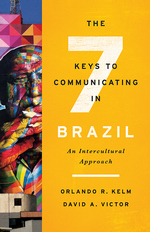
The key to professional success in Brazil is understanding Brazilians. But how do you understand an unfamiliar culture? Seasoned cross-cultural trainers Orlando R. Kelm and David A. Victor use Victor’s groundbreaking approach of evaluating a culture’s language, environment, social organization, context, authority, nonverbal communication, and time conception to provide a framework for understanding Brazilians and show effective strategies to overcome these communication barriers. The method, referred to as the LESCANT approach makes you the expert evaluator of the culture and helps you easily navigate hurdles that can challenge business relationships.
Each chapter of The Seven Keys to Communicating in Brazil employs memorable anecdotes, business cases on each topic from business professionals, and photographs to address key topics. The authors demonstrate how to evaluate the cultural differences between Brazil and North America and include examples of common communication mistakes. Engaging and accessible, the book helps North Americans master the nuances of the Brazilian language and achieve a real experience of the Brasil dos brasileiros.
READERS
Browse our collection.
PUBLISHERS
See BiblioVault's publisher services.
STUDENT SERVICES
Files for college accessibility offices.
RECENTLY PUBLISHED





UChicago Accessibility Resources
home | accessibility | search | about | contact us
BiblioVault ® 2001 - 2025
The University of Chicago Press