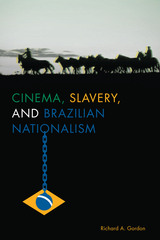
By Richard A. Gordon
A unique contribution to film studies, Richard Gordon’s Cinema, Slavery, and Brazilian Nationalism is the first full-length book on Brazilian films about slavery. By studying Brazilian films released between 1976 and 2005, Gordon examines how the films both define the national community and influence viewer understandings of Brazilianness. Though the films he examines span decades, they all communicate their revised version of Brazilian national identity through a cinematic strategy with a dual aim: to upset ingrained ways of thinking about Brazil and to persuade those who watch the films to accept a new way of understanding their national community.
By examining patterns in this heterogeneous group of films, Gordon proposes a new way of delineating how these films attempt to communicate with and change the minds of audience members. Gordon outlines five key aspects that each film incorporates, which describe their shared formula for and role in constructing social identity. These elements include the ways in which the films attempt to create links between the past and the viewers’ present and their methods of encouraging viewers to identify with their protagonists, who are often cast as a prototype for the nation. By aligning themselves with this figure, viewers arrive at a definition of their national identity that, while Afrocentric, also promotes racial and ethnic inclusiveness. Gordon’s innovative analysis transcends the context of his work, and his conclusions can be applied to questions of national identity and film across cultures.