
 A SCHOLARLY BOOK REPOSITORY
"An original, sensitively told story in which the perspectives of the child are carefully remembered. . . . Bailey's book speaks, with gentle eloquence, not only to those who remember being boys, but to everyone who would seek to protect children from the hurts and ravagings that ordinary life can inflict, to say nothing of war." —Richard Montague, Newsday
"No doubt Tony Bailey owed America something for its hospitality during those anxious years, and with this book he has amply repaid the debt." —Joseph McLellan, Washington Post
"An exquisitely controlled, quietly amusing and moving story." —Publishers Weekly
"As tender as it is truthful, and as amusing as it is unpretentious." —John Russell, New York Times Book Review
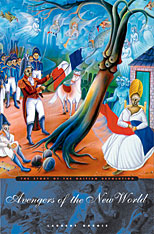
The first and only successful slave revolution in the Americas began in 1791 when thousands of brutally exploited slaves rose up against their masters on Saint-Domingue, the most profitable colony in the eighteenth-century Atlantic world. Within a few years, the slave insurgents forced the French administrators of the colony to emancipate them, a decision ratified by revolutionary Paris in 1794. This victory was a stunning challenge to the order of master/slave relations throughout the Americas, including the southern United States, reinforcing the most fervent hopes of slaves and the worst fears of masters.
But, peace eluded Saint-Domingue as British and Spanish forces attacked the colony. A charismatic ex-slave named Toussaint Louverture came to France’s aid, raising armies of others like himself and defeating the invaders. Ultimately Napoleon, fearing the enormous political power of Toussaint, sent a massive mission to crush him and subjugate the ex-slaves. After many battles, a decisive victory over the French secured the birth of Haiti and the permanent abolition of slavery from the land. The independence of Haiti reshaped the Atlantic world by leading to the French sale of Louisiana to the United States and the expansion of the Cuban sugar economy.
Laurent Dubois weaves the stories of slaves, free people of African descent, wealthy whites, and French administrators into an unforgettable tale of insurrection, war, heroism, and victory. He establishes the Haitian Revolution as a foundational moment in the history of democracy and human rights.
Black Nationalism in the New World combines geography, political economy, and subaltern studies in readings of noncanonical literary works, which in turn illuminate debates over African-American and West Indian culture, identity, and politics. In addition to Martin Delany’s Blake, or the Huts of America, Carr focuses on Pauline Hopkins’s Contending Forces; Crown Jewel, R. A. C. de Boissière’s novel of the Trinidadian revolt against British rule; Wilson Harris’s Guyana Quartet; the writings of the Oakland Black Panthers—particularly Huey Newton, Bobby Seale, and Eldridge Cleaver; the gay novella Just Being Guys Together; and Lionheart Gal, a collection of patois testimonials assembled by Sistren, a radical Jamaican women’s theater group active in the ‘80s.
With its comparative approach, broad historical sweep, and use of texts not well known in the United States, Black Nationalism in the New World extends the work of such theorists as Homi Bhabha, Paul Gilroy, and Nell Irwin Painter. It will be necessary reading for those interested in African American studies, Caribbean studies, cultural studies, women’s studies, and American studies.
There’s no excuse for getting lost these days—satellite maps on our computers can chart our journey in detail and electronics on our car dashboards instruct us which way to turn. But there was a time when the varied landscape of North America was largely undocumented, and expeditions like that of Lewis and Clark set out to map its expanse. As John Rennie Short argues in Cartographic Encounters, that mapping of the New World was only possible due to a unique relationship between the indigenous inhabitants and the explorers.
In this vital reinterpretation of American history, Short describes how previous accounts of the mapping of the new world have largely ignored the fundamental role played by local, indigenous guides. The exchange of information that resulted from this “cartographic encounter” allowed the native Americans to draw upon their wide knowledge of the land in the hope of gaining a better position among the settlers.
This account offers a radical new understanding of Western expansion and the mapping of the land and will be essential to scholars in cartography and American history.
This book traces the fascinating history of how and why ancient Mesoamerican objects have been collected. It begins with the pre-Hispanic antiquities that first entered European collections in the sixteenth century as gifts or seizures, continues through the rise of systematic collecting in Europe and the Americas during the nineteenth and twentieth centuries, and ends in 1940—the start of Europe’s art market collapse at the outbreak of World War II and the coinciding genesis of the large-scale art market for pre-Hispanic antiquities in the United States.
Drawing upon archival resources and international museum collections, the contributors analyze the ways shifting patterns of collecting and taste—including how pre-Hispanic objects changed from being viewed as anthropological and scientific curiosities to collectible artworks—have shaped modern academic disciplines as well as public, private, institutional, and nationalistic attitudes toward Mesoamerican art. As many nations across the world demand the return of their cultural patrimony and ancestral heritage, it is essential to examine the historical processes, events, and actors that initially removed so many objects from their countries of origin.
Winner, Oscar G. Brockett Book Prize in Dance Research, 2014
Honorable Mention, Sally Banes Publication Prize, American Society for Theatre Research, 2014
de la Torre Bueno® Special Citation, Society of Dance History Scholars, 2013
From Christopher Columbus to “first anthropologist” Friar Bernardino de Sahagún, fifteenth- and sixteenth-century explorers, conquistadors, clerics, scientists, and travelers wrote about the “Indian” dances they encountered throughout the New World. This was especially true of Spanish missionaries who intensively studied and documented native dances in an attempt to identify and eradicate the “idolatrous” behaviors of the Aztec, the largest indigenous empire in Mesoamerica at the time of its European discovery.
Dancing the New World traces the transformation of the Aztec empire into a Spanish colony through written and visual representations of dance in colonial discourse—the vast constellation of chronicles, histories, letters, and travel books by Europeans in and about the New World. Scolieri analyzes how the chroniclers used the Indian dancing body to represent their own experiences of wonder and terror in the New World, as well as to justify, lament, and/or deny their role in its political, spiritual, and physical conquest. He also reveals that Spaniards and Aztecs shared an understanding that dance played an important role in the formation, maintenance, and representation of imperial power, and describes how Spaniards compelled Indians to perform dances that dramatized their own conquest, thereby transforming them into colonial subjects. Scolieri’s pathfinding analysis of the vast colonial “dance archive” conclusively demonstrates that dance played a crucial role in one of the defining moments in modern history—the European colonization of the Americas.

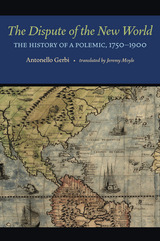
Translated in 1973, The Dispute of the New World is the definitive study of this debate. Antonello Gerbi scrutinizes each contribution to the debate, unravels the complex arguments, and reveals their inner motivations. As the story of the polemic unfolds, moving through many disciplines that include biology, economics, anthropology, theology, geophysics, and poetry, it becomes clear that the subject at issue is nothing less than the totality of the Old World versus the New, and how each viewed the other at a vital turning point in history.
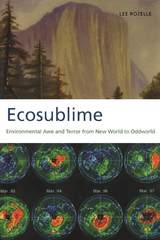
Lee Rozelle probes the metaphor of environmental catastrophe in American literature of the last 150 years. In each instance, Rozelle finds evidence that the ecosublime--nature experienced as an instance of wonder and fear--profoundly reflects spiritual and political responses to the natural world, America’s increasingly anti-ecological trajectory, and the ascendance of a post-natural landscape.
In the 19th century, Rozelle argues, Isabella Bird and Edgar Allan Poe represented the western wilderness as culturally constructed and idealized landscapes. Gardens, forests, and frontiers are conceptual frameworks that either misrepresent or uphold ecological space. Modernists like Nathanael West and William Carlos Williams, on the other hand, portray urban space as either wastelands or mythical urban gardens. A chapter on Charles W. Chesnutt and Rebecca Harding Davis analyzes a new breed of literary eco-advocate, educating and shocking mainstream readers through depictions of ecological disaster. A later chapter probes the writings of Edward Abbey and the Unabomber Manifesto to delve into the sublime dimensions of environmental activism, monkey-wrenching, and eco-terrorism.
Today, political leaders and candidates for office must campaign in a multimedia world through traditional forums—newspapers, radio, and television—as well as new digital media, particularly social media. Electoral Campaigns, Media, and the New World of Digital Politics chronicles how Twitter, Facebook, Reddit, email, and memes are used successfully and unsuccessfully to influence elections. Each of these platforms have different affordances and reach various audiences in different ways. Campaigns often have to wage different campaigns on each of these mediums. In some instances, they are crucial in altering coverage in the mainstream media. In others, digital media remains underutilized and undeveloped. As has always been the case in politics, outcomes that depend on economic and social conditions often dictate people’s readiness for certain messages. However, the method and content of those messages has changed with great consequences for the health and future of democracy.
This book answers several questions: How do candidates/parties reach audiences that are preoccupied, inattentive, amorphous, and bombarded with so many other messages? How do they cope with the speed of media reporting in a continuous news cycle that demands instantaneous responses? How has media fragmentation altered the campaign styles and content of campaign communication, and general campaign discourse? Finally and most critically, what does this mean for how democracies function?

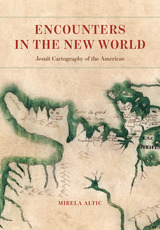
In 1540, in the wake of the tumult brought on by the Protestant Reformation, Saint Ignatius of Loyola founded the Society of Jesus, also known as the Jesuits. The Society’s goal was to revitalize the faith of Catholics and to evangelize to non-Catholics through charity, education, and missionary work. By the end of the century, Jesuit missionaries were sent all over the world, including to South America. In addition to performing missionary and humanitarian work, Jesuits also served as cartographers and explorers under the auspices of the Spanish, Portuguese, and French crowns as they ventured into remote areas to find and evangelize to native populations.
In Encounters in the New World, Mirela Altic analyzes more than 150 of their maps, most of which have never previously been published. She traces the Jesuit contribution to mapping and mapmaking from their arrival in the New World into the post-suppression period, placing it in the context of their worldwide undertakings in the fields of science and art. Altic’s analysis also shows the incorporation of indigenous knowledge into the Jesuit maps, effectively making them an expression of cross-cultural communication—even as they were tools of colonial expansion. This ambiguity, she reveals, reflects the complex relationship between missions, knowledge, and empire. Far more than just a physical survey of unknown space, Jesuit mapping of the New World was in fact the most important link to enable an exchange of ideas and cultural concepts between the Old World and the New.

In 1585, the British painter and explorer John White created images of Carolina Algonquian Indians. These images were collected and engraved in 1590 by the Flemish publisher and printmaker Theodor de Bry and were reproduced widely, establishing the visual prototype of North American Indians for European and Euro-American readers.
In this innovative analysis, Michael Gaudio explains how popular engravings of Native American Indians defined the nature of Western civilization by producing an image of its “savage other.” Going beyond the notion of the “savage” as an intellectual and ideological construct, Gaudio examines how the tools, materials, and techniques of copperplate engraving shaped Western responses to indigenous peoples. Engraving the Savage demonstrates that the early visual critics of the engravings attempted-without complete success-to open a comfortable space between their own “civil” image-making practices and the “savage” practices of Native Americans-such as tattooing, bodily ornamentation, picture-writing, and idol worship. The real significance of these ethnographic engravings, he contends, lies in the traces they leave of a struggle to create meaning from the image of the American Indian.
The visual culture of engraving and what it shows, Gaudio reasons, is critical to grasping how America was first understood in the European imagination. His interpretations of de Bry’s engravings describe a deeply ambivalent pictorial space in between civil and savage-a space in which these two organizing concepts of Western culture are revealed in their making.
Michael Gaudio is assistant professor of art history at the University of Minnesota.
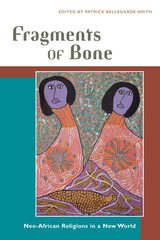
Contributors: Osei-Mensah Aborampah, Niyi Afolabi, Patrick Bellegarde-Smith, Randy P. Conner, T. J. Desch-Obi, Ina Johanna Fandrich, Kean Gibson, Marilyn Houlberg, Nancy B. Mikelsons, Roberto Nodal, Rafael Ocasio, Miguel "Willie" Ramos, and Denise Ferreira da Silva
Good Money, Part I: The New World includes seven of Hayek's articles from the 1920s that were written largely in reaction to the work of Irving Fisher and W. C. Mitchell. Hayek encountered Fisher's work on the quantity theory of money and Mitchell's studies on business cycles during a U.S. visit in 1923-24. These articles attack the idea that price stabilization was consistent with the stabilization of foreign exchange and foreshadow Hayek's general critique that the whole of an economy is not simply the sum of its parts.
Good Money, Part II: The Standard offers five more of Hayek's articles that advance his ideas about money. In these essays, Hayek investigates the consequences of the "predicament of composition." This principle works on the premise that the entire society cannot simultaneously increase liquidity by selling property or services for cash. This analysis led Hayek to make what was perhaps his most controversial proposal: that governments should be denied a monopoly on the coining of money.
Taken together, these volumes present a comprehensive chronicle of Hayek's writings on monetary policy and offer readers an invaluable reference to some of his most profound thoughts about money.
"Each new addition to The Collected Works of F. A. Hayek, the University of Chicago's painstaking series of reissues and collections, is a gem."— Liberty on Volume IX of The Collected Works of F. A. Hayek
"Intellectually [Hayek] towers like a giant oak in a forest of saplings."—Chicago Tribune
"One of the great thinkers of our age who . . . revolutionized the world's intellectual and political life."—Former President George Herbert Walker Bush
Beginning in the last third of the twentieth century, Australian literary and cultural studies underwent a profound transformation to become an important testing ground of new ideas and theories. How do Australian cultural products project a sense of the nation today? How do Australian writers, artists, and film directors imagine the Australian heritage and configure its place in a larger world that extends beyond Australia's shores?
Ranging from the country's colonial beginnings to its more globally oriented present, the nineteen essays by distinguished scholars working on the cutting edge of the field present a multi-faceted view of the vast land down under. A central theme is the relation of cultural products to nature and history. Issues explored include problems of race and gender, colonialism and postcolonialism, individual and national identity, subjective experience and international connections. Among others, the essays treat major authors such as Peter Carey, David Malouf, and Judith Wright.
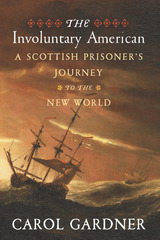
In the winter of 1650–51, one hundred fifty ragged and hungry Scottish prisoners of war arrived at Massachusetts Bay Colony, where they were sold as indentured laborers for 20 to 30 pounds each. Among them was Thomas Doughty, a common foot soldier who had survived the Battle of Dunbar, a forced marched of 100 miles without food or water, imprisonment in Durham Cathedral, and a difficult Atlantic crossing. An ordinary individual who experienced extraordinary events, Doughty was among some 420 Scottish soldiers who were captured during the War of the Three Kingdoms, transported to America, and sold between 1650 and 1651. Their experiences offer a fresh perspective on seventeenth-century life.
The Involuntary American: A Scottish Prisoner’s Journey to the New World by Carol Gardner describes Doughty’s life as a soldier, prisoner of war, exile, servant, lumberman, miller, and ultimately free landowner. It follows him and his peers through critical events: the apex of the Little Ice Age, the War of the Three Kingdoms, the colonization of New England, the burgeoning transatlantic trade in servants and slaves, King Philip’s and King William’s wars, and the Salem witch crisis. Firstperson accounts of individuals who lived through those events—Scottish, English, Puritan, Native American, wealthy, poor, working class, educated or not— provide rich period detail and a variety of perspectives.
The Involuntary American demonstrates how even individuals of humble circumstances were swept into the maelstrom of the First Global Age. It expands our understanding of immigration to the colonies, colonial servitude, the linkages and tensions between Europe, Massachusetts Bay, and America’s northeastern frontier, and of New England society in the early colonial period.
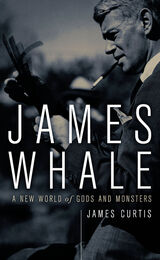
The definitive biography of this innovative and influential director
James Whale directed some of the most stylish movies of the 1930s, but he was most successful in a genre he virtually invented. Most famously in Frankenstein, but also in The Invisible Man and The Bride of Frankenstein, Whale created a new type of horror film—sophisticated, tragic, and morbidly humorous.
Whale made grim war dramas, light comedy, adventure, mystery, and even a movie version of the musical Show Boat. However, his career faltered and, being openly gay, he found work increasingly hard to get. He quit his film work just ten years after the triumph of Frankenstein, and died as a result of suicide. James Curtis has written the definitive life of James Whale, taking him from poverty in rural England to the squalor of a German prison camp, to the excitement of London’s West End, and ultimately to Hollywood, where he profoundly influenced several generations of filmmakers.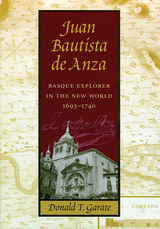
The first biography of an eighteenth-century Basque immigrant who became a silver miner, a cattle rancher, and commander of the cavalry in Sonora, Mexico. The name of Juan Bautista de Anza the younger is a fairly familiar one in the contemporary Southwest because of the various streets, schools, and other places that bear his name. Few people, however, are familiar with his father, the elder Juan Bautista de Anza, whose activities were crucial to the survival of the tenuous and far-flung settlements of Spain’s northernmost colonial frontier. For this first comprehensive biography of the elder Anza, Donald T. Garate spent more than ten years researching archives in Spain and the Americas. The result is a lively picture of the Spanish borderlands and the hardy, ambitious colonists who peopled them.
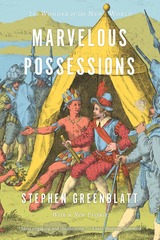
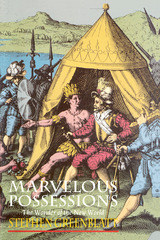
In a series of innovative readings of travel narratives, judicial documents, and official reports, Stephen Greenblatt shows that the experience of the marvelous, central to both art and philosophy, was cunningly yoked by Columbus and others to the service of colonial appropriation. He argues that the traditional symbolic actions and legal rituals through which European sovereignty was asserted were strained to the breaking point by the unprecedented nature of the discovery of the New World. But the book also shows that the experience of the marvelous is not necessarily an agent of empire: in writers as different as Herodotus, Jean de Léry, and Montaigne—and notably in Mandeville's Travels, the most popular travel book of the Middle Ages—wonder is a sign of a remarkably tolerant recognition of cultural difference.
Marvelous Possession is not only a collection of the odd and exotic through which Stephen Greenblatt powerfully conveys a sense of the marvelous, but also a highly original extension of his thinking on a subject that has occupied him throughout his career. The book reaches back to the ancient Greeks and forward to the present to ask how it is possible, in a time of disorientation, hatred of the other, and possessiveness, to keep the capacity for wonder from being poisoned?
"A marvellous book. It is also a compelling and a powerful one. Nothing so original has ever been written on European responses to 'The wonder of the New World.'"—Anthony Pagden, Times Literary Supplement
"By far the most intellectually gripping and penetrating discussion of the relationship between intruders and natives is provided by Stephen Greenblatt's Marvelous Possessions."—Simon Schama, The New Republic
"For the most engaging and illuminating perspective of all, read Marvelous Possessions."—Laura Shapiro, Newsweek
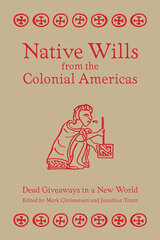
Native Wills from the Colonial Americas showcases new testamentary sources from the sixteenth to the eighteenth centuries. It provides readers with translations and analyses of wills written in Spanish, Nahuatl, Yucatec Maya, K’iche’ Maya, Mixtec, and Wampanoag.
Divided into three thematic sections, the book provides insights and details that further our understanding of indigenous life in the Americas under colonial rule. Part One employs testaments to highlight the women of Native America and the ways their lives frequently challenged prescribed gender roles and statuses. Part Two uses testaments to illustrate the strategies of the elite in both negotiating and maintaining their power in a colonial, Spanish world. Part Three contributes to our understanding of the individual and collective nature of death by extracting from wills the importance of conversion, kinship, and societal ties in the colonial Americas. Capturing individual voices during dramatic periods of change, the documents presented here help us understand how cultures both adapt and persist.
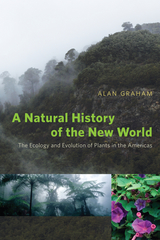
The paleoecological history of the Americas is as complex as the region is broad: stretching from the Arctic Circle to Tierra del Fuego, the New World features some of the most extraordinary vegetation on the planet. But until now it has lacked a complete natural history. Alan Graham remedies that with A Natural History of the New World. With plants as his scientific muse, Graham traces the evolution of ecosystems, beginning in the Late Cretaceous period (about 100 million years ago) and ending in the present, charting their responses to changes in geology and climate.
By highlighting plant communities’ roles in the environmental history of the Americas, Graham offers an overdue balance to natural histories that focus exclusively on animals. Plants are important in evolution’s splendid drama. Not only are they conspicuous and conveniently stationary components of the Earth’s ecosystems, but their extensive fossil record allows for a thorough reconstruction of the planet’s paleoenvironments. What’s more, plants provide oxygen, function as food and fuel, and provide habitat and shelter; in short, theirs is a history that can speak to many other areas of evolution.
A Natural History of the New World is an ambitious and unprecedented synthesis written by one of the world’s leading scholars of botany and geology.
Initial chapters are devoted to the writings of Columbus, Vespucci, Cortés, Verrazzano, and others. The second portion of the book concerns the Historia general y natural de las Indias of Gonzalo Fernández de Oviedo, a work commissioned by Charles V of Spain in 1532 but not published in its entirety until the 1850s. Antonello Gerbi contends that Oviedo, a Spanish administrator who lived in Santo Domingo, has been unjustly neglected as a historian. Gerbi shows that Oviedo was a major authority on the culture, history, and conquest of the New World.

“A great poem of this end of our century. It is masterfully structured in recurring themes and voices which build on and off each other. Gardinier is above all a poet whose language and images are completely integrated so that in Keats's words, every rift is laden with ore. I found this a thrilling poem to read.” --Adrienne Rich
According to architect Tay Kheng Soon, the time has come to change and build a new world. The feeling has impelled him to write this book, bringing together memoir and writings on identity, landscape and belonging, and on architecture and urbanism. Born in British-ruled Singapore, Soon was deeply engaged in the debates about building a new world that attended the end of colonialism. His focus, but far from his only concern, was Singapore's built environment—and its spiritual one—since the early 1960s. A New World in the Making is a must-read reflection on tropical Asia, on architecture and urbanism, and on looking ahead to the always urgent task of building a new world.

The New World of Southeast Asia was first published in 1949. Minnesota Archive Editions uses digital technology to make long-unavailable books once again accessible, and are published unaltered from the original University of Minnesota Press editions.
Old Growth in a New World untangles the complexities of the old growth concept and the parallel complexity of old-growth policy and management. It brings together more than two dozen contributors—ecologists, economists, sociologists, managers, historians, silviculturists, environmentalists, timber producers, and philosophers—to offer a broad suite of perspectives on changes that have occurred in the valuing and management of old-growth forests in the Pacific Northwest over the past thirty years. The book
• introduces the issues and history of old-growth values and conservation in the Pacific Northwest;
• explores old growth through the ideas of leading ecologists and social scientists;
• addresses the implications for the future management of old-growth forests and considers how evolving science and social knowledge might be used to increase conservation effectiveness.
By confronting the complexity of the old-growth concept and associated policy and management challenges, Old Growth in a New World encourages productive discussion on the future of old growth in the Pacific Northwest and offers options for more effective approaches to conserving forest biodiversity.
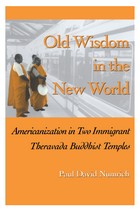
Paul David Numrich's socio-historical analysis highlights a number of classic Americanization themes of establishment, growth, and adaptation. These have surfaced, the author shows, in debates over the retention of Old World culture and language, the "problem" of the second generation, and the role of the laity in religious institutions. Going beyond such familiar themes, Numrich also uncovers the intriguing phenomenon of ethnically defined "parallel congregations" in these temples, as he reveals the ways in which Asian-immigrant Buddhists and American converts pursue substantively different expressions of the Theravada tradition under the direction of a shared clerical leadership, the resident monks.
In the author's view, these Theravada case studies underline the complexity of the present Americanization process. By examining the intersection of two important trends—the steady growth of Asian immigration and an increasing indigenous interest in new religious movements, especially those of Asian origin—this book points to some fascinating new directions for the study of religious and cultural diversity in the United States.
The Author: Paul David Numrich is a research associate in the Religion in Urban America Program at the University of Illinois at Chicago.
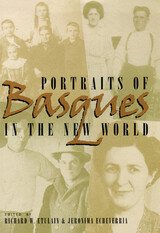
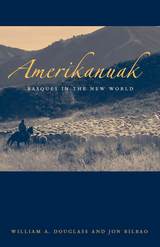
A collection of new essays on notable historic and contemporary Basques of America's Far West that offers a perceptive and lively examination of the lives of one of the West's most resilient and successful ethnic minorities. It is essential reading for anyone interested in the Basque people or those interested in the process of immigration and assimilation: these profiles illustrate how America's Basque immigrants have achieved success in mainstream society while retaining strong ties to their ancient Old World culture.
The concept of "American" literature is not the exclusive province of any one nation. Thanks to the historical circumstances that governed the European conquest and settlement of the Americas, we can and should approach the writings of English and French Canada, the United States, Spanish America, and Brazil as a cohesive group of American literature, worthy of study without constant reference to European texts. Now, Rediscovering the New World makes a timely addition to this expanding field on Inter-American scholarship that should help lead tothe formation of a new canon.
This adventurous and ambitious work begins with an examination of Pre-Columbian literature (and shows that his powerful tradition remains alive and well in the twentieth century), then confronts the narratives of discovery and conquest, the New World epic, identity as the Ur-theme of American literature, miscegenation as another integral theme, and regionalism as a shaping force. Other striking these and juxtapositions include a comparison of Henry James and Machado de Assis as the first two great New World novelists, modernism as both a distinct literary movement and an amorphous body of aesthetic principles, and the conflict between "civilization" and "barbarism."
More in the exploratory spirit of the French Canadian voyageur than in the spirit of the conquistador, Rediscovering the New World is the first scholarly work in English to integrate an international set of American literary cultures. It should inspire other explorers as the field of Inter-American literary relations continues to evolve.
In seventeenth- and eighteenth-century England and America, established society branded as "enthusiasts" those unconventional but religiously devout extremists who stepped across orthodox lines and claimed an intimate, emotional relationship with God. John of Leyden, Anne Hutchinson, William Penn, and George Whitefield all shared the label "enthusiast." This book is a study of the enthusiasts who migrated to the American colonies as well as those who emergedthere--from Pilgrim Fathers to pietistic Moravians, from the martyr-bound Quakers to heaven-bent revivalists of the 1740s.
This study of the role of religious enthusiasm in early America tells us much about English attitudes toward religion in the New World and about the vital part it played in the lives of the colonists. Both friends and enemies of enthusiasm revealed in their arguments and actions their own conceptions of the America they inhabited. Was religion in America to be an extension of Old World institutions or truly a product of the New World? Would enthusiasm undermine civilized institutions, not only established churches, but government, social structure, morality, and the economy as well? Calling enthusiasts first heretics, then subversives and conspirators, conventional society sought ways to suppress or banish them. By 1776 enthusiasm had spilled over into politics and added a radical dimension to the revolutionary struggle.
This timely exploration of the effect of radical religion on the course of early American history provides essential historical perspective to the current interest in popular religion.
In the course of this debate, many Spaniards were inspired to think more deeply on their own ethnic ancestry and identity, as Spanish treatment of the New World natives awakened the slumbering memory of Roman treatment of the Iberian tribes whom modern Spaniards were now embracing as their truest ancestors. At the same time, growing awareness of the cultural practices--especially the religious rituals--of the American natives framed a new perspective on both the pre-Christian ancestors of modern Europeans and even on the survival of "pagan" customs among modern Europeans themselves. In this incisive study, David A. Lupher addresses the increasingly debated question of the impact the discovery of the New World had upon Europeans' perceptions of their identity and place in history.
Romans in a New World holds much to interest both classicists and students of the history and culture of early modern Europe--especially, though not exclusively, historians of Spain. David A. Lupher's concern with the ideology of imperialism and colonization and with cross-cultural negotiations will be useful to students of cultural studies, as well.
David A. Lupher is Professor of Classics, University of Puget Sound.
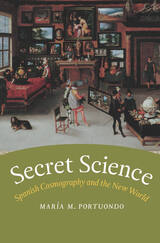
The discovery of the New World raised many questions for early modern scientists: What did these lands contain? Where did they lie in relation to Europe? Who lived there, and what were their inhabitants like? Imperial expansion necessitated changes in the way scientific knowledge was gathered, and Spanish cosmographers in particular were charged with turning their observations of the New World into a body of knowledge that could be used for governing the largest empire the world had ever known.
As María M. Portuondo here shows, this cosmographic knowledge had considerable strategic, defensive, and monetary value that royal scientists were charged with safeguarding from foreign and internal enemies. Cosmography was thus a secret science, but despite the limited dissemination of this body of knowledge, royal cosmographers applied alternative epistemologies and new methodologies that changed the discipline, and, in the process, how Europeans understood the natural world.
Spain and Portugal in the New World, 1492-1700 was first published in 1984. Minnesota Archive Editions uses digital technology to make long-unavailable books once again accessible, and are published unaltered from the original University of Minnesota Press editions.
Spanish and Portuguese expansion substantially altered the social, political, and economic contours of the modern world. In his book, Lyle McAlister provides a narrative and interpretive history of the exploration and settlement of the Americas by Spain and Portugal.
McAlister divides this period (and the book) into three parts. First, he describes the formation of Old World societies with particular attention to those features that influenced the directions and forms of overseas expansion. Second, he traces the dynamic processes of conquest and colonization that between 1492 and about 1570 firmly established Spanish and Portuguese dominion in the New World. The third part deals with colonial growth and consolidation down to about 1700. McAlister's main themes are: the post-conquest territorial expansion that established the limits of what later came to be called Latin America, the emergence of distinctively Spanish and Portuguese American societies and economies, the formation of systems of imperial control and exploitation, and the ways in which conflicts between imperial and American interests were reconciled.
This comprehensive history, with its extensive bibliographic essay and attention to historiographic issues, will be a standard reference for students and scholars of the period.
In this bold reinterpretation of American culture, Philip Fisher describes generational life as a series of renewed acts of immigration into a new world. Along with the actual flood of immigrants, technological change brings about an immigration of objects and systems, ways of life and techniques for the distribution of ideas.
A provocative new way of accounting for the spirit of literary tradition, Still the New World makes a persuasive argument against the reduction of literature to identity questions of race, gender, and ethnicity. Ranging from roughly 1850 to 1940, when, Fisher argues, the American cultural and economic system was set in place, the book reconsiders key works in the American canon--from Emerson, Whitman, and Melville, to Twain, James, Howells, Dos Passos, and Nathanael West, with insights into such artists as Winslow Homer and Thomas Eakins. With striking clarity, Fisher shows how these artists created and recreated a democratic poetics marked by a rivalry between abstraction, regionalism, and varieties of realism--and in doing so, defined American culture as an ongoing process of creative destruction.
“Fascinating and instructive…King’s philosophy, speaking to us through the written word, may turn out to constitute his most enduring legacy.”
—Annette Gordon-Reed, New York Review of Books
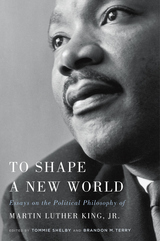
Martin Luther King, Jr., is one of America’s most revered figures, yet despite his mythic stature, the significance of his political thought remains underappreciated. In this indispensable reappraisal, leading scholars—including Cornel West, Martha Nussbaum, and Danielle Allen—consider the substance of his lesser known writings on racism, economic inequality, virtue ethics, just-war theory, reparations, voting rights, civil disobedience, and social justice and find in them an array of compelling challenges to some of the most pressing political dilemmas of our time.
“King was not simply a compelling speaker, but a deeply philosophical intellectual…We still have much to learn from him.”
—Quartz
“A compelling work of philosophy, all the more so because it treats King seriously without inoculating him from the kind of critique important to both his theory and practice.”
—Los Angeles Review of Books
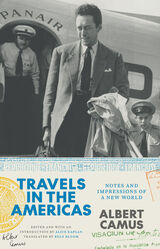
In March 1946, the young Albert Camus crossed from Le Havre to New York. Though he was virtually unknown to American audiences at the time, all that was about to change—The Stranger, his first book translated into English, would soon make him a literary star. By 1949, when he set out on a tour of South America, Camus was an international celebrity. Camus’s journals offer an intimate glimpse into his daily life during these eventful years and showcase his thinking at its most personal—a form of observational writing that the French call choses vues (things seen).
Camus’s journals from these travels record his impressions, frustrations, joys, and longings. Here are his unguarded first impressions of his surroundings and his encounters with publishers, critics, and members of the New York intelligentsia. Long unavailable in English, the journals have now been expertly retranslated by Ryan Bloom, with a new introduction by Alice Kaplan. Bloom’s translation captures the informal, sketch-like quality of Camus’s observations—by turns ironic, bitter, cutting, and melancholy—and the quick notes he must have taken after exhausting days of travel and lecturing. Bloom and Kaplan’s notes and annotations allow readers to walk beside the existentialist thinker as he experiences changes in his own life and the world around him, all in his inimitable style.
READERS
Browse our collection.
PUBLISHERS
See BiblioVault's publisher services.
STUDENT SERVICES
Files for college accessibility offices.
RECENTLY PUBLISHED


UChicago Accessibility Resources
home | accessibility | search | about | contact us
BiblioVault ® 2001 - 2024
The University of Chicago Press