
 A SCHOLARLY BOOK REPOSITORY
In this book, Koh fully explains the many new concepts of international law that arose from UNCLOS III, such as the Exclusive Economic Zone, Archipelagic State, Straits Used for International Navigation, Transit Passage, Archipelagic Sealane Passage, and the Common Heritage of Mankind. He also discusses current threats to maritime security and explains the intricacies of the disputes in the South China Sea. Koh asks What can be learned from the success of UNCLOS? How can we build on that success and manage the new tensions that arise in the Law of the Sea? There is no better guide to this aspect of international law than Koh.
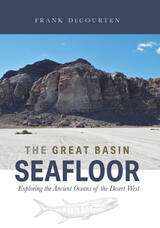
Written for a nontechnical audience, this book interprets the rock record left by more than 500 million years of oceanic activity, when mud and sand accumulated and solidified to produce today’s Great Basin across parts of modern Utah, Nevada, and California. DeCourten deciphers clues within exposed slopes and canyons to reconstruct the vanished seafloor and its volcanic events and examines fossils to reveal once-thriving ancient marine communities. Supplemental material is available online to serve as a field guide for readers wishing to explore this ancient ocean themselves as they travel through the region.

Beneath the surface of the seas and oceans lies a territory as important for human societies as the exposed land and the airspace above them: the seafloor. Our daily life is inextricably linked to the seafloor and its resources, from global telecommunications infrastructure to offshore oil and gas extraction to strategic mineral mining.
By focusing on France, a country with an underwater territory seventeen times larger than its emerged lands, New Deep Territories explains how the seafloor emerged as a territory during the second half of the twentieth century. Beatriz Martinez-Rius traces the evolution of the country’s seafloor exploration and the motivations that fueled it from the aftermath of World War I to the late 1970s. In the early 1960s, the seafloor, instead of colonial territories, came to be seen as a source of natural resources. The French government, corporations such as oil companies, and scientists all imagined future uses of the seafloor, and these ever-evolving aspirations drove the development of technologies, techniques, and scientific fields that built up the submerged territory. Government officers and industrial stakeholders massively invested in technoscientific development to prepare for a future reliant on seafloor resources, including oil, gas, and minerals, well before it was technologically possible, economically feasible, and legally acceptable to extract them. The future they envisioned did not arrive, but their investment resulted in an unprecedented understanding of the ocean’s crust. Today, once again, national governments, international organizations, and private stakeholders are turning their attention to the seafloor.
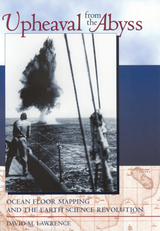
The deep oceans are the last great frontier remaining on Earth. Humans have conquered the vast wilderness of the terrestrial surface, from the searing deserts and dark forests of the tropics to the icy polar regions. Today, anyone with enough ambition and money can travel upriver into the heart of the Borneo jungle, climb Mount Everest, or spend the night at the South Pole. But the oceans beyond the continental shelves remain forbidding, beyond the reach of science, adventurism, and commerce.
Not long ago, scientists viewed the ocean floor as a vast, featureless plain, an ancient repository of detritus eroded from the surface of an unchanging Earth. Light never reached the seemingly lifeless depths. The ocean basins were only of marginal scholarly interest. This all changed with the Herculean quest to discover what lay on the world's ocean floor—a quest that inspired the continental drift-plate tectonics revolution and overturned prevailing scientific notions of how the Earth’s surface was created, rearranged, and destroyed.
Upheaval from the Abyss spans a 130-year period, beginning with the early, backbreaking efforts to map the depths during the age of sail; continuing with improvements in research methods spurred by maritime disaster and war; and culminating in the publication of the first map of the world’s ocean floor in 1977. The author brings this tale to life by weaving through it the personalities of the scientists-explorers who struggled to see the face of the deep, and reveals not only the facts of how the ocean floor was mapped, but also the human dimensions of what the scientists experienced and felt while in the process.
READERS
Browse our collection.
PUBLISHERS
See BiblioVault's publisher services.
STUDENT SERVICES
Files for college accessibility offices.
RECENTLY PUBLISHED




UChicago Accessibility Resources
home | accessibility | search | about | contact us
BiblioVault ® 2001 - 2026
The University of Chicago Press