
 A SCHOLARLY BOOK REPOSITORY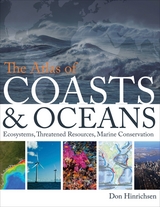
Oceans drive the world’s climate, nurture marine ecosystems full of aquatic life, and provide shipping lanes that have defined the global economy for centuries. And few realize that half of the world’s population lives in a coastal region within easy reach of one. Yet human activities such as commercial fishing, coastal real estate development, and industrial pollution have taken their toll on the seas. The first book of its kind, The Atlas of Coasts and Oceans documents the fraught relationship between humans and the earth’s largest bodies of water—and outlines the conservation steps needed to protect the marine environment for generations to come.
The Atlas offers a fascinating and often sobering account of how urbanization, climate change, offshore oil drilling, shipping routes, global tourism, and maritime conflict have had a profound impact on the world’s oceans and coasts. Combining text and images in visually engaging, thematically organized map spreads, this volume addresses the ecological, environmental, and economic importance of marine phenomena such as coral reefs, eroding shorelines, hurricanes, and fish populations—and how development threatens to destroy the ultimate source of all life on the “blue planet.” Lavishly illustrated with global and regional maps, from the Arabian Gulf to the Great Barrier Reef, from the Black Sea to the Mediterranean, and all the other major global waterways, The Atlas of Coasts and Oceans will be the definitive companion to any study of its subject for years to come.
The book explores issues ranging from urban design and land use, to resource extraction and renewable energy, to educating urbanites about the wonders of marine life. Beatley looks at how emerging practices like “community supported fisheries” and aquaponics can provide a sustainable alternative to industrial fishing practices. Other chapters delve into incentives for increasing use of wind and tidal energy as renewable options to oil and gas extraction that damages ocean life, and how the shipping industry is becoming more “green.” Additionally, urban citizens, he explains, have many opportunities to interact meaningfully with the ocean, from beach cleanups to helping scientists gather data.
While no one city “has it all figured out,” Beatley finds evidence of a changing ethic in cities around the world: a marine biodiversity census in Singapore, decreasing support for shark-finning in Hong Kong, “water plazas” in Rotterdam, a new protected area along the rocky shore of Wellington, New Zealand, “bluebelt” planning in Staten Island, and more. Ultimately he explains we must create a culture of “ocean literacy” using a variety of approaches, from building design and art installations that draw inspiration from marine forms, to encouraging citizen volunteerism related to oceans, to city-sponsored research, and support for new laws that protect marine health.
Equal parts inspiration and practical advice for urban planners, ocean activists, and policymakers, Blue Urbanism offers a comprehensive look at the challenges and great potential for urban areas to integrate ocean health into their policy and planning goals.
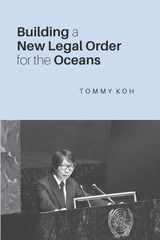
In this book, Koh fully explains the many new concepts of international law that arose from UNCLOS III, such as the Exclusive Economic Zone, Archipelagic State, Straits Used for International Navigation, Transit Passage, Archipelagic Sealane Passage, and the Common Heritage of Mankind. He also discusses current threats to maritime security and explains the intricacies of the disputes in the South China Sea. Koh asks What can be learned from the success of UNCLOS? How can we build on that success and manage the new tensions that arise in the Law of the Sea? There is no better guide to this aspect of international law than Koh.
At its core, ecosystem-based management (EBM) is about acknowledging connections. Instead of focusing on the impacts of single activities on the delivery of individual ecosystem services, EBM focuses on the array of services that we receive from marine systems, the interactive and cumulative effects of multiple human activities on these coupled ecological and social systems, and the importance of working towards common goals across sectors. Ecosystem-Based Management for the Oceans provides a conceptual framework for students and professionals who want to understand and utilize this powerful approach. And it employs case studies that draw on the experiences of EBM practitioners to demonstrate how EBM principles can be applied to real-world problems.
The book emphasizes the importance of understanding the factors that contribute to social and ecological resilience —the extent to which a system can maintain its structure, function, and identity in the face of disturbance. Utilizing the resilience framework, professionals can better predict how systems will respond to a variety of disturbances, as well as to a range of management alternatives. Ecosystem-Based Management for the Oceans presents the latest science of resilience, while it provides tools for the design and implementation of responsive EBM solutions.
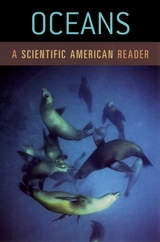
With selections chosen for their value in identifying the multiple uses of oceans, their resources, and the hurdles they face as the world’s population continues to expand and consume their resources at a staggering rate, Oceans collects more than thirty thematically arranged articles from the past decade, including recent pieces written in the wake of the 2004 tsunami. The bookfeatures articles that investigate the origins of the world’s oceans, the diversity of life in the water, the state of global fisheries, the dangers of natural disasters, and the perils oceans face, whether induced by nature or by humans.
With breadth of topics as wide as the ocean is deep, this Scientific American reader will engage general readers interested in the evolution, ecology, and conservation of the oceanic ecosystem and can be used in courses on introductory oceanography, environmental science, and marine biology.
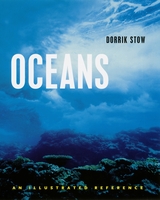
Oceans: An Illustrated Reference tells the story of this last great frontier. With hundreds of beautiful full-color photographs and explanatory diagrams, charts, and maps, Oceans combines the visual splendor of ocean life with up-to-date scientific information to provide an invaluable and fascinating resource on this vital realm. Covering all major areas of oceanographic knowledge and research, Oceans is divided into two parts. The first, "Ocean Systems," examines the physical nature of the oceans, including plate tectonics, temperature and climate, waves and tides, natural resources and much more. The second, "Ocean Life,"explores biodiversity, evolution and adaptation, marine ecosystems and complex communities, and the preservation of fragile marine environments.
Oceans also offers readers a host of tools to better understand the magnificent world of the sea. A special section of bathymetric maps-made possible by satellite observation, deep-towed surveying craft, and remotely operated submarine vessels-provides a view of the depth and texture of ocean floors around the globe, giving us a glimpse of worlds rarely seen. And throughout the book, engagingly written special features delve into specific marine environments and phenomena such as the lost Tethys Ocean, from which the Himalayas were born. Cross-references and a detailed index help readers navigate this multifaceted volume, and a glossary provides clear definitions of scientific vocabulary.
Although the oceans are vast, their resources are finite. Oceans clearly presents the future challenge to us all-that of ensuring that our common ocean heritage is duly respected, wisely managed, and carefully harnessed for the benefit of the whole planet. Lavishly illustrated and filled with current research, Oceans is a step in that direction: a rich, magnificent, and illuminating volume for anyone who has ever heard the siren song of the sea.
The concept of environmental security, drawing on the widely understood notion of international strategic interdependence (in facing, for example, threats of nuclear war or economic collapse) is gaining currency as a way of thinking about international environmental management.
In 1989, the Institute for World Economy and International Relations of the Russian Academy of Sciences and the Marine Policy Center of Woods Hole Oceanographic Institution instituted a joint project to examine environmental security as it applies to the world's oceans. The Oceans and Environmental Security is a unified expression of their findings.
The oceans, as global commons, are of central importance to issues of international environmental security. Critical problems are those that are likely to destabilize normal relations between nations and provoke international countermeasures. As such, the book focuses on seven specific concerns:
- land-based marine pollution
- North Pacific fisheries depletion
- hazardous materials transport
- nuclear contamination
- the Arctic Ocean
- the Southern Ocean and Antarctica
- the Law of the Sea
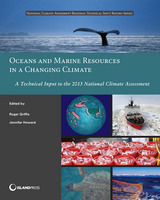
Prepared for the 2013 National Climate Assessment and a landmark study in terms of its breadth and depth of coverage, Oceans and Marine Resources in a Changing Climate is the result of a collaboration among numerous local, state, federal, and nongovernmental agencies to develop a comprehensive, state of the art look at the effects of climate change on the oceans and marine ecosystems under U.S. jurisdiction.
This book provides an assessment of scientific knowledge of the current and projected impacts of climate change and ocean acidification on the physical, chemical, and biological components and human uses of marine ecosystems under U.S. jurisdiction. It also provides assessment of the international implications for the U.S. due to climate impacts on ocean ecosystems and of efforts to prepare for and adapt to climate and acidification impacts on ocean ecosystem, including
· Climate-Driven Physical and Chemical Changes in Marine Ecosystems
· Impacts of Climate Change on Marine Organisms
· Impacts of Climate Change on Human Uses of the Ocean
· International Implications of Climate Change
· Ocean Management Challenges, Adaptation Approaches, and Opportunities in a Changing Climate
· Sustaining the Assessment of Climate Impacts on Oceans and Marine Resources
Rich in science and case studies, it examines the latest climate change impacts, scenarios, vulnerabilities, and adaptive capacity and offers decision makers and stakeholders a substantial basis from which to make informed choices that will affect the well-being of the region’s inhabitants in the decades to come.
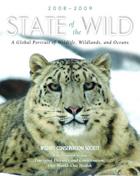
Each volume in the series combines evocative writings with a fascinating tour of conservation news highlights and vital statistics from around the world. One-third of each volume focuses on a topic of particular concern to conservationists working to protect wildlife and our last wild places. This 2008–2009 edition considers the integration of wildlife health, ecosystem health, human health, and the health of domestic animals—a “One World–One Health” approach to disease and conservation.
This focus is complemented with essays clustered into sections that address other key issues—conservation of species; conservation of wild places; people, culture, and conservation; and the art and practice of conservation. Essays cover a broad range of topics, from restoring biodiversity on the prairies to mapping the state of the oceans to the conservation impacts of lawlessness and coca cultivation in Colombia. Essay contributions come from people directly involved in on-the-ground conservation efforts and offer a unique and valuable perspective on often-overlooked topics.
State of the Wild’s accessible approach educates a wide range of audiences while at the same time presenting leading-edge scientific overviews of hot topics in conservation. Uniquely structured with magazine-like features up front, conservation news in the middle, and essays from eminent authors and experienced scientists throughout, this landmark series is an essential addition to any environmental bookshelf.
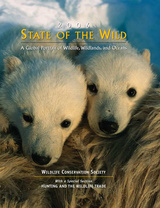
In wild places where nature thrives, humanity prospers; our well-being is inextricably linked with that of the planet's web of life. In fact, one could argue that the state of the world can be measured by the state of the wild.
But how do we gauge the state of earth's wildlife, wildlands, and oceans? State of the Wild is a new series that brings together some of the world's most renowned conservationists and writers-George Schaller, Alan Rabinowitz, Sylvia Earle, Rick Bass, Bill McKibben, Tom Lovejoy, and many others-to assess wildlife and wilderness, and to provide insights into how humans can become better stewards of the wild.
This new series combines evocative writings with a fascinating tour of news highlights and vital statistics from around the world. One-third of each volume will focus on a topic of particular concern to conservationists working to protect wildlife and our last wild places. This 2006 edition explores the impacts of hunting and the wildlife trade through a range of essays: Ted Kerasote traces the history of hunting in North America; Carl Safina, Eric Gilman, and Wallace J. Nichols quantify the toll taken by commercial fishing on seabirds, turtles, and other marine species; James Compton and Samuel K. H. Lee explore the global reach of the wildlife trade for traditional Asian medicine.
Contributors also examine other pivotal conservation issues, from the reasons why one in eight of the world's birds are endangered, to the impacts of global climate change, to the complexity of conserving seals, flamingos, zebras, and other wide-ranging species. The book's closing essay, "The Relative Wild," considers what exactly it means for a place to be "wild," where even the most remote corners of the planet have been altered by human activities.
Uniquely structured with magazine-like features up front, conservation news in the middle, and essay contributions from eminent authors and biologists throughout, this landmark series is an essential addition to any environmental bookshelf.
Although humans have long depended on oceans and aquatic ecosystems for sustenance and trade, only recently has human influence on these resources dramatically increased, transforming and undermining oceanic environments throughout the world. Marine ecosystems are in a crisis that is global in scope, rapid in pace, and colossal in scale. In The Tragedy of the Commodity, sociologists Stefano B. Longo, Rebecca Clausen, and Brett Clark explore the role human influence plays in this crisis, highlighting the social and economic forces that are at the heart of this looming ecological problem.
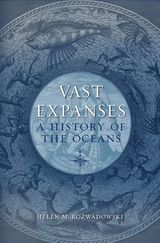
Our ancient connections with the sea have developed and multiplied through industrialization and globalization, a trajectory that runs counter to Western depictions of the ocean as a place remote from and immune to human influence. Rozwadowski argues that knowledge about the oceans—created through work and play, scientific investigation, and also through human ambitions for profiting from the sea—has played a central role in defining our relationship with this vast, trackless, and opaque place. It has helped us to exploit marine resources, control ocean space, extend imperial or national power, and attempt to refashion the sea into a more tractable arena for human activity.
But while deepening knowledge of the ocean has animated and strengthened connections between people and the world’s seas, to understand this history we must address questions of how, by whom, and why knowledge of the ocean was created and used—and how we create and use this knowledge today. Only then can we can forge a healthier relationship with our future sea.
READERS
Browse our collection.
PUBLISHERS
See BiblioVault's publisher services.
STUDENT SERVICES
Files for college accessibility offices.
RECENTLY PUBLISHED





UChicago Accessibility Resources
home | accessibility | search | about | contact us
BiblioVault ® 2001 - 2025
The University of Chicago Press