front cover of D'Albuquerque's Children
D'Albuquerque's Children
Performing Tradition in Malaysia's Portuguese Settlement
Margaret Sarkissian
University of Chicago Press, 2000
When the Portuguese seafarer Afonso de Albuquerque conquered the bustling port of Malacca in 1511, he effectively gained control of the entire South China Sea spice trade. Although their dominance lasted only 130 years, the Portuguese legacy lies at the heart of a burgeoning tourist attraction on the outskirts of the city, in which performers who believe they are the descendants of swashbuckling Portuguese conquerors encapsulate their "history" in a cultural stage show.

Using historical and ethnographic data, Margaret Sarkissian reveals that this music and dance draws on an eclectic array of influences that span the Portuguese diaspora (one song conjures up images of Lucille Ball impersonating Carmen Miranda on "I Love Lucy"). Ironically, she shows, what began as a literate tradition in the 1950s has now become an oral one so deeply rooted in Settlement life that the younger generation, like the tourists, now see it as an unbroken heritage stretching back almost 500 years. A fascinating case of "orientalism in reverse," D'Albuquerque's Children illuminates the creative ways in which one community has adapted to life in a postcolonial world.
[more]

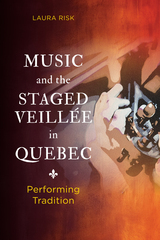
front cover of Music and the Staged Veillée in Quebec
Music and the Staged Veillée in Quebec
Performing Tradition
Laura Risk
University of Illinois Press, 2026
The story of a cultural touchstone and its impact

Fiddlers, step dancers, storytellers, traditional singers, and folklorists staged Montreal’s first veillée in 1919. All that was missing, announced one of the organizers, was a magic carpet to transport the audience into the countryside and a kiss of forgetfulness to erase the woes of modern life.

Laura Risk tells the story of the veillées and explores how these commercial performances of idealized rural life became part of Quebec’s cultural heritage. Her in-depth examinations of key performances and recordings follow traditional music and dance from the stage onto radio, records and other audio media, and television. Throughout, Risk documents how veillées redefined folklore in twentieth-century Quebec and illuminates how their distinctive framing of traditional musicians and repertoire impacts the performance and reception of the music to the present day.

Astute and evocative, Music and the Staged Veillée in Quebec reveals the music, dancing, call-and-response songs, and extramusical associations winding through century-long conversations about nation, culture, and identity in Quebec.

[more]


Send via email Share on Facebook Share on Twitter