
 A SCHOLARLY BOOK REPOSITORY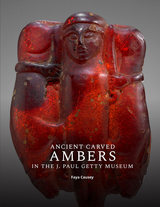
The catalogue is preceded by a general introduction to ancient amber (which was also published in 2012 as a stand-alone print volume titled Amber and the Ancient World). Through exquisite visual examples and vivid classical texts, this book examines the myths and legends woven around amber—its employment in magic and medicine, its transport and carving, and its incorporation into jewelry, amulets, and other objects of prestige. This publication highlights a group of remarkable amber carvings at the J. Paul Getty Museum.
This catalogue was first published in 2012 at museumcatalogues.getty.edu/amber/. The present online edition of this open-access publication was migrated in 2019 to www.getty.edu/publications/ambers/; it features zoomable, high-resolution photography; free PDF, EPUB, and Kindle/MOBI downloads of the book; and JPG downloads of the catalogue images.
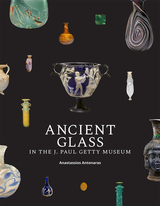
The J. Paul Getty Museum’s collection of ancient glass—astonishingly delicate, richly hued, and fancifully shaped—is among the most celebrated in the United States. Ranging from the Bronze Age to the medieval period (1500 BCE–1000 CE), the 584 objects included in this publication originated from a wide geographical area, including the Middle East, the Mediterranean, and central Europe.
This catalogue, written by acclaimed scholar Anastassios Antonaras, begins with a fascinating essay on the history of glassmaking—a highly technical art form that is still practiced similarly today—and continues with detailed and informative entries on the works. Each entry is accompanied by vivid photography. The book also includes a history of the collection, glossary of glassmaking terms, technical study, and full bibliography.
The free online edition of this open-access publication is available at getty.edu/publications/ancient-glass/ and includes 360-degree views and zoomable high-resolution photography. Also available are free PDF and EPUB downloads of the book, and JPG downloads of the main catalogue images.

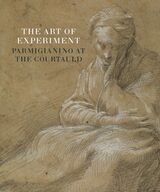
Accompanying an exhibition at London’s Courtauld Gallery, this stunning catalog presents works by the Renaissance artist Girolamo Francesco Maria Mazzola, better known as Parmigianino (1503–1540).
Fundamentally a draftsman at heart, Parmigianino drew relentlessly during his relatively short life, and around a thousand of his drawings have survived. The Courtauld’s collection comprises twenty-four sheets. In preparation for the catalog, new photography and technical examinations have been carried out on all the works, revealing two new drawings that were previously unknown, hidden underneath their historic mounts. They have also helped to better identify connections between some of the drawings and the finished paintings for which they were conceived. This stunning illustrated catalog presents the whole Courtauld collection and sheds light on an artist who approached every technique with unprecedented freedom and produced innovative works that are still admired by artists and collectors today.

From the classical encyclopedias of Pliny to famous tales such as The Travels of Marco Polo, historical travel writing has had a lasting impact, despite the fact that it was based on a curious mixture of truth, legend, and outright superstition. One foundational medieval source that expands on the ancient idea of the “wonders of the world” is the fifteenth-century French Book of the Marvels of the World, an illustrated guide to the globe filled with oddities, curiosities, and wonders—tales of fantasy and reality intended for the medieval armchair traveler. The fifty-six locales featured in the manuscript are presented in a manner that suggests authority and objectivity but are rife with stereotypes and mischaracterizations, meant to simultaneously instill a sense of wonder and fear in readers.
In The Book of Marvels, the authors explore the tradition of encyclopedias and travel writing, examining the various sources for geographic knowledge in the Middle Ages. They look closely at the manuscript copies of the French text and its complex images, delving into their origins, style, content, and meaning. Ultimately, this volume seeks to unpack how medieval white Christian Europeans saw their world and how the fear of difference—so pervasive in society today—is part of a long tradition stretching back millennia.
This volume is published to accompany an exhibition on view at the J. Paul Getty Museum at the Getty Center from June 11 to September 1, 2024, and at the Morgan Library & Museum from January 24 to May 25, 2025.
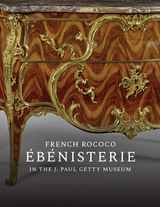
The first comprehensive catalogue of the Getty Museum’s significant collection of French Rococo ébénisterie furniture.
This catalogue focuses on French ébénisterie furniture in the Rococo style dating from 1735 to 1760. These splendid objects directly reflect the tastes of the Museum’s founder, J. Paul Getty, who started collecting in this area in 1938 and continued until his death in 1976.
The Museum’s collection is particularly rich in examples created by the most talented cabinet masters then active in Paris, including Bernard van Risenburgh II (after 1696–ca. 1766), Jacques Dubois (1694–1763), and Jean-François Oeben (1721–1763). Working for members of the French royal family and aristocracy, these craftsmen excelled at producing veneered and marquetried pieces of furniture (tables, cabinets, and chests of drawers) fashionable for their lavish surfaces, refined gilt-bronze mounts, and elaborate design. These objects were renowned throughout Europe at a time when Paris was considered the capital of good taste.
The entry on each work comprises both a curatorial section, with description and commentary, and a conservation report, with construction diagrams. An introduction by Anne-Lise Desmas traces the collection’s acquisition history, and two technical essays by Arlen Heginbotham present methodologies and findings on the analysis of gilt-bronze mounts and lacquer.
The free online edition of this open-access publication is available at www.getty.edu/publications/rococo/ and includes zoomable, high-resolution photography. Also available are free PDF, EPUB, and Kindle/MOBI downloads of the book, and JPG downloads of the main catalogue images.
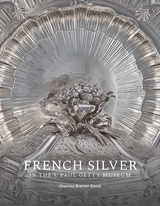
The collection of seventeenth- and eighteenth-century French silver at the J. Paul Getty Museum is of exceptional quality and state of preservation. Each piece is remarkable for its beauty, inventive form, skillful execution, illustrious provenance, and the renown of its maker. This volume is the first complete study of these exquisite objects, with more than 250 color photographs bringing into focus extraordinary details such as minuscule makers’ marks, inscriptions, and heraldic armorials.
The publication details the formation of the Museum’s collection of French silver, several pieces of which were selected by J. Paul Getty himself, and discusses the regulations of the historic Parisian guild of gold- and silversmiths that set quality controls and consumer protections. Comprehensive entries catalogue a total of thirty-three pieces with descriptions, provenance, exhibition history, and technical information. The related commentaries shed light on the function of these objects and the roles they played in the daily lives of their prosperous owners. The book also includes maker biographies and a full bibliography.
The free online edition of this open-access publication is available at getty.edu/publications/french-silver/ and includes 360-degree views and zoomable high-resolution photography. Also available are free PDF and EPUB downloads of the book, and JPG downloads of the main catalogue images.
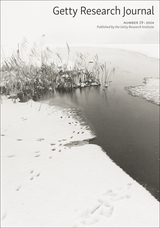
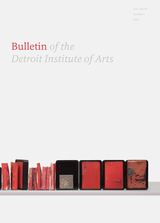
This issue features essays on a fragmentary Kufic Qurʼan of Early Abbasid style produced in Central Iran; cuttings from a twelfth-century Bible written in southeastern France for a Carthusian monastery in the orbit of the Grande Chartreuse; French archaeologist Jane Dieulafoy’s nineteenth-century documentation of Ilkhanid monuments, particularly the Emamzadeh Yahya, one of Iran’s most plundered tombs; the wartime encounter between Polish painters stationed in Baghdad and Iraqi artists during the British military reoccupation of Iraq in 1941–45; and the integration of photography and poetry in East German samizdat artists’ books of the 1980s. Shorter texts include a notice on a large folding panorama of the city of Salvador in the state of Bahia, taken around 1880 by Brazilian photographer Rodolpho Lindemann.
The free online edition of this open-access publication is at www.getty.edu/publications/grj/19/ and includes zoomable illustrations. Free PDF and EPUB downloads of the book are also available.
In tracing the history of gold through the ages, this beautiful book showcases the multifarious uses to which the precious metal has been put. Drawing on her own long experience investigating the art and science of metallurgy, Susan La Niece guides readers through the rich history of gold. In detailed images and descriptive text, her book shows us gold over the millennia as coinage, jewelry and ornamentation, high-status vessels, and grave goods; as gifts of distinction, and as radiant symbols in rituals of magic and worship.
Following a glimmering trail through distant times and places, Gold takes us to cultures as disparate as the Mughals of India, the Anglo-Saxons of Britain, and the pre-Hispanic civilizations of the New World. It considers the work of alchemists and goldsmiths, the myths and the legends, the fakes and fine art. And, in the end, it offers a fittingly lavish and deeply informed picture of gold in all its practical, figurative, commercial, artistic, and historical facets.
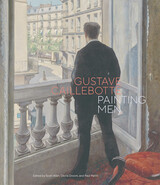
More than any other French Impressionist, painter Gustave Caillebotte (1848–1894) observed and depicted the many men in his life, including his brothers and friends, employees, and the workers and bourgeois in his Parisian neighborhood. Male subjects feature prominently in some of his best-known works, such as The Floor Scrapers, Man at His Bath, Young Man at His Window, Boating Party, and Paris Street, Rainy Day. The originality of his paintings of men is fully explored for the first time in this catalogue, published to accompany a major international exhibition co-organized by the J. Paul Getty Museum, Musée d’Orsay, and the Art Institute of Chicago.
Alongside paintings, drawings, and photographs, as well as an appendix featuring maps and new biographical research that sheds light on Caillebotte’s social network, this volume includes historically grounded thematic essays by curators and leading scholars. By exploring the complex and varied facets of Caillebotte’s identity—as son, brother, soldier, bachelor, amateur, sportsman, and so on—these essays pose questions of identity, leaving space for ambiguous and fluid expressions of gender and masculinity—for both Caillebotte and the larger late nineteenth-century French world.
This volume is published to accompany an exhibition on view at the Musée d’Orsay from October 8, 2024, to January 19, 2025, J. Paul Getty Museum at the Getty Center from March 25 to May 25, 2025, and The Art Institute of Chicago from June 29 to October 5, 2025.
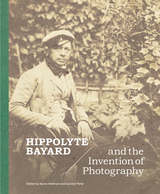
Hippolyte Bayard (1801–1887) is often characterized as an underdog in the early history of photography. From the outset, his contribution to the invention of the medium was eclipsed by others such as Louis-Jacques-Mandé Daguerre (1787–1851) and William Henry Fox Talbot (1800–1877). However, Bayard had an undeniable role in the birth of photography and its subsequent evolution into a form of art. He was a pioneer in artistic style, innovator in terms of practice, and teacher of the next generation of photographers.
Alongside an exploration of Bayard’s decades-long career and lasting impact, this volume presents—for the first time in print—some of the earliest photographs in existence. An album containing nearly 200 images, 145 of those by or attributed to Bayard, is among the Getty Museum’s rarest and most treasured photographic holdings. Few prints have ever been seen in person due to the extreme light sensitivity of Bayard’s experimental processes, making this an essential reference for scholars and enthusiasts of the very beginning of photography.
This volume is published to accompany an exhibition on view at the J. Paul Getty Museum at the Getty Center from April 9 to July 7, 2024.
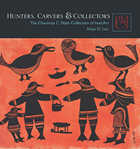
In the late 1950s, Chauncey C. Nash started collecting Inuit carvings just as the art of printmaking was being introduced in Kinngait (Cape Dorset), an Inuit community on Baffin Island in the Canadian territory of Nunavut. Nash donated some 300 prints and sculptures to Harvard’s Peabody Museum—one of the oldest collections of early modern Inuit art. The Peabody collection includes not only early Inuit sculpture but also many of the earliest prints on paper made by the women and men who helped propel Inuit art onto the world stage.
Author Maija M. Lutz draws from ethnology, archaeology, art history, and cultural studies to tell the story of a little-known collection that represents one of the most vibrant and experimental periods in the development of contemporary Inuit art. Lavishly illustrated, Hunters, Carvers, and Collectors presents numerous never-before-published gems, including carvings by the artists John Kavik, Johnniebo Ashevak, and Peter Qumalu POV Assappa. This latest contribution to the award-winning Peabody Museum Collections Series fills an important gap in the literature of Native American art.

Providing a kaleidoscopic view into these works, this richly illustrated volume explores each installation through three to four essays written by critics, poets, and scholars from diverse fields including anthropology, mathematics, art history, media studies, and design. Their texts are complemented by three additional essays reflecting on each piece's art historical significance; the architectural contexts in which the works reside on the university's campus; and The New School's relationship to adventurous art practice. Also included is a roundtable discussion among leading arts educators and artists who reflect on the pedagogical potential of a campus-based contemporary art collection. The book's final section presents a history of each commissioned work, highlighted by archival images never before published.
Published by The New School. Distributed by Duke University Press.
Contributors. Saul Anton, Daniel A. Barber, Stefano Basilico, Carol Becker, Naomi Beckwith, Omar Berrada, Gregg Bordowitz, Tisa Bryant, Holland Cotter, Mónica de la Torre, Aruna D'Souza, Elizabeth Ellsworth, Julia L. Foulkes, Andrea Geyer, Kathleen Goncharov, Jennifer A. González, Michele Greet, Randall Griffey, Victoria Hattam, Pablo Helguera, Jamer Hunt, Anna Indych-López, Luis Jaramillo, Jeffrey Kastner, Robert Kirkbride, Lynda Klich, Carin Kuoni, Sarah E. Lawrence, Tan Lin, Lucy R. Lippard, Laura Y. Liu, Reinhold Martin, Shannon Mattern, Lydia Matthews, Maggie Nelson, Olu Oguibe, G. E. Patterson, Hugh Raffles, Claudia Rankine, Jasmine Rault, Heather Reyes, Frances Richard, Silvia Rocciolo, Carl Hancock Rux, Luc Sante, Mira Schor, Eric Stark, Radhika Subramaniam, Edward J. Sullivan, Roberto Tejada, Otto von Busch, Wendy S. Walters, Jennifer Wilson, Mabel O. Wilson

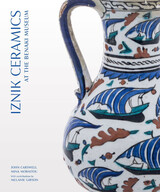
The Benaki Museum of Islamic Art in Athens has a substantial collection of Iznik ceramics, intricate works created in the city of Iznik in Asia Minor that are decorated with vibrant colors and designs. Although well known to many who visit the museum, this collection—which includes tableware, tiles, and sherds—has never before been published in its entirety.
Archaeologist, scholar, and curator John Carswell first began studying and cataloging these objects in the 1980s. This project has since been revived and guided to fruition by the curator of the Benaki Museum of Islamic Art, Mina Moraitou, who has also contributed a chapter on the Museum’s founder Antonis Benakis and the formation of its Iznik collection. The catalog brings together these admired and sought-after ceramics, featuring over three hundred illustrations of pieces from the Museum’s collection.
James Loeb (1867–1933), one of the great patrons and philanthropists of his time, left many enduring legacies both to America, where he was born and educated, and to his ancestral Germany, where he spent the second half of his life. Organized in celebration of the sesquicentenary of his birth, the James Loeb Biennial Conferences were convened to commemorate his achievements in four areas: the Loeb Classical Library (2017), collection and connoisseurship (2019), and after pandemic postponement, psychology and medicine (2023), and music (2025).
The subject of the second conference was Loeb’s deep and multifaceted engagement with the material culture of the ancient world as a scholar, connoisseur, collector, and curator. The volume’s contributors range broadly over the manifold connections and contexts, both personal and institutional, of Loeb’s archaeological interests, and consider these in light of the long history of collection and connoisseurship from antiquity to the present. Their essays also reflect on the contemporary significance of Loeb’s work, as the collections he shaped continue to be curated and studied in today’s rapidly evolving environment for the arts.
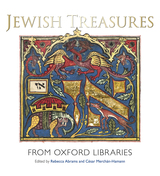
Saved for posterity by religious scholarship, intellectual rivalry, and political ambition, these extraordinary collections also detail the consumption and circulation of knowledge across the centuries, forming a social and cultural history of objects moved across borders from person to person. Together, they offer a fascinating journey through Jewish intellectual and social history.
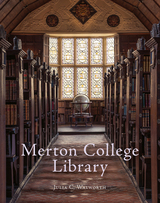
Drawing on the remarkable wealth of documentation in the college’s archives, this is the first history of the library to explore collections, buildings, readers, and staff across more than seven hundred years. The story is told in part through stunning color images that depict not only exceptional treasures but also the library furnishings and decorations, and which show manuscripts, books, bindings, and artifacts of different periods in their changing contexts. Featuring a historical timeline and a floor plan of the college, this book will be of interest to historians, alumni, and tourists alike.
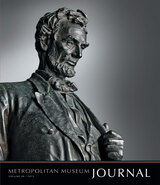
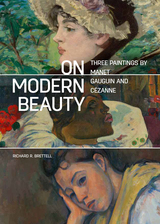
Brettell shapes his manifesto around three masterworks from the collection of the J. Paul Getty Museum: Édouard Manet’s Jeanne (Spring), Paul Gauguin’s Arii Matamoe (The Royal End), and Paul Cézanne’s Young Italian Woman at a Table. The provocative discussion reveals how each of these exceptional paintings, though depicting very different subjects—a fashionable actress, a preserved head, and a weary working woman—enacts a revolutionary, yet enduring, icon of beauty.
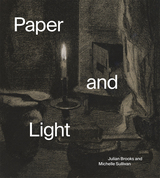
The treatment of light and shadow is one of the building blocks of drawing. From techniques such as highlights and reserves, to material selection and the creation of translucent tracing paper, to the use of light as a medium for viewing artworks, artists for hundreds of years have found innovative and dazzling ways to create light on a sheet of paper.
This publication examines the central relationship between paper and light in the world of drawings in western European art from the Renaissance to the twentieth century. Focusing on drawings from the collection of the J. Paul Getty Museum, as well as works from the British Museum, Musée du Louvre, and others, and featuring masterful works by such artists as Parmigianino, Leonardo da Vinci, Nicolas Poussin, Odilon Redon, Edgar Degas, and Georges Seurat, Paper and Light will entice readers to look longer and more closely at drawings, deriving an even deeper appreciation for the skill and labor that went into them.
This volume is published to accompany an exhibition on view at the J. Paul Getty Museum at the Getty Center from October 15, 2024, to January 19, 2025.
Reproduced in full color and with the accompanying poems in both their original language and a translation, this catalogue commemorates the incredible creative spirit of the project and provides a new way of contemplating these great poetic works.
The final installment in the definitive series of catalogues of the Robert Woods Bliss Collection, Pre-Columbian Art from Central America and Colombia at Dumbarton Oaks examines a comprehensive and expertly curated collection of jade and gold objects from Costa Rica, Panama, and Colombia. This lavish catalogue provides over two hundred detailed and illustrated descriptions of objects that span approximately two millennia. Illustrated in detail with hundreds of high-quality photographs in full color and with stunning clarity, these breathtaking works of art reveal the ingenuity, skill, and vision of Indigenous artists and artisans.
With a dozen accompanying chapters by thirty contributors from the United States, Europe, and Latin America, this landmark publication describes the objects in the context of a history of the collection, production techniques, technical analyses, iconographic interpretations, and evaluations of material from specific archaeological sites. Pre-Columbian Art from Central America and Colombia at Dumbarton Oaks is a major watershed in the archaeology of the Isthmo-Colombian Area, representing an essential contribution to scholarship on fascinating cultures from an area located between Mesoamerica and the Andes, with ties to the Antilles and Amazonia, in the center of the Americas.

To celebrate the acquisition of the archive of distinguished artist Tom Phillips, the Bodleian Library asked the artist to assemble and design a series of books drawing on his themed collection of over 50,000 photographic postcards. These encompass the first half of the twentieth century, a period in which, thanks to the ever cheaper medium of photography, ordinary people could afford to own portraits of themselves. Each book in the series contains two hundred images chosen from a visually rich vein of social history. Their covers also feature thematically linked paintings, specially created for each title, from Phillips’s signature work, A Humument.
Readers, as its title suggests, shows people reading (or pretending to read) a wide variety of material, from the Bible to Film Fun, either in the photographer’s studio, in their own home, or on vacation on the beach. Each of these unique and visually stunning books give a rich glimpse of forgotten times and will be greatly valued by art and history lovers alike.
The curious course of silver through human history unfolds in this rich and engaging book, accompanied by striking illustrations from the British Museum.
Philippa Merriman takes the reader back to the earliest uses of silver: in ingots and coins, dowries, hoards, and college plate. She shows us how silver demonstrated status—whether for an individual, as ornament, furnishings, and a store of wealth; or for a society, as grave decor, civic regalia, and ritual goods. And she traces the long and fascinating history of silver’s service as personal adornment—on heads, hands, wrists, ears, legs, and feet, and as accessories ranging from swords and baldrics to snuffboxes, walking sticks, fans, and chatelaines.
From the practical aspects of working silver to its role in magic, myth, and ritual in cultures as disparate as the Vikings and the Bedouins of North Africa, this exquisite book offers a full and fitting reflection of this precious metal’s power to move us.
Over the last two decades, the encyclopedic museum has been criticized and praised, constantly discussed, and often in the news. Encyclopedic museums are a phenomenon of Europe and the United States, and their locations and mostly Eurocentric collections have in more recent years drawn attention to what many see as bias. Debates on provenance in general, cultural origins, and restitutions of African heritage have exerted pressure on encyclopedic museums, and indeed on all manner of museums. Is there still a place for an institution dedicated to gathering, preserving, and showcasing all the world’s cultures?
Donatien Grau’s conversations with international arts officials, museum leaders, artists, architects, and journalists go beyond the history of the encyclopedic format and the last decades’ issues that have burdened existing institutions. Are encyclopedic museums still relevant? What can they contribute when the Internet now seems to offer the greater encyclopedia? How important is it for us to have in-person access to objects from all over the world that can directly articulate something to us about humanity? The fresh ideas and nuances of new voices on the core principles important to museums in Dakar, Abu Dhabi, and Mumbai complement some of the world’s arts leaders from European and American institutions—resulting in some revealing and unexpected answers. Every interviewee offers differing views, making for exciting, stimulating reading.
Includes interviews with George Abungu, National Museums of Kenya; Kwame Anthony Appiah, New York University; Homi K. Bhabha, Harvard University; Hamady Bocoum, Musée des Civilisationes Noires, Dakar; Irina Bokova, UNESCO; Partha Chatterjee, Columbia University; Thomas Campbell, Fine Arts Museum of San Francisco; James Cuno, J. Paul Getty Trust; Philippe de Montebello, New York University; Bachir Souleymane Diagne, Columbia University; Kaywin Feldman, National Gallery of Art; Marc Fumaroli, Collège de France; Massimiliano Gioni, New Museum; Michael Govan, Los Angeles County Museum of Art; Camille Henrot, artist; Max Hollein, Metropolitan Museum of Art; Henri Loyrette, Musée du Louvre; Jean Nouvel, architect; Zaki Nusseibeh, United Arab Emirates; Mikhail Piotrovsky, State Hermitage Museum; Grayson Perry, artist; Krzysztof Pomian, École des Hautes Études en Sciences Sociales; Mari Carmen Ramírez, Museum of Fine Arts, Houston; Fiammetta Rocco, The Economist; Sabyasachi Mukherjee, CSMVS Mumbai; Bénédicte Savoy; Collège de France; Kavita Singh, Jawaharlal Nehru University, New Delhi; Amit Sood, Google Arts & Culture.
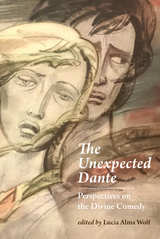
The Unexpected Dante brings together five leading scholars who offer fresh perspectives on the meanings and reception of The Divine Comedy. Some investigate Dante’s intentions by exploring the poem’s esoteric allusions to topics ranging from musical instruments to Roman law. Others examine the poem’s long afterlife and reception in the United States, with chapters showcasing new discoveries about Nicolaus de Laurentii’s 1481 edition of Commedia and the creative contemporary adaptations that have relocated Dante’s visions of heaven and hell to urban American settings.
This study also includes a guide that showcases selected treasures from the extensive Dante collections at the Library of Congress, illustrating the depth and variety of The Divine Comedy’s global influence. The Unexpected Dante is thus a boon to both Dante scholars and aficionados of this literary masterpiece.
Published by Bucknell University Press in association with the Library of Congress. Distributed worldwide by Rutgers University Press.
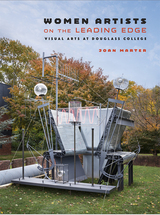
How do students develop a personal style from their instruction in a visual arts program? Women Artists on the Leading Edge explores this question as it describes the emergence of an important group of young women artists from an innovative post-war visual arts program at Douglass College.
The women who studied with avant-garde artists at Douglas were among the first students in the nation to be introduced to performance art, conceptual art, Fluxus, and Pop Art. These young artists were among the first to experience new approaches to artmaking that rejected the predominant style of the 1950s: Abstract Expressionism. The New Art espoused by faculty including Robert Watts, Allan Kaprow, Roy Lichtenstein, Geoffrey Hendricks, and others advocated that art should be based on everyday life. The phrase “anything can be art” was frequently repeated in the creation of Happenings, multi-media installations, and video art. Experimental approaches to methods of creation using a remarkable range of materials were investigated by these young women. Interdisciplinary aspects of the Douglass curriculum became the basis for performances, videos, photography, and constructions. Sculpture was created using new technologies and industrial materials. The Douglass women artists included in this book were among the first to implement the message and direction of their instructors.
Ultimately, the artistic careers of these young women have reflected the successful interaction of students with a cutting-edge faculty. From this BA and MFA program in the Visual Arts emerged women such as Alice Aycock. Rita Myers, Joan Snyder, Mimi Smith, and Jackie Winsor, who went on to become lifelong innovators. Camaraderie was important among the Douglass art students, and many continue to be instructors within a close circle of associates from their college years. Even before the inception of the women’s art movement of the 1970s, these women students were encouraged to pursue professional careers, and to remain independent in their approach to making art. The message of the New Art was to relate one’s art production to life itself and to personal experiences. From these directions emerged a “proto-feminist” art of great originality identified with women’s issues. The legacy of these artists can be found in radical changes in art instruction since the 1950s, the promotion of non-hierarchical approaches to media, and acceptance of conceptual art as a viable art form.
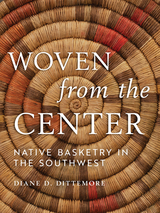
Woven from the Center presents breathtaking basketry from some of the greatest weavers in the Southwest. Each sandal and mat fragment, each bowl and jar, every water bottle and whimsy is infused with layers of aesthetic, cultural, and historical meanings. This book offers stunning photos and descriptions of woven works from Tohono O’odham, Akimel O’odham, Hopi, Western Apache, Yavapai, Navajo, Pai, Paiute, New Mexico Pueblo, Eastern Apache, Seri, Yaqui, Mayo, and Tarahumara communities.
This richly illustrated volume stands on its own as a definitive look at basketry of the Greater Southwest, including northern Mexico. It also serves as a companion to the peerless collection of U.S. Southwest and Northwest Mexican Native American basketry curated at the Arizona State Museum in Tucson, Arizona. Comprehensive in its coverage, this work is based on decades of research on weavers, collectors, and donors. It includes ample illustrations of basket weavers, past and present, bringing to life the people behind these wonderful woven treasures.
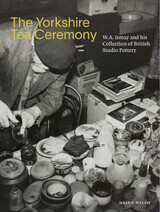
In the latter half of the twentieth century, “professional Yorkshireman” W. A. Ismay (1910–2001) amassed over 3,600 pieces by more than 500 potters. Surrounded by his family of pots, he lived in a tiny terraced house in Wakefield, Yorkshire, and left his collection and its associated archive to the city of York upon his death. This eclectic group of works contains objects created by many of the most significant potters working in the United Kingdom, including Lucie Rie, Hans Coper, Bernard Leach, and Michael Cardew, as well as lesser-known makers.
With new academic research into this little-studied collection and archive, Yorkshire Tea Ceremony explores Ismay’s journey as a collector and offers fresh perspectives on a marginalized area of British Modernism. Tracing the collection’s journey from private to public ownership illuminates issues surrounding the acquisition and reveals the transformative effect it has had on both curatorial practice and the ambition of regional public institutions. The W. A. Ismay Collection offers a well-documented example of the valuable contribution collectors can make to the British studio ceramics movement.
Published to coincide with the twentieth anniversary of the collection’s move from private to public ownership, this volume accompanies an exhibition at York Art Gallery’s Centre of Ceramic Art (CoCA).
READERS
Browse our collection.
PUBLISHERS
See BiblioVault's publisher services.
STUDENT SERVICES
Files for college accessibility offices.
RECENTLY PUBLISHED





UChicago Accessibility Resources
home | accessibility | search | about | contact us
BiblioVault ® 2001 - 2024
The University of Chicago Press