
 A SCHOLARLY BOOK REPOSITORY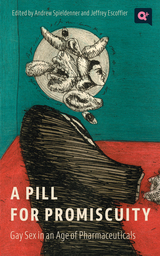
Finalist for Lambda Literary Award for Best LGBTQ+ Anthology
For a generation of gay men who came of age in the 1980s and 1990s, becoming sexually active meant confronting the dangers of catching and transmitting HIV. In the 21st century, however, the development of viral suppression treatments and preventative pills such as PrEP and nPEP has massively reduced the risk of acquiring HIV. Yet some of the stigma around gay male promiscuity and bareback sex has remained, inhibiting open dialogues about sexual desire, risk, and pleasure.
A Pill for Promiscuity brings together academics, artists, and activists—from different generations, countries, ethnic backgrounds, and HIV statuses—to reflect on how gay sex has changed in a post-PrEP era. Some offer personal perspectives on the value of promiscuity and the sexual communities it fosters, while others critique unequal access to PrEP and the increased role Big Pharma now plays in gay life. With a diverse group of contributors that includes novelist Andrew Holleran, trans scholar Lore/tta LeMaster, cartoonist Steve MacIsaac, and pornographic film director Mister Pam, this book asks provocative questions about how we might reimagine queer sex and sexuality in the 21st century.

A sweeping cultural history of our yearning for psychedelics to free us from both modern life and traditional religion.
In 1957, Life Magazine published an article called “Seeking the Magic Mushroom” about a Mexican healing ritual centered on an obscure psychedelic: Psilocybe mushrooms. Readers raced to experiment with the drug for their own spiritual, therapeutic, and recreational purposes until a psychedelic craze swept the nation. Today, though psilocybin has been transformed from a sacred fungus into a pharmaceutical product, many people still turn to the enigmatic mushroom to encounter profound spiritual experiences without the baggage of traditional religion.
In Still Seeking the Magic Mushroom, Hugh B. Urban examines the alluring promise of mysticism without religion. With psychedelics, one need not fast, flagellate, or even worship a god to encounter the transcendent; a carefully timed ingestion of psilocybin will suffice. But, Urban argues, stripping the trip from its religion came at a cost: the erasure of Indigenous culture and the eventual commercialization and scientification of the psychedelic underground. Urban shows that psychedelic mushrooms, far from the fringe or countercultural margins, have been central players in shaping American attitudes toward religion and science over the last century. He argues that our love affair with the intoxicating fungus reveals a deep frustration with a disenchanted world, desire for meaning beyond religion, yearning for nature amid ecological crisis, faith in science to save us, and the relentless power of capitalism to turn everything into commodities.
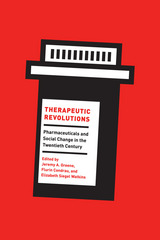
This collection challenges the historical accuracy of this revolutionary narrative and offers instead a more nuanced account of the process of therapeutic innovation and the relationships between the development of medicines and social change. These assembled histories and ethnographies span three continents and use the lived experiences of physicians and patients, consumers and providers, and marketers and regulators to reveal the tensions between universal claims of therapeutic knowledge and the actual ways these claims have been used and understood in specific sites, from postwar West Germany pharmacies to twenty-first century Nigerian street markets. By asking us to rethink a story we thought we knew, Therapeutic Revolutions offers invaluable insights to historians, anthropologists, and social scientists of medicine.
READERS
Browse our collection.
PUBLISHERS
See BiblioVault's publisher services.
STUDENT SERVICES
Files for college accessibility offices.
RECENTLY PUBLISHED






UChicago Accessibility Resources
home | accessibility | search | about | contact us
BiblioVault ® 2001 - 2026
The University of Chicago Press