
 A SCHOLARLY BOOK REPOSITORY
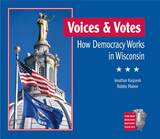
Voices & Votes: How Democracy Works in Wisconsin invites upper elementary school students to explore the intersection of American civics and Wisconsin history. This sixth and final book in the New Badger History series introduces students to the basic structures of American democracy, state government, and Wisconsin's road to statehood. The first seven chapters help students grasp how the three branches of government function at the federal, state, local, and tribal levels, while tying these structural notions to Wisconsin history. Students will learn that citizens' voices and votes help government evolve to meet ever-changing societal needs. The last chapter emphasizes how young people can actively engage in their communities to bring about positive change.

What are the different levels of government in Wisconsin? How are laws made? What is a political party? Who is allowed to vote in elections? How can citizens get involved in their communities?
These questions and many more are answered in this revised and updated edition of Voices and Votes, aimed at students in grades 3–5. Filled with color photos and illustrations—as well as diagrams, maps, and vocabulary words that make the material easy to absorb—this book explores:
- The fundamentals of federal, state, local, and Tribal government
- How Wisconsin’s constitution was created and how it has changed
- The way elections work and why voting matters
Readers will also find compelling examples of citizens from our state’s past who spoke up and worked to change laws and policies in order to improve their communities, including:
- Gaylord Nelson, who advocated for the environment as a state senator, member of Congress, and governor
- Vel Phillips, who helped expand housing opportunities as a member of Milwaukee’s city council
- Jesus Salas, who worked with state agencies to improve the lives of migrant farmworkers in Wisconsin
The book also offers contemporary stories of young people engaging with their communities, working to solve problems, and sharing their voices. This brilliantly updated edition of Voices and Votes will inspire a new generation of readers to understand and participate in our democracy.
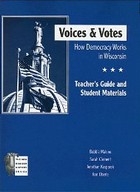
Voices and Votes: How Democracy Works in Wisconsin; Teacher's Guide and Student Materials features several activities for each chapter to engage students in a more in-depth exploration of the book. These activities, designed for both individual and small groups, demand the use of higher-level thinking skills while integrating a wide range of learning styles, and all have culminating components that can be used for assessment. The guide also features easily reproducible student pages, including maps, charts, and interesting illustrations.
READERS
Browse our collection.
PUBLISHERS
See BiblioVault's publisher services.
STUDENT SERVICES
Files for college accessibility offices.
RECENTLY PUBLISHED




UChicago Accessibility Resources
home | accessibility | search | about | contact us
BiblioVault ® 2001 - 2026
The University of Chicago Press