Results by title
6 books match the query 'Professor'

A Professor in the Wilderness
Peter Damian Before the Gregorian ReforJohn Howe
Catholic University of America Press, 2027

NOVEL PROFESSIONS
INTERESTED DISINTEREST AND THE MAKING OF THE VICTORIAN NOVELJennifer Ruth
The Ohio State University Press, 2006
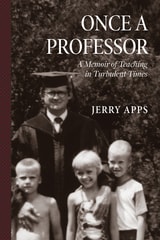
Once a Professor
A Memoir of Teaching in Turbulent TimesJerry Apps
Wisconsin Historical Society Press, 2018
“I never wanted to be a professor,” writes Jerry Apps in the introduction to Once a Professor. Yet a series of unexpected events and unplanned experiences put him on an unlikely path—and led to a thirty-eight-year career at the University of Wisconsin.
In this continuation of the Apps life story begun in his childhood memoir Limping through Life, Wisconsin’s celebrated rural storyteller shares stories from his years at the University of Wisconsin–Madison from 1957 to 1995, when he left the university to lecture and write fulltime. During those years Apps experienced the turmoil of protests and riots at the UW in the 1960s, the struggles of the tenure process and faculty governance, and the ever-present pressure to secure funding for academic research and programs.
Through it all, the award-winning writer honed a personal philosophy of education—one that values critical thinking, nontraditional teaching approaches, and hands-on experiences outside of the classroom. Colorful characters, personal photos, and journal entries from the era enrich this account of an unexpected campus career.
Picture a Professor
Interrupting Biases about Faculty and Increasing Student LearningJessamyn Neuhaus
West Virginia University Press, 2022
“Does a service to all who would prefer a different path, offering realistic strategies to engage students in undermining scholarly stereotypes.”—Science
Picture a Professor is a collection of evidence-based insights and intersectional teaching strategies crafted by and for college instructors. It aims to inspire transformative student learning while challenging stereotypes about what a professor looks like.
Representing a variety of scholarly disciplines, the volume’s contributing authors offer practical advice for effectively navigating student preconceptions about embodied identity and academic expertise. Each contributor recognizes the pervasiveness of racialized, gendered, and other biases about professors and recommends specific ways to respond to and interrupt such preconceptions—helping students, teachers, and others reenvision what we think of when we picture a professor.
Educators at every stage of their career will find affirming acknowledgment of the ways systemic inequities affect college teaching conditions, as well as actionable advice about facilitating student learning with innovative course design, classroom activities, assessment techniques, and more.
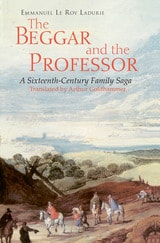
The Beggar and the Professor
A Sixteenth-Century Family SagaEmmanuel Le Roy Ladurie
University of Chicago Press, 1997
"Le Roy Ladurie paints a remarkably contemporary picture of life in the sixteenth century. . . . It's a good story, told with a deft narrative touch."—Michael S. Kimmel, The Nation
"Le Roy Ladurie is a master of the representative detail and uses the Platters' lives as a means to see a whole century 'through a glass, darkly'."—The Independent
"Le Roy Ladurie has not only thoroughly sketched out the Platters' particular brand of gusto, he has also made it seem a defining characteristic of the sixteenth century."—The New Republic
"All [of] the drama and pathos of a Disney film."—Emily Eakin, Lingua Franca
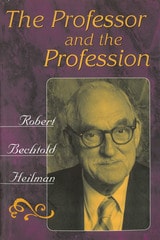
The Professor and the Profession
Robert Bechtold Heilman
University of Missouri Press, 1999
Robert Bechtold Heilman is one of the last survivors of a remarkable generation of American critics that included such literary giants as Cleanth Brooks, Allen Tate, and Edmund Wilson, men to whom literary criticism was not a profession or an academic necessity but a calling. In a distinguished career that has spanned nearly six decades, Heilman has influenced generations of scholars and critics through his exquisitely written commentaries on subjects ranging from William Shakespeare to Thomas Hardy.
In The Professor and the Profession, Heilman looks back over his life and times from his perspective as both an academic and an American. Differing in theme and subject matter, the essays included in this collection are ultimately unified by the author himself. Whether the topic is football, Robert Penn Warren, or education, Heilman's generous and intelligent voice emerges on every page. Yet this collection is more than one academic's personal reminiscences; it is a reflection upon American literary history itself.
In the first section of essays, "The Self Displayed," Heilman reveals how he developed from a small-town boy into a distinguished critic and teacher, touching upon his participation in baseball and love of football along the way. "Writers Portrayed" and "Literary Types and Problems Inspected," the following sections, offer his opinions on the past and on the current state of American literary criticism, including personal portraits of such renowned friends as Eric Voegelin, Robert Penn Warren, Theodore Roethke, and Malcolm Cowley. The final section, "Education Examined," is an enlightening inquiry into the development of American universities in the twentieth century.
A fascinating chronicle of a significant academic life, The Professor and the Profession will appeal to a broad array of scholars, from young academics wanting to know where they came from to those of Heilman's generation who can appreciate this personal reminiscence into the world of letters.