
 A SCHOLARLY BOOK REPOSITORY
"Goldstein has raised our understanding of the politics of psychiatric professionalization on to a new plane."—Roy Porter, Times Higher Education Supplement
"[A]n historiographical tour de force, quite simply the most insightful work on the subject in English or any other language. . . . [A] work of distinctive originality. . . . It is written with lucidity and elegance, even a certain confident scholarly panache, that make it a pleasure to read."—Toby Gelfand, Social History
"Exhaustively researched, elegantly written, and persuasively argued, Console and Classify is an excellent example of the . . . sociologically informed intellectual history, stimulated by Kuhn and Foucault."—Robert Alun Jones, American Journal of Sociology


In 1930 Dr. Karl A. Menninger, one of America's most distinguished psychiatrists, was asked by the editor of Ladies' Home Journal to write a monthly column that would address mental health issues and answer questions from readers. The result was the widely popular column "Mental Hygiene in the Home," which ran for eighteen months at a time when the American public was just beginning to popularize the idea of mental hygiene and psychotherapy.
Of the thousands of letters Dr. Menninger received, only a small number were printed in the Journal. However, he wrote personal responses to all of them, over two thousand of which have been preserved. For this book, Howard J. Faulkner and Virginia D. Pruitt have selected more than eighty exchanges that provide intimate glimpses into the personal lives of women from across the country.
Most notable in this fascinating collection is the precision and clarity of the women's voices, as well as Dr. Menninger's incisive, analytical, and elegantly phrased replies. The topics that were of major concern to these women included their own sexuality, cheating husbands, problem children, and interfering in-lawsþin other words, the same issues that many women still face today. Although Dr. Menninger's advice may sometimes be questionable by modern standards, these letters provide a useful look at the social assumptions of the 1930s.
Included in the book is an excellent introduction by the editors that traces America's affection for advice columns, chronicles Dr. Menninger's life and work, and provides an overview of the development of psychotherapy. Entertaining as well as informative, these letters not only offer a valuable reflection of women's issues during the Depression era but also invite comparison and contrast with contemporary problems, attitudes, and values.

Combining over forty years of experience as a practicing psychiatrist with an insider’s perspective of current psychiatric practice, Dr. Robert Taylor provides invaluable guidance to persons considering psychiatric treatment or contemplating a change of doctor in an effort to find better treatment. Cautioning readers against settling for a psychiatrist who views psychodrugs as the treatment, Dr. Taylor provides specific suggestions for avoiding the growing number of psychiatrists who write scripts automatically.
In recent decades, psychiatric care has been overly reliant on psychodrugs. Patient diagnoses are being seriously questioned. Finding the Right Psychiatrist encourages people to seek care from a complete psychiatrist—one able and willing to pursue matters of mind and brain/body, rather than settling on psychodrugs as the main treatment.
Throughout the book, readers learn about the proper uses and limits of psychiatric diagnosis. Dr. Taylor carefully outlines an individualized approach to psychiatric care guided more by a patient’s particular problems and situation than by diagnoses that often mislead more than help. He provides a realistic appraisal of psychiatric medications: what they can and cannot do as well, a discussion of mind work tools, traits of effective psychiatrists, suggestions for how to deal with common insurance company obstacles, and an explanation of the confusing politics of psychiatry.
An indispensable resource for anyone seeking psychiatric help or tasked with advising someone of what to look for in a doctor, Finding the Right Psychiatrist gives hope and guidance to those searching for complete and personalized care.
View a three minute video of Dr. Robert L. Taylor speaking about Finding the Right Psychiatrist.

With FranzFanon, Peter Hudis presents a penetrating critical biography of the activist’s life and work. Countering the prevailing belief that Fanon’s contributions to modern thought can be wholly defined by an advocacy of violence, Hudis presents his work instead as an integrated whole, showing that its nuances—and thus its importance—can only be appreciated in light of Fanon’s efforts to fuse philosophical theory and actual practice. By taking seriously Fanon’s philosophical and psychological contributions, as well as his political activism, Hudis presents a powerful and perceptive new view of the man and his achievement.
This brief, richly perceptive introduction to Fanon will give new force to his ideas, his life, and his example for people engaged in radical political theory and taking action against oppression around the world today.

While many medical professionals can physically examine the body to identify and understand its troubles—a cardiologist can take a scan of the heart, an endocrinologist can measure hormone levels, an oncologist can locate a tumor—psychiatrists have a much harder time unlocking the inner workings of the brain or its metaphysical counterpart, the mind.
In From Skepticism to Competence, sociologist Mariana Craciun delves into the radical uncertainty of psychiatric work by following medical residents in the field as they learn about psychotherapeutic methods. Most are skeptical at the start. While they are well equipped to treat brain diseases through prescription drugs, they must set their expectations aside and learn how to navigate their patients’ minds. Their instructors, experienced psychotherapists, help the budding psychiatrists navigate this new professional terrain by revealing the inner workings of talk and behavioral interventions and stressing their utility in a world dominated by pharmaceutical treatments. In the process, the residents examine their own doctoring assumptions and develop new competencies in psychotherapy. Exploring the world of contemporary psychiatric training, Craciun illuminates novice physicians’ struggles to understand the nature and meaning of mental illness and, with it, their own growing medical expertise.

"Could I be sued?" The exploding number of malpractice lawsuits in recent years has brought this question to the mind of every clinician---the conscientious as well as the negligent.
A unique and practical guide to clinical risk management, this book combines the expertise of mental health professionals, judges, attorneys, and insurance industry experts, to help the clinician provide effective treatment while reducing the risk of legal liability. Wide-ranging, clinically based, and up to date, it will be a welcome guide for medical and surgical practitioners as well.
The first section gives clinicians a working knowledge of legal regulation in psychiatry and medicine, covering informed consent, documentation of patient care, and potential conflicts of interest. The second section identifies high-risk areas for lawsuits, including managing suicidal and violent patients, boundary violations, supervision issues, prescription of medications, liability in managed care settings, and treatment termination. The book concludes with a primer on clinical testimony in the courtroom.
The broad range of distinguished contributors to this volume will provide a survival guide to clinicians in the increasingly complex and rapidly changing world of health care.
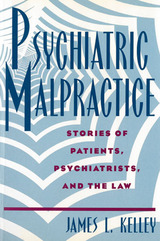
• Two weeks after Johnny Moore was discharged from a psychiatric hospital, the deeply troubled teenager took a lethal overdose of the antidepressant prescribed by his psychiatrist.
• Dennis Gould suffered from paranoid schizophrenia. He let a streetcar cut off his right arm rather than carry out his divine mission to kill his ex-girlfriend, Shelley Rotman; three years later––while under psychiatric care and after several hospitalizations––Gould stabbed the young woman to death with his left arm.
• After seven months of psychotherapy as his only treatment in a private psychiatric hospital, Raphael Osheroff’s symptoms of the agitated depression that had destroyed his medical practice and personal life were more severe than ever. At a second hospital, Osheroff was given the antidepressant drugs he had been asking for––and he rapidly improved.
• Joan Barkley went to Dr. Jonathan Fox for help in overcoming her addiction to Darvon. After a year of therapy, the twice-weekly sessions turned into intense sexual encounters, which continued for two years.
James Kelley tells the true stories of people who sought help from psychiatrists and ended up suing them for malpractice. These tales are compelling, tragic, and sometimes bizarre. They offer a unique view into a relationship that is normally confidential and caring––but can be catastrophic when it goes wrong. Kelley discusses several cases that received national attention: former Reagan administration press secretary James Brady's suit against the psychiatrist who had been treating John Hinckley; the Tarasoff decision that established the psychiatrist’s duty to warn potential victims of a patient’s threats; and the disciplinary proceedings against Dr. Margaret Bean-Bayog for her unusual “mothering” treatment of Paul Lozano.
Kelley accompanies detailed accounts of courtroom clashes––based on court records––with clear, even-handed treatments of four kinds of psychiatric malpractice cases: a patient’s suicide, a patient’s violence against other people, a psychotherapist's sexual misconduct, and the use of unconventional treatments. With a wealth of examples, he explains the role of psychiatrists as expert witnesses against each other, the difficulties of predicting the outcomes of these suits, and the balances psychiatrists and judges have to strike between the duties owed to patients, on the one hand, and to society on the other.
Whether you identify with the patients or the psychiatrists, you will find these tales unforgettable. Kelley writes in nontechnical language for the general reader, stressing the human elements. His lucid analyses of key, current issues make his book essential reading for professionals in mental health or law––and for anyone contemplating a malpractice suit.

Chester Pierce was born in 1927; by 1952 he was a graduate of the Harvard Medical School. He went on to become president of the American Board of Psychiatry and Neurology and president of the American Orthopsychiatric Association. He was elected to the Institute of Medicine at the National Academy of Sciences and had an annual research seminar named after him by the National Medical Association.
Founding chair of the Black Psychiatrists of America, Pierce has profoundly affected American psychiatry and the thinking of African American psychiatrists during the last two decades. While recognized for his substantive scholarship on coping with extreme environments such as the South Pole, he is probably best known for his theories regarding how blacks cope with racism in the United States.
In Race and Excellence, Ezra Griffith, also an African American professor of psychiatry, engages Pierce in a dialogue with the goal of clarifying the inter-connection between the personal and the professional in the lives of both black scholars. The text melds the story of Pierce's life and his achievements, with particular attention to his theories about the predictable nature of racist behavior and the responses of oppressed groups. Having earned his doctorate a generation after Pierce, Griffith approaches his conversation with Pierce as a face-to-face meeting between mentor and student. Retelling Pierce's life story ultimately becomes for Griffith an exercise in conceptualizing his own experience. As he writes, “I never just wanted to tell Chet's story; I wanted to work his story out, to measure it, to try it on, to figure out which parts are good for me and other blacks so earnestly seeking heroes.”

Wolf describes his Jewish childhood and youth in pre-war Poland, his escape from the Holocaust and subsequent medical service in the Soviet Army during World War II and the following decade, his distinguished career in psychiatry in post-Stalinist Soviet Russia, and his final years in Portland, Oregon, after his departure from the Soviet Union in 1992.
Wolf’s narrative skill and evocative personal insights, combined with Judson Rosengrant’s judicious editing and annotation and elegant translation, provide the reader with direct access to a world that has seemingly ceased to exist, yet continues to resonate and inform our own lives in powerful ways.
“Therefore, Choose Life…” will appeal to readers interested in the history of the East-European twentieth century, pre-Holocaust Jewish family life in Poland, and in the survival of a man of deep religious faith and cultivation in the face of the catastrophes and vicissitudes of his time and place.
A War of Nerves is a history of military psychiatry in the twentieth century—an authoritative, accessible account drawing on a vast range of diaries, interviews, medical papers, and official records, from doctors as well as ordinary soldiers. It reaches back to the moment when the technologies of modern warfare and the disciplines of psychological medicine first confronted each other on the Western Front, and traces their uneasy relationship through the eras of shell-shock, combat fatigue, and post-traumatic stress disorder.
At once absorbing historical narrative and intellectual detective story, A War of Nerves weaves together the literary, medical, and military lore to give us a fascinating history of war neuroses and their treatment, from the World Wars through Vietnam and up to the Gulf War. Ben Shephard answers recurring questions about the effects of war. Why do some men crack and others not? Are the limits of resistance determined by character, heredity, upbringing, ideology, or simple biochemistry?
Military psychiatry has long been shrouded in misconception, and haunted by the competing demands of battle and of recovery. Now, for the first time, we have a definitive history of this vital art and science, which illuminates the bumpy efforts to understand the ravages of war on the human mind, and points towards the true lessons to be learned from treating the aftermath of war.
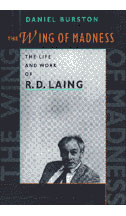
Daniel Burston chronicles Laing's meteoric rise to fame as one of the first media psychogurus of the century, and his spiraling decline in the late seventies and eighties. Here are the successes: Laing's emergence as a unique voice on the psychiatric scene with his first book, The Divided Self, in 1960; his forthright and articulate challenges to conventional wisdom on the origins, meaning, and treatment of mental disturbances; his pioneering work on the families of schizophrenics, Sanity, Madness and the Family (coauthored with A. Esterson). Here as well are Laing's more dubious moments, personal and professional, including the bizarre experiment with psychotic patients at Kingsley Hall. Burston traces many of Laing's controversial ideas and therapeutic innovations to a difficult childhood and adolescence in Glasgow and troubling experiences as an army doctor; he also offers a measured assessment of these ideas and techniques.
The R. D. Laing who emerges from these pages is a singular combination of skeptic and visionary, an original thinker whose profound contradictions have eclipsed the true merit of his work. In telling his story, Burston gives us an unforgettable portrait of an anguished human being and, in analyzing his work, recovers Laing's achievement for posterity.

Boss approached Heidegger asking for help in reflective thinking on the nature of Heidegger's work. Soon they were holding annual two-week meetings in Boss's home in Zollikon, Switzerland. The protocols from these seminars, recorded by Boss and reviewed, corrected, and supplemented by Heidegger himself, make up one part of this volume. They are augmented by Boss's record of the conversations he had with Heidegger in the days between seminars and by excerpts from the hundreds of letters the philosopher wrote to Boss between 1947 and 1971.
READERS
Browse our collection.
PUBLISHERS
See BiblioVault's publisher services.
STUDENT SERVICES
Files for college accessibility offices.
RECENTLY PUBLISHED







UChicago Accessibility Resources
home | accessibility | search | about | contact us
BiblioVault ® 2001 - 2024
The University of Chicago Press