
 A SCHOLARLY BOOK REPOSITORY
This book explores Inca use of knotted cords to transmit information and the problem of interpreting artifacts from distant cultures.
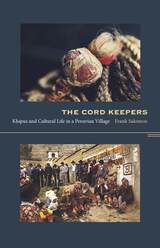
In 1994, Salomon witnessed the use of khipus as civic regalia on the heights of Tupicocha, in Peru’s central Huarochirí region. By observing the rich ritual surrounding them, studying the village’s written records from past centuries, and analyzing the khipus themselves, Salomon opens a fresh chapter in the quest for khipu decipherment. He draws on a decade’s field research, early colonial records, and radiocarbon and fiber analysis. Challenging the prevailing idea that the use of khipus ended under early Spanish colonial rule, Salomon reveals that these beautiful objects served, apparently as late as the early twentieth century, to document households’ contribution to their kin groups and these kin groups’ contribution to their village. The Cord Keepers is a major contribution to Andean history and, more broadly, to understandings of writing and literacy.
A unique study of an Andean community’s water rituals and the extraordinary document describing how they should be performed
In the dry season in the Andes, water from springs, lakes, reservoirs, and melting glaciers feeds irrigation canals that have sustained communities for thousands of years. Managing and maintaining these water infrastructures is essential, and in 1921, in the village of San Pedro de Casta, Peru, local authorities recorded their ritual canal-cleaning duties in a Spanish-language document called the Entablo. It is only the second book (along with the Huarochirí Manuscript) ever seen by scholars in which an Andean community explains its customs and ritual laws in its own words.
Sarah Bennison offers a critical introduction to the Entablo, a Spanish transcription of the document, and an English translation. Among its other revelations, the Entablo delves into the use of khipu boards, devices that meld the traditional knotted strings known as khipus with a written alphabet. Only in the Entablo do we learn that there were multiple khipu boards associated with a single canal-cleaning ritual, or that there were separate khipu records for men and women. The Entablo manuscript furnishes unparalleled insights into Andean rituals, religion, and community history at a historical moment when rural highland communities were changing rapidly.
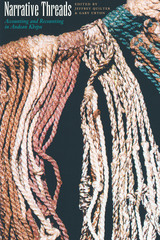
The Inka Empire stretched over much of the length and breadth of the South American Andes, encompassed elaborately planned cities linked by a complex network of roads and messengers, and created astonishing works of architecture and artistry and a compelling mythology—all without the aid of a graphic writing system. Instead, the Inkas' records consisted of devices made of knotted and dyed strings—called khipu—on which they recorded information pertaining to the organization and history of their empire. Despite more than a century of research on these remarkable devices, the khipu remain largely undeciphered.
In this benchmark book, twelve international scholars tackle the most vexed question in khipu studies: how did the Inkas record and transmit narrative records by means of knotted strings? The authors approach the problem from a variety of angles. Several essays mine Spanish colonial sources for details about the kinds of narrative encoded in the khipu. Others look at the uses to which khipu were put before and after the Conquest, as well as their current use in some contemporary Andean communities. Still others analyze the formal characteristics of khipu and seek to explain how they encode various kinds of numerical and narrative data.
READERS
Browse our collection.
PUBLISHERS
See BiblioVault's publisher services.
STUDENT SERVICES
Files for college accessibility offices.
RECENTLY PUBLISHED




UChicago Accessibility Resources
home | accessibility | search | about | contact us
BiblioVault ® 2001 - 2026
The University of Chicago Press