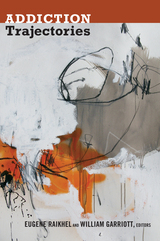
Eugene Raikhel and William Garriott, eds.
Bringing anthropological perspectives to bear on addiction, the contributors to this important collection highlight the contingency of addiction as a category of human knowledge and experience. Based on ethnographic research conducted in sites from alcohol treatment clinics in Russia to Pentecostal addiction ministries in Puerto Rico, the essays are linked by the contributors' attention to the dynamics—including the cultural, scientific, legal, religious, personal, and social—that shape the meaning of "addiction" in particular settings. They examine how it is understood and experienced among professionals working in the criminal justice system of a rural West Virginia community; Hispano residents of New Mexico's Espanola Valley, where the rate of heroin overdose is among the highest in the United States; homeless women participating in an outpatient addiction therapy program in the Midwest; machine-gaming addicts in Las Vegas, and many others. The collection's editors suggest "addiction trajectories" as a useful rubric for analyzing the changing meanings of addiction across time, place, institutions, and individual lives. Pursuing three primary trajectories, the contributors show how addiction comes into being as an object of knowledge, a site of therapeutic intervention, and a source of subjective experience.
Contributors. Nancy D. Campbell, E. Summerson Carr, Angela Garcia, William Garriott, Helena Hansen, Anne M. Lovell, Emily Martin, Todd Meyers, Eugene Raikhel, A. Jamie Saris, Natasha Dow Schüll