
 A SCHOLARLY BOOK REPOSITORY

A New York Times Best Seller
2019 National Book Award Longlist, Nonfiction
2019 Kirkus Book Prize Finalist, Nonfiction
A February IndieNext Pick
Named A Most Anticipated Book of 2019 by Buzzfeed, Nylon, The A. V. Club, CBC Books, and The Rumpus, and a Winter's Most Anticipated Book by Vanity Fair and The Week
Starred Reviews: Kirkus and Booklist
"Warm, immediate and intensely personal."—New York Times
How does one pay homage to A Tribe Called Quest? The seminal rap group brought jazz into the genre, resurrecting timeless rhythms to create masterpieces such as The Low End Theory and Midnight Marauders. Seventeen years after their last album, they resurrected themselves with an intense, socially conscious record, We Got It from Here . . . Thank You 4 Your Service, which arrived when fans needed it most, in the aftermath of the 2016 election. Poet and essayist Hanif Abdurraqib digs into the group’s history and draws from his own experience to reflect on how its distinctive sound resonated among fans like himself. The result is as ambitious and genre-bending as the rap group itself.
Abdurraqib traces the Tribe's creative career, from their early days as part of the Afrocentric rap collective known as the Native Tongues, through their first three classic albums, to their eventual breakup and long hiatus. Their work is placed in the context of the broader rap landscape of the 1990s, one upended by sampling laws that forced a reinvention in production methods, the East Coast–West Coast rivalry that threatened to destroy the genre, and some record labels’ shift from focusing on groups to individual MCs. Throughout the narrative Abdurraqib connects the music and cultural history to their street-level impact. Whether he’s remembering The Source magazine cover announcing the Tribe’s 1998 breakup or writing personal letters to the group after bandmate Phife Dawg’s death, Abdurraqib seeks the deeper truths of A Tribe Called Quest; truths that—like the low end, the bass—are not simply heard in the head, but felt in the chest.
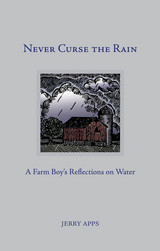
In Never Curse the Rain, Jerry shares his memories of water, from its importance to his family’s crops and cattle to its many recreational uses—fishing trips, canoe journeys, and the simple pleasures of an afternoon spent dreaming in the haymow as rain patters on the barn roof. Water is still a touchstone in Jerry’s life, and he explores the ways he’s found it helpful in soothing a troubled mind or releasing creativity. He also discusses his concerns about the future of water and ensuring we always have enough. For, as Jerry writes, "Water is one of the most precious things on this planet, necessary for all life, and we must do everything we can to protect it."
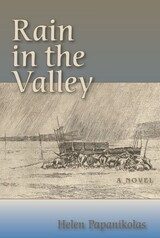
Three generations of the Demas family face the ups and downs of the twentieth century after their fathers leave the coal mines that drew them from Greece to America, become wool growers and small businessmen, and Americanize their Demopoulos name. As the years pass, the family accumulates untidy lives and tragedies. Parents seek to keep their children tightly bound by old-country customs, to arrange marriages, and to foist their views of women’s inferiority on their daughters. Lia Papastamos in particular, child of a forced marriage between her Greek father and Amerikanidha mother, pulls away from the stifling burden of family tradition and interference, but she and her husband must contend with the decline that time, synthetics, and changing tastes bring to a once-thriving sheep business.
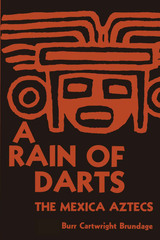
This book was the first serious scholarly attempt in nearly a century to put in narrative form the exciting and important history of the Mexican Indians who founded Tenochtitlan and who created from it what is known as the Aztec empire. Although many native sources, often in translations with scholarly annotations. became available in the twentieth century, the corpus of this material was scattered and uncoordinated. Burr Cartwright Brundage has utilized these sources to produce a consecutive narrative that portrays direction and purpose in the evolution of the Aztec empire.
A Rain of Darts is the first one-volume history of the Mexica, historically the most important of the Aztec peoples. The focus of the narrative is on the political state produced by the Mexica during their stormy history. The eleven Mexica reigns that preceded the Spanish Conquest are investigated, their triumphs and errors explained, and the lives of their great leaders illuminated where the sources allow.
The narrative opens with the first appearance of the Mexica out of the arid north; it details their aimless wandering, the founding of the city of Mexico in the waters of Lake Tezcoco, their desperate struggle for independence (successfully achieved in 1428), and the flourishing of the new state and its curiously structured empire. This history concludes with an analysis of the character of Moteuczoma II, and investigates the final sickness of the Mexican state. Cortez and his small army of Spaniards are seen here for the first time in historical literature through the eyes of the people they conquered. The Mexica Aztecs remain at the center of the narrative.
The Mexica were unable to build a tightly knit empire because of the elitist, international warrior class and its peculiar cult of war and sacrifice. To the Mexica, warfare and bloodshed were sacraments; the teuctli or knightly warrior was the priest of this cult. to which he was as loyal as to the state. In this lay the uniqueness of the Mexican state and the seeds of its tragic end in 1521.

Rain, Wind, Thunder, Fire, Daughter is a story about leaving religion and coming of age in a world of accelerating climate apocalypses and environmental loss. In her debut collection of poems, H. G. Dierdorff interweaves an investigation of wildfires in Eastern Washington with a personal account of growing up in Christian fundamentalism, calling our attention to the violent histories undergirding both.
“I want you to touch the fire / sparking from my lips” the opening sonnet commands, daring the reader to abandon the safety of analytical distance and draw near to the moment of ignition itself. The voice that emerges is incessant, ecstatic, explosive. Fire erupts from every page, multiplying into rage, desire, judgement, responsibility, and renewal.
A love song to the forests of the Pacific Northwest, a dramatic portrait of a daughter struggling to find her place in her family, and a philosophical exploration of the limits of language and belief, this collection demands the necessity of both pleasure and grief as responses to a world on fire.
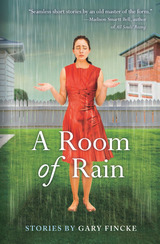
The narratives throughout Gary Fincke’s sixth collection of short stories contain newsworthy events that are chronicled secondhand: the shooting of a policeman, the murder of a house flipper, the firing of a teacher for punching a violent student, the accidental drowning of a gay man in a flood, and a fire somewhat accidently set by a juvenile smoker in a school.
Despite these surprising events, the narrator of each story is an ordinary person caught up in the action but preoccupied by other things, whether zombie movies, collecting unusual words, the oddity of other people’s sexual habits, or what to do in retirement.
These shocking incidents become both central and peripheral to the narrative, as Fincke portrays the fluctuating emotions and self-protective reflections of fathers, sons, and husbands, creating a world where individuals rarely understand each other, yet still arrive at moments of compassion, tolerance, perseverance, and familial love.

In this visually stunning volume, Polly Schaafsma, leading authority on pre-Hispanic Indian rock imagery and kiva murals of the greater American Southwest, provides an insightful journey into the petroglyphs and rock paintings of the Jornada Mogollon farmers in southern New Mexico's lower Chihuahuan Desert.
Talking to the Rain defines the Rio Grande Tradition, emphasizing the foundational Jornada Style as exemplified by its Mimbres-like imagery as well as its diverse and complex rain-making symbolism. By examining visual metaphors of cosmology and place-making, the book reveals an ancient dialogue between farmers and the cosmos that places rain for crops as its central concern. Exceptional color photographs by François Gohier invite readers to experience the landscapes and locations selected for creating these images. Both scholarly and accessible, Talking to the Rain offers a fresh perspective on cultural landscapes and the profound connections between people, art, and environment, making it essential for understanding Southwest cultural history.
READERS
Browse our collection.
PUBLISHERS
See BiblioVault's publisher services.
STUDENT SERVICES
Files for college accessibility offices.
RECENTLY PUBLISHED




UChicago Accessibility Resources
home | accessibility | search | about | contact us
BiblioVault ® 2001 - 2025
The University of Chicago Press