
 A SCHOLARLY BOOK REPOSITORY
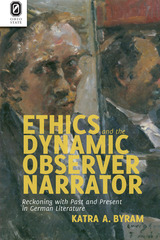
Ethics and the Dynamic Observer Narrator contributes to scholarship on both narrative theory and the historical and cultural context of German and Austrian literary studies. Narrative theory, according to Byram, should understand this form to register complex interactions between history and narrative form. Byram also juxtaposes new readings of works by Textor, Storm, and Raabe from the nineteenth century with analyses of twentieth-century works by Grass, Handke, and Sebald, ultimately reframing our understanding of literary Vergangenheitsbewältigung, or the struggle to come to terms with the past. Overall, Byram shows that neither the problem of reckoning with the past nor the dynamic observer form is unique to Germany’s post-WWII era. Both are products of the dynamics of modern identity, surfacing whenever critical change separates what was from what is.
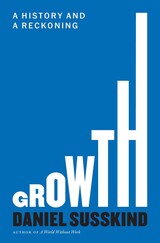
A vivid account of the past, present, and future of economic growth, showing how and why we must continue to pursue it while responding to the challenges it creates.
Over the past two centuries, economic growth has freed billions from the struggle for subsistence and made our lives far healthier and longer. Yet prosperity has come at a price: environmental destruction, desolation of local cultures, the rise of vast inequalities and destabilizing technologies. Faced with such damage, many now claim that the only way forward is through “degrowth,” deliberately shrinking our economic footprint. But to abandon humanity’s progress would be folly. Instead, Daniel Susskind argues, we must keep growth but redirect it, making it better reflect what we truly value.
In a sweeping analysis full of historical insight, Susskind shows how policymaking came to revolve around a single-minded quest for greater GDP. This is a surprisingly recent development: economic growth was barely discussed until the second half of the twentieth century. And our understanding of what drives it is more recent still. Only lately have we come to see how humankind emerged from its millennia of stagnation: through the sustained discovery of powerful and productive new ideas.
This insight undermines the mantra that “we cannot have infinite growth on a finite planet,” for the world of ideas is infinitely vast. Yet growth’s critics are right to insist that we can no longer focus on its upsides alone. We must confront the tradeoffs, Susskind contends: sometimes, societies will have to deliberately pursue less growth for the sake of other goals. These will be moral decisions, not simply economic ones, demanding the engagement not just of politicians and experts but of all citizens.
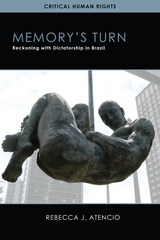
In clear and engaging prose, Rebecca J. Atencio tells the story of the slow turn to memory in Brazil, a turn that has taken place in both politics and in cultural production. She shows how testimonial literature, telenovelas, literary novels, theatrical plays, and memorials have interacted with policies adopted by the Brazilian state, often in unexpected ways. Under the right circumstances, official and cultural forms of reckoning combine in Brazil to produce what Atencio calls cycles of cultural memory. Novel meanings of the past are forged, and new cultural works are inspired, thus creating the possibility for further turns in the cycle.
The first book to analyze Brazil’s reckoning with dictatorship through both institutional and cultural means, Memory’s Turn is a rich, informative exploration of the interplay between these different modes of memory reconstruction.
Winner, Alfred B. Thomas Award, Southeastern Council of Latin American Studies
Honorable Mention, Roberto Reis Book Prize, Brazilian Studies Association

Still a predominantly white profession, librarianship has a legacy of racial discrimination, and it is essential that we face the ways that race impacts how we meet the needs of diverse user communities. Identifying and acknowledging implicit and learned bias is a necessary step toward transforming not only our professional practice but also our scholarship, assessment, and evaluation practices. From this Special Report, readers will
- learn the hidden history of Africa’s contributions to libraries and educational institutions, which are often omitted from K-12, higher education, and library school curricula;
- engage with the racist legacies of libraries as well as contemporary scholarship related to Black and African American users’ experiences with libraries;
- be introduced to frameworks and theories that can help to identify and unpack the role of race in librarianship and in library users’ experiences; and
- garner practical takeaways to bring to their own views and practice of librarianship.

The collection of poems in The Reckoning of Jeanne d’Antietam circles the U.S. Civil War and the failed revolution of Reconstruction, and Matthew Moore makes incursions into the histories and beliefs of the era through architectures of sound, but also via ancillary histories and histories stacked upon histories—densely and visibly scrawled—like Anselm Kiefer's sculptures of lead books, melted and dripping with the texts of illegible songs. His poems include the figure of Joan of Arc (Jeanne d'Arc) and her voices; the explosion of the U.S. prison system and racial legal fictions amid the groundswell of mass terror in the wake of the U.S. Civil War; the politically poisoned poetic lineage that moves from Modernism, to New Criticism, and dead-ends in Southern Agrarianism; and the destructive colonial histories of the sugar and cotton industries.
The Reckoning of Jeanne d’Antietam stands imbricated with the spell of language-the-testament; language as hard rhyme and difficult music, evanescence and violence; and the invocation of names and events at their meeting places in history. Moore’s poems stand against sentiment and pity, and against the consolation of that which cannot be consoled.
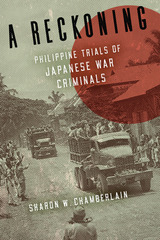
Chamberlain highlights the differing views of Filipinos and Japanese about the trials. The Philippine government aimed to show its commitment to impartial proceedings with just outcomes. In Japan, it appeared that defendants were selected arbitrarily, judges and prosecutors were biased, and lower-ranking soldiers were punished for crimes ordered by their superior officers. She analyzes the broader implications of this divergence as bilateral relations between the two nations evolved and contends that these competing narratives were reimagined in a way that, paradoxically, aided a path toward postwar reconciliation.
Nelson brings together stories of human rights activism, Mayan identity struggles, coerced participation in massacres, and popular entertainment—including traditional dances, horror films, and carnivals—with analyses of mass-grave exhumations, official apologies, and reparations. She discusses the stereotype of the Two-Faced Indian as colonial discourse revivified by anti-guerrilla counterinsurgency and by the claims of duplicity leveled against the Nobel laureate Rigoberta Menchú, and she explores how duplicity may in turn function as a survival strategy for some. Nelson examines suspicions that state power is also two-faced, from the left’s fears of a clandestine para-state behind the democratic façade, to the right’s conviction that NGOs threaten Guatemalan sovereignty. Her comparison of antimalaria and antisubversive campaigns suggests biopolitical ways that the state is two-faced, simultaneously giving and taking life. Reckoning is a view from the ground up of how Guatemalans are finding creative ways forward, turning ledger books, technoscience, and even gory horror movies into tools for making sense of violence, loss, and the future.
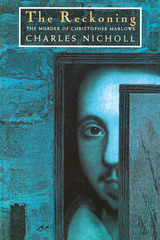
Here, in a tour de force of scholarship and ingenuity, Charles Nicholl penetrates four centuries of obscurity to reveal not only a complex and unsettling story of entrapment and betrayal, chimerical plot and sordid felonies, but also a fascinating vision of the underside of the Elizabethan world.
"Provides the sheer enjoyment of fiction, and might just be true."—Michael Kenney, Boston Globe
"Mr. Nicholl's glittering reconstruction of Marlowe's murder is only one of the many fascinating aspects of this book. Indeed, The Reckoning is equally compelling for its masterly evocation of a vanished world, a world of Elizabethan scholars, poets, con men, alchemists and spies, a world of Machiavellian malice, intrigue and dissent."—Michiko Kakutani, New York Times
"The rich substance of the book is his detail, the thick texture of betrayal and evasion which was Marlowe's life."—Thomas Flanagan, Washington Post Book World
Winner of the Crime Writer's Gold Dagger Award for Nonfiction Thriller

An ethnography of the Ecuadorian Amazon that demonstrates the need for a relational, place-based, contingent understanding of harm and toxicity.
Reckoning with Harm is a striking ethnographic analysis of the harm resulting from oil extraction. Covering fifty years of settler colonization and industrial transformation of the Ecuadorian Amazon, Amelia Fiske interrogates the relations of harm. She moves between forest-courtrooms and oily waste pits, farms and toxic tours, to explore both the ways in which harm from oil is entangled with daily life and the tensions surrounding efforts to verify and redress it in practice. Attempts to address harm from the oil industry in Ecuador have been consistently confounded by narrow, technocratic understandings of evidence, toxicity, and responsibility. Building on collaborators’ work to contest state and oil company insistence that harm is controlled and principally chemical in nature, Fiske shows that it is necessary to refigure harm as relational in order to reckon with unremediated contamination of the past while pushing for broad forms of accountability in the present. She theorizes that harm is both a relationship and an animating feature of relationships in this place, a contingent understanding that is needed to contemplate what comes next when living in a toxic world.
In Reckoning with Matter, Matthew L. Jones draws on the remarkably extensive and well-preserved records of the quest to explore the concrete processes involved in imagining, elaborating, testing, and building calculating machines. He explores the writings of philosophers, engineers, and craftspeople, showing how they thought about technical novelty, their distinctive areas of expertise, and ways they could coordinate their efforts. In doing so, Jones argues that the conceptions of creativity and making they exhibited are often more incisive—and more honest—than those that dominate our current legal, political, and aesthetic culture.

A monumentalizing portrayal of a peasant bowed over by brutal toil, Man with a Hoe (1860–62) by Jean-François Millet (1814–1875) is arguably the most art historically significant painting in the J. Paul Getty Museum’s collection of nineteenth-century European art. This volume situates the work in the arc of Millet’s career and traces its fascinating and contentious reception, from its scandalous debut at the 1863 Paris Salon to the years following its acquisition by American collectors in the 1890s. The essays examine the painting’s tumultuous public life, beginning in France, where critics attacked it on aesthetic and political grounds as a radical realist provocation; through its transformative movement in the art market during the remaining years of the artist’s life and following his death; to its highly publicized arrival in California as a celebrated masterpiece. In the United States it was enlisted to serve philanthropic interests, became the subject of a popular poem, and once again became embroiled in controversy, in this case one that was strongly inflected by American racial politics. This is the first publication dedicated to the work since its acquisition by the Getty Museum in 1985.
This volume is published to accompany an exhibition on view at the J. Paul Getty Museum at the Getty Center from September 12 to December 10, 2023.
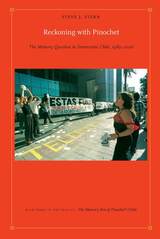
Stern’s analysis integrates policymaking by elites, grassroots efforts by human rights victims and activists, and inside accounts of the truth commissions and courts where top-down and bottom-up initiatives met. Interpreting solemn presidential speeches, raucous street protests, interviews, journalism, humor, cinema, and other sources, he describes the slow, imperfect, but surprisingly forceful advance of efforts to revive democratic values through public memory struggles, despite the power still wielded by the military and a conservative social base including the investor class. Over time, resourceful civil-society activists and select state actors won hard-fought, if limited, gains. As a result, Chileans were able to face the unwelcome past more honestly, launch the world’s first truth commission to examine torture, ensnare high-level perpetrators in the web of criminal justice, and build a public culture of human rights. Stern provides an important conceptualization of collective memory in the wake of national trauma in this magisterial work of history.

The essays investigate and meditate on a broad array of related topics, including drone strikes, tear gas, and military intervention; the sugar trade, the Dutch blackface celebration of Zwarte Piet, and constructions of whiteness in Europe and the U.S.; and visual arts of Russian avant-garde painters, an Iraqi choreographer living in Belgium, and German choreographer Pina Bausch.
This is a lyrical, timely book deeply salient to the political moment we continue to find ourselves in: a moment of incredible anti-refugee and anti-immigrant sentiment, a moment of xenophobic and misogynistic violence.

In The Torture Letters, Laurence Ralph chronicles the history of torture in Chicago, the burgeoning activist movement against police violence, and the American public’s complicity in perpetuating torture at home and abroad. Engaging with a long tradition of epistolary meditations on racism in the United States, from James Baldwin’s The Fire Next Time to Ta-Nehisi Coates’s Between the World and Me, Ralph offers in this book a collection of open letters written to protesters, victims, students, and others. Through these moving, questing, enraged letters, Ralph bears witness to police violence that began in Burge’s Area Two and follows the city’s networks of torture to the global War on Terror. From Vietnam to Geneva to Guantanamo Bay—Ralph’s story extends as far as the legacy of American imperialism. Combining insights from fourteen years of research on torture with testimonies of victims of police violence, retired officers, lawyers, and protesters, this is a powerful indictment of police violence and a fierce challenge to all Americans to demand an end to the systems that support it.
With compassion and careful skill, Ralph uncovers the tangled connections among law enforcement, the political machine, and the courts in Chicago, amplifying the voices of torture victims who are still with us—and lending a voice to those long deceased.
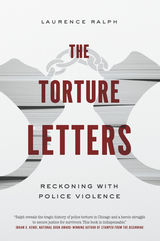
In The Torture Letters, Laurence Ralph chronicles the history of torture in Chicago, the burgeoning activist movement against police violence, and the American public’s complicity in perpetuating torture at home and abroad. Engaging with a long tradition of epistolary meditations on racism in the United States, from James Baldwin’s The Fire Next Time to Ta-Nehisi Coates’s Between the World and Me, Ralph offers in this book a collection of open letters written to protesters, victims, students, and others. Through these moving, questing, enraged letters, Ralph bears witness to police violence that began in Burge’s Area Two and follows the city’s networks of torture to the global War on Terror. From Vietnam to Geneva to Guantanamo Bay—Ralph’s story extends as far as the legacy of American imperialism. Combining insights from fourteen years of research on torture with testimonies of victims of police violence, retired officers, lawyers, and protesters, this is a powerful indictment of police violence and a fierce challenge to all Americans to demand an end to the systems that support it.
With compassion and careful skill, Ralph uncovers the tangled connections among law enforcement, the political machine, and the courts in Chicago, amplifying the voices of torture victims who are still with us—and lending a voice to those long deceased.
READERS
Browse our collection.
PUBLISHERS
See BiblioVault's publisher services.
STUDENT SERVICES
Files for college accessibility offices.
RECENTLY PUBLISHED



UChicago Accessibility Resources
home | accessibility | search | about | contact us
BiblioVault ® 2001 - 2024
The University of Chicago Press