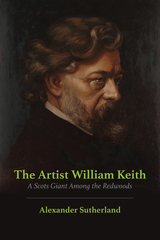
The Artist William Keith: A Scots Giant Among the Redwoods reveals the rise of William Keith (November 18, 1838? – April 13, 1911), a fatherless child from a humble presbyterian upbringing in rural Aberdeenshire, Scotland to an eminent position in the artistic and civic circles of Gold Rush-era San Francisco. Illustrated with 20 images, Alexander Sutherland’s detailed and engaging study traces Keith’s personal, family and artistic influences, his lively personality and his drive to make a name for himself.
Brought to America by his widowed mother in 1851, Keith’s initial career in wood engraving was superseded by an interest in painting. He later trained in Europe, influenced by German Realism, the Barbizon painters in Paris, and later, studying portraiture in Munich. However, his major artistic shift came in 1872, when he befriended fellow Scot, John Muir (April 21, 1838 – December 24, 1914), a conservationist and environmentalist.
Their numerous trips into the mountains of Yosemite and other wilderness regions in search of suitable subjects for painting was the catalyst for a thirty-eight-year friendship and cemented Keith’s success as a landscape painter. A later influence was landscape artist George Inness (1825-94), who helped Keith find a way out of a period of despondency. Keith’s later years in San Francisco were characterised by cosmopolitan and Suffragist connections and influence in the bohemian art world of California. The San Francisco Earthquake of 1906 destroyed much of his life’s work but Keith responded pragmatically producing further work -tangible evidence of his remarkable resilience.