
 A SCHOLARLY BOOK REPOSITORY
10 start with A start with A

This momentous culinary journey begins with Ancien Régime cookbooks and ends with twenty-first-century cooking programs. It takes us from Carême, the "inventor" of modern French cuisine in the early nineteenth century, to top chefs today, such as Daniel Boulud and Jacques Pépin. Not a history of French cuisine, Accounting for Taste focuses on the people, places, and institutions that have made this cuisine what it is today: a privileged vehicle for national identity, a model of cultural ascendancy, and a pivotal site where practice and performance intersect. With sources as various as the novels of Balzac and Proust, interviews with contemporary chefs such as David Bouley and Charlie Trotter, and the film Babette's Feast, Ferguson maps the cultural field that structures culinary affairs in France and then exports its crucial ingredients. What's more, well beyond food, the intricate connections between cuisine and country, between local practice and national identity, illuminate the concept of culture itself.
To Brillat-Savarin's famous dictum—"Animals fill themselves, people eat, intelligent people alone know how to eat"—Priscilla Ferguson adds, and Accounting for Taste shows, how the truly intelligent also know why they eat the way they do.
“Parkhurst Ferguson has her nose in the right place, and an infectious lust for her subject that makes this trawl through the history and cultural significance of French food—from French Revolution to Babette’s Feast via Balzac’s suppers and Proust’s madeleines—a satisfying meal of varied courses.”—Ian Kelly, Times (UK)
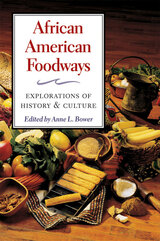
Ranging from seventeenth-century West African fare to contemporary fusion dishes using soul food ingredients, the essays in this book provide an introduction to many aspects of African American foodways and an antidote to popular misconceptions about soul food. Examining the combination of African, Caribbean, and South American traditions, the volume's contributors offer lively insights from history, literature, sociology, anthropology, and African American studies to demonstrate how food's material and symbolic values have contributed to African Americans' identity for centuries. Individual chapters examine how African foodways survived the passage into slavery, cultural meanings associated with African American foodways, and the contents of African American cookbooks, both early and recent.
Contributors are Anne L. Bower, Robert L. Hall, William C. Whit, Psyche Williams-Forson, Doris Witt, Anne Yentsch, Rafia Zafar.

African Performance Arts and Political Actspresents innovative formulations for how African performance and the arts shape the narratives of cultural history and politics. This collection, edited by Naomi André, Yolanda Covington-Ward, and Jendele Hungbo, engages with a breadth of African countries and art forms, bringing together speech, hip hop, religious healing and gesture, theater and social justice, opera, radio announcements, protest songs, and migrant workers’ dances. The spaces include village communities, city landscapes, prisons, urban hostels, Township theaters, opera houses, and broadcasts through the airwaves on television and radio as well as in cyberspace. Essays focus on case studies from Cameroon, the Democratic Republic of the Congo, Nigeria, Senegal, South Africa, and Tanzania.

Fabio Parasecoli discovers that for centuries, southern Mediterranean countries such as Italy fought against food scarcity, wars, invasions, and an unfavorable agricultural environment. Lacking in meat and dairy, Italy developed foodways that depended on grains, legumes, and vegetables until a stronger economy in the late 1950s allowed the majority of Italians to afford a more diverse diet. Parasecoli elucidates how the last half century has seen new packaging, conservation techniques, industrial mass production, and more sophisticated systems of transportation and distribution, bringing about profound changes in how the country’s population thought about food. He also reveals that much of Italy’s culinary reputation hinged on the world’s discovery of it as a healthy eating model, which has led to the prevalence of high-end Italian restaurants in major cities around the globe.
Including historical recipes for delicious Italian dishes to enjoy alongside a glass of crisp Chianti, Al Dente is a fascinating survey of this country’s cuisine that sheds new light on why we should always leave the gun and take the cannoli.
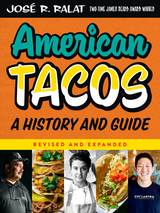
The first history of tacos developed in the United States, now revised and expanded, this book is the definitive survey that American taco lovers must have for their own taco explorations.
“Everything a food history book should be: illuminating, well-written, crusading, and inspiring a taco run afterwards. You’ll gain five pounds reading it, but don’t worry—most of that will go to your brain.”—Gustavo Arellano, Los Angeles Times
“[Ralat] gives an in-depth look at each taco’s history and showcases other aspects of taco culture that has solidified it as a go-to dish on dinner tables throughout the nation.”—Smithsonian Magazine
“A fascinating look at America’s many regional tacos. . . . From California’s locavore tacos to Korean ‘K-Mex’ tacos to Jewish ‘deli-Mex’ to Southern-drawl ‘Sur-Mex’ tacos to American-Indian-inspired fry bread tacos to chef-driven ‘moderno’ tacos, Ralat lays out a captivating landscape.”—Houston Chronicle
“You’ll learn an enormous and entertaining amount about [tacos] in . . . American Tacos. . . . The book literally covers the map of American tacos, from Texas and the South to New York, Chicago, Kansas City and California.”—Forbes
“An impressively reported new book . . . a fast-paced cultural survey and travel guide . . . American Tacos is an exceptional book.”—Taste
2021 Best Travel Book, International Latino Book Awards
Tacos may have been created south of the border, but Americans have made this Mexican food their own, with each style reflective of a time and a place. American Tacos explores them all, taking us on a detailed and delicious journey through the evolution of this dish.In search of every taco variety from California to Texas and beyond, Ralat traveled from coast to coast and border to border, visiting thirty-eight cities across the country. He examines the pervasive crunchy taco and the new Alta California tacos from chefs Wes Avila, Christine Rivera, and Carlos Salgado. He tastes famous Tex-Mex tacos like the puffy taco and breakfast taco, then tracks down the fry bread taco and the kosher taco. And he searches for the regional hybrid tacos of the American South and the modern, chef-driven tacos of restaurants everywhere. Throughout, he tells the story of how each style of taco came to be, creating a rich look at the diverse taco landscape north of the border. Featuring interviews with taqueros and details on taco paraphernalia and the trappings of taco culture, American Tacos is a book no taco fan will want to take a bite without.

New essays from foodways archaeology related to cuisine in social, cultural, and environmental contexts

The delicious recipes and community spirit that have made Appetite for Change a force for good in North Minneapolis
Feed someone a delicious meal, and you've satisfied a moment’s hunger. Show someone how to cultivate, cook, and share good food, and you satisfy the hungry soul of a whole community. Feeding the soul is what Appetite for Change does, working to improve the foodscape in its Northside community through youth-led urban gardens and farmers markets, cooking workshops and a meal box delivery service, and the Breaking Bread Cafe. Sharing both enticing recipes and heartfelt stories of sustenance, Appetite for Change is filled with soul food classics that feature light twists and local touches and show how multiple cultures can commingle within one cookbook—and even one plate.
There are recipes here for everyone: side dishes like Caribbean Coleslaw, Okra Succotash, and Curried Potato Bites; salads, including Purple Rain Salad and Beet It Salad, both created by AFC youth members to sell at Twins baseball games; small plates, from Jackfruit Nachos to Fried Green Tomatoes; and family-favorite soups and stews, like Lentil Sweet Potato Stew and Jambalaya. There are even breakfast options—including Jerk Shrimp and Cheese Grits, Banana Pecan Bread, and a Big, Beautiful Frittata—and desserts ranging from Flourless Chocolate Cake to Cranberry Cream Cheese Bars. And when it’s time to feed a crowd, look no further than the “Community Feasts” chapter, chock-full of recipes as familiar as Fried Chicken and as singular as Delicata Black Bean Tacos.
Healthy, affordable, easy, and delicious, all of the recipes shared here connect with stories of how the people and purpose behind Appetite for Change have brought nourishing hope and new life to an entire community.
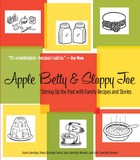
Compiled by four sisters and based on their recollections of their childhood in Oshkosh, Wisconsin, Apple Betty & Sloppy Joe captures the glow of memories formed while growing up in a midwestern kitchen. From Lemon Meringue Pie to Tomato Soup Cake, from Mom's Chicken Pie to Grandma Noffke's Sliced Cucumber Pickles, this charming book features hundreds of recipes (some classic, some quirky), plus dozens of food and cooking-related anecdotes, memories, humorous asides, and period photos that transport readers back to Mom's or Grandma's kitchen, circa 1950.
The Sanvidges share a legacy of beloved dishes and food memories that resonate not just for their family, but for readers everywhere who grew up in a small midwestern town - or wish they had. Nostalgic, funny, and warmhearted, Apple Betty & Sloppy Joe celebrates the ways food and food memories link us to our past, and to each other. A delightful gift for food lovers of any generation.
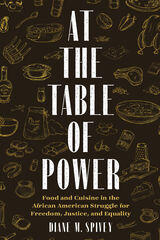
At the Table of Power is both a cookbook and a culinary history that intertwines social issues, personal stories, and political commentary. Renowned culinary historian Diane M. Spivey offers a unique insight into the historical experience and cultural values of African America and America in general by way of the kitchen. From the rural country kitchen and steamboat floating palaces to marketplace street vendors and restaurants in urban hubs of business and finance, Africans in America cooked their way to positions of distinct superiority, and thereby indispensability. Despite their many culinary accomplishments, most Black culinary artists have been made invisible—until now. Within these pages, Spivey tells a powerful story beckoning and daring the reader to witness this culinary, cultural, and political journey taken hand in hand with the fight of Africans in America during the foundation years, from colonial slavery through the Reconstruction era. These narratives, together with the recipes from the nineteenth and twentieth centuries, expose the politics of the day and offer insight on the politics of today. African American culinary artists, Spivey concludes, have more than earned a rightful place at the table of culinary contribution and power.
READERS
Browse our collection.
PUBLISHERS
See BiblioVault's publisher services.
STUDENT SERVICES
Files for college accessibility offices.
RECENTLY PUBLISHED






UChicago Accessibility Resources
home | accessibility | search | about | contact us
BiblioVault ® 2001 - 2024
The University of Chicago Press