
 A SCHOLARLY BOOK REPOSITORY
9 start with W start with W

Wars in the Woods examines the conflicts that have developed over the preservation of forests in America, and how government agencies and advocacy groups have influenced the management of forests and their resources for more than a century. Samuel Hays provides an astute analysis of manipulations of conservation law that have touched off a battle between what he terms “ecological forestry” and “commodity forestry.” Hays also reveals the pervading influence of the wood products industry, and the training of U.S. Forest Service to value tree species marketable as wood products, as the primary forces behind forestry policy since the Forest Management Act of 1897.
Wars in the Woods gives a comprehensive account of the many grassroots and scientific organizations that have emerged since then to combat the lumber industry and other special interest groups and work to promote legislation to protect forests, parks, and wildlife habitats. It also offers a review of current forestry practices, citing the recent Federal easing of protections as a challenge to the progress made in the last third of the twentieth century.
Hays describes an increased focus on ecological forestry in areas such as biodiversity, wildlife habitat, structural diversity, soil conservation, watershed management, native forests, and old growth. He provides a valuable framework for the critical assessment of forest management policies and the future study and protection of forest resources.
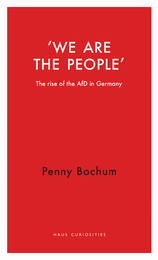
We are the People analyzes the sudden growth and radicalization of the AfD, from its Euroskeptic beginnings in 2013 to its increasing extremism. Penny Bochum shows us how the leaders’ use of inflammatory, xenophobic, and even Nazi-era language mirrors that of emerging far-right forces across much of the Western world. At the same time, through a lucid examination of the group’s ideology, Bochum shows how their brand of populism is distinct and based on German experiences and history.

Gordy's uncanny instinct for finding extraordinary talent--from performers and musicians to songwriters and producers—packed the label's roster with a who's who of historic artists and hitmakers. Here is the story of the Supremes and superstar Diana Ross, of the towering solo acts Marvin Gaye and Stevie Wonder, of vocal groups led by the Temptations and Four Tops, of the phenomenal Jackson Five and Michael Jackson, and of singer/songwriter and Motown executive Smokey Robinson. Up front about Gordy's manipulative and complex relationships with his artists, George reveals the inner workings of how Motown conducted its business. He also offers portraits of the Funk Brothers and other musicians who played the unforgettable songs.
George's preface shows how Motown influenced a later generation of young artists and music moguls, including R. Kelly, D'Angelo, Sean Combs, and Russell Simmons.


Focusing on a region wider than today's nation-state of Iran, this book explores developments in the spheres that most affect women: gender constructs, family structure, community roles, education, economic participation, Islamic practices and institutions, politics, and artistic representations.
The contributors to this volume are prominent international scholars working in this field, and each draws on decades of research to address the history of Iranian women within the context of his or her area of expertise. This broad framework allows for a thorough and nuanced examination of the history of a complex society.

Drawing on a diverse range of sources—oral histories along with union, industry, and government archival materials—Wolfe's account focuses not only on labor leaders and formal Left groups, but considers the impact of grassroots workers' movements as well. He pays particular attention to the role of gender in the often-contested relations between leadership groups and thee rank and file. Wolfe's analysis illuminates how various class and gender ideologies influenced the development of unions, industrialists' strategies, and rank-and-file organizing and protest activities.
This study reveals how workers in Sào Paulo maintained a local grassroots social movement that, by the mid–1950s, succeeded in seizing control of Brazil's state-run official unions. By examining the actions of these workers in their rise to political prominence in the 1940s and 1950s, this book provides a new understanding of the sources and development of populist politics in Brazil.


Few people today remember John Swainson. As a teenage soldier he lost both legs in a WWII landmine explosion. Back in the United States, following a meteoric political rise in the Michigan State Senate, Swainson was elected as Michigan's youngest governor since Stevens T. Mason.
In 1970 Swainson was elected to the Michigan Supreme Court, becoming one of the few public officials to have served in the legislative, executive, and judicial branches of state government. Then, in 1957, he was indicted on federal charges of bribery and perjury, and convicted of lying to a federal grand jury. Forced to leave the state Supreme Court and disbarred from practicing law, he became a pariah, sinking into depression and alcoholism. He virtually disappeared from public view.
Lawrence M. Glazer re-examines the FBI's investigation of Swainson and delves into his 1975 trial in detail. He reveals new information from eye-witnesses who never testified and, in a poignant coda, relates the little-known story of Swainson's rehabilitation and return to public life as a historian.

Writing across the Color Line details how this body of literature was selected for publication, edited, manufactured, advertised, and distributed, even as it faced hostile criticism and frequent misinterpretation by white readers. Shedding light on the transformative potential of multiethnic literature and the tenacity of racist attitudes that dominated the literary marketplace, Dietrich proves that Native American, African American, Latinx, Asian American, and Irish American writers of the period relied on self-caricature, tricksterism, and the careful control of authorial personae to influence white audiences.
READERS
Browse our collection.
PUBLISHERS
See BiblioVault's publisher services.
STUDENT SERVICES
Files for college accessibility offices.
RECENTLY PUBLISHED







UChicago Accessibility Resources
home | accessibility | search | about | contact us
BiblioVault ® 2001 - 2024
The University of Chicago Press