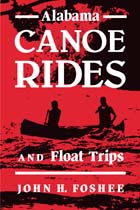
A detailed guide to 102 canoe trips on the Cahaba River and 40 other creeks and rivers within the state.
John H. Foshee’s popular and informative Alabama Canoe Rides and Float Trips has been a favorite of canoeing enthusiasts since 1975, providing a detailed guide to 102 canoe trips on the Cahaba River and 40 other creeks and rivers within the state. The trips highlighted in the book range from 3½ to 14 miles in length, with difficulty factors varying from leisurely float trips to Class 4 rapids.
This handy guide will assist beginning and expert canoeists in the selection of and preparation for a variety of float experiences. The author gives suggestions for river safety and makes recommendations for equipment. In addition, he points out major danger areas and obstacles that may be encountered and includes information on river access and use of topographical maps. An appendix contains brief descriptions of the rides, including their put-ins and take-outs, and follows the general format of the individual trip descriptions.
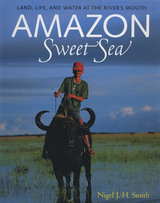
Far into the Atlantic Ocean, the outflow from the Amazon River creates a "sweet sea" of fresh water. At the river's mouth, a vast delta of river channels and marshes, floodplain and upland forests, open and scrub savannas, floating meadows, and mangrove swamps hosts an astonishingly diverse assemblage of plant and animal life. So rich is this biological treasure house that early European explorers deemed it inexhaustible.
In this highly readable book, Nigel Smith explores how human use of the Amazon estuary's natural resources has been affected by technological change, rapid urban growth, and accelerated market integration. Avoiding alarmist rhetoric, he shows how human intervention in the estuary has actually diversified agriculture and helped save floodplain forests from wanton destruction. His findings underscore the importance of understanding the history of land use and the ecological knowledge of local people when formulating development and conservation policies. The book will be of interest to everyone concerned with the fate of tropical forests, conserving biodiversity, and developing natural resources in a sustainable manner.
The Bark River valley in southeastern Wisconsin is a microcosm of the state's - indeed, of the Great Lakes region's - natural and human history. "The Bark River Chronicles" reports one couple's journey by canoe from the river's headwaters to its confluence with the Rock River and several miles farther downstream to Lake Koshkonong. Along the way, it tells the stories of Ice Age glaciation, the effigy mound builders, the Black Hawk War, early settlement and the development of waterpower sites, and recent efforts to remove old dams and mitigate the damage done by water pollution and invasive species.
Along with these big stories, the book recounts dozens of little stories associated with sites along the river. The winter ice harvest, grain milling technology, a key supreme court decision regarding toxic waste disposal, a small-town circus, a scheme to link the Great Lakes to the Mississippi River by canal, the murder of a Chicago mobster, controversies over race and social class in Waukesha County's lake country, community efforts to clean up the river and restore a marsh, visits to places associated with the work of important Wisconsin writers - these and many other stories belong to the Bark River chronicles.
For the two voyageurs who paddle the length of the Bark, it is a journey of rediscovery and exploration. As they glide through marshes, woods, farmland, and cities, they acquire not only historical and environmental knowledge but also a renewed sense of the place in which they live. Maps and historical photographs help the reader share their experience.
The Colorado River is a vital resource to urban and agricultural communities across the Southwest, providing water to 30 million people. Contested Waters tells the river's story-a story of conquest, control, division, and depletion.
Beginning in prehistory and continuing into the present day, Contested Waters focuses on three important and often overlooked aspects of the river's use: the role of western water law in its over-allocation, the complexity of power relationships surrounding the river, and the concept of sustainable use and how it has been either ignored or applied in recent times. It is organized in two parts, the first addresses the chronological history of the river and long-term issues, while the second examines in more detail four specific topics: metropolitan perceptions, American Indian water rights, US-Mexico relations over the river, and water marketing issues. Creating a complete picture of the evolution of this crucial yet over-utilized resource, this comprehensive summary will fascinate anyone interested in the Colorado River or the environmental history of the Southwest.
Covering the period from the first government survey of the treacherous Limekiln Crossing to the completion of the Livingstone Channel, The Detroit River tells the story of the industrial transformation of the city’s most important waterway.
Exploring the Big Woods: A Guide to the Last Great Forest of Eastern Arkansas is both a natural history and a guide to one of the last remnants of Mississippi bottomland forest, an ecosystem that once stretched from southern Illinois to the Gulf Coast.
Crossed by the White River and its tributaries, which periodically flood and release nutrients, the Big Woods is one of the few places in the Mississippi River Valley where this life-giving flood cycle persists. As a result, it is home to an unusual abundance of animals and plants.
Immense cypresses, hickories, sweetgums, oaks, and sycamores; millions of migrating waterfowl; incredible scenery; and the complex relationship between humans and nature are all to be discovered here.
Exploring the Big Woods will introduce readers to the natural features, plants, animals, and hiking and canoeing trails going deep into the forests and swamps of this rare and beautiful natural resource.
A breathtaking portrait of Alabama rivers.
From their primal seepages in the Appalachian highlands or along the broad Chunnenuggee Hills, Alabama’s rivers carve through the rocky uplands and down the Fall Line rapids, then ease across the coastal plain to their eventual confluence with the Gulf of Mexico.
Beth Maynor Young’s 155 full-color photographs constitute art through a lens; the colors, the light, and the angles all converge for a tender praise of her subject. Her stunning visuals are supported by tantalizing captions and introductory text from John C. Hall, a master field trip leader. Together, they tell a proud story of the native beauty and complexity of these Alabama watercourses that shepherd fully 20% of the nation’s fresh water to sea.
The intimate close-up of verdant mosses or pebbled beaches pulls one into their space just as surely as does a sweeping scene of a watershed valley or a sparkling sunset over water. We all become eager listeners and observers on this guided “paddle to the Gulf,” drinking in the peace, delight, and beauty offered by the experience. At the end, we know we won’t be the same as before beginning the journey.
In addition to being a celebration of their richness, Headwaters serves as a call to greater stewardship of these riverine resources. Conservation sidebars describe the current efforts in this direction and encourage further study and protection. This book tells us, in glorious color and instructive word, why we’ll always treasure these wonderful rivers.
Although John Wesley Powell and party are usually given credit for the first river descent through the Grand Canyon, the ghost of James White has haunted those claims. White was a Colorado prospector, who, almost two years before Powell's journey, washed up on a makeshift raft at Callville, Nevada. His claim to have entered the Colorado above the San Juan River with another man (soon drowned) as they fled from Indians was widely disseminated and believed for a time, but Powell and his successors on the river publically discounted it. Colorado River runners and historians have since debated whether White's passage through Grand Canyon even could have happened.
Hell or High Water is the first full account of White's story and how it became distorted and he disparaged over time. It is also a fascinating detective story, recounting how White's granddaughter, Eilean Adams, over decades and with the assistance of a couple of notable Colorado River historians who believed he could have done what he claimed, gradually uncovered the record of James White's adventure and put together a plausible narrative of how and why he ended up floating helplessly down a turbulent river, entrenched in massive cliffs, with nothing but a driftwood raft to carry him through.
When he started taking paying passengers by boat through the rapids of the Colorado River's canyons, Norman Nevills invented whitewater tourism and the commercial river business. For twelve years, from 1938 until his death in a plane crash in 1949, he safely took, without a single life lost, friends, explorers, and customers down the Colorado, Green, San Juan, Salmon, and Snake Rivers in boats he designed. National media found him and his adventures irresistible and turned him into the personification of river running. Logging seven trips through the Grand Canyon when no one else had completed more than two, he was called the Fast Water Man. Boatmen he trained went on to found their own competing operations. Always controversial, Nevills had important critics and enemies as well as friends and supporters, but no one can dispute his tremendous impact on the history of western rivers and recreation.
Nevills's complete extant journals of those river expeditions are published for the first time in High, Wide, and Handsome. They contain vivid stories and images of still untamed-by-dams rivers and canyons in the Colorado River system and elsewhere, of wild rides in wooden boats, and of the few intrepid pioneers of adventure tourism who paid Nevills so they could experience it all. They have been transcribed and edited by river historian Roy Webb, author of If We Had a Boat: Green River Explorers, Adventurers, and Runners and Call of the
Colorado.
p.MsoNormal, li.MsoNormal, div.MsoNormal { margin: 0in 0in 0.0001pt; font-size: 12pt; font-family: "Times New Roman"; }div.Section1 { page: Section1; }
Whether the subject is the plants that grow there, the animals that live there, the rivers that run there, or the people he has known there, Paul Lindholdt’s In Earshot of Water illuminates the Pacific Northwest in vivid detail. Lindholdt writes with the precision of a naturalist, the critical eye of an ecologist, the affection of an apologist, and the self-revelation and self-awareness of a personal essayist in the manner of Annie Dillard, Loren Eiseley, Derrick Jensen, John McPhee, Robert Michael Pyle, and Kathleen Dean Moore.
Exploring both the literal and literary sense of place, with particular emphasis on environmental issues and politics in the far Northwest, Lindholdt weds passages from the journals of Lewis and Clark, the log of Captain James Cook, the novelized memoir of Theodore Winthrop, and Bureau of Reclamation records growing from the paintings that the agency commissioned to publicize its dams in the 1960s and 1970s, to tell ecological and personal histories of the region he knows and loves.
In Lindholdt’s beautiful prose, America’s environmental legacies—those inherited from his blood relatives as well as those from the influences of mass culture—and illuminations of the hazards of neglecting nature’s warning signs blur and merge and reemerge in new forms. Themes of fathers and sons layer the book, as well—the narrator as father and as son—interwoven with a call to responsible social activism with appeals to reason and emotion. Like water itself, In Earshot of Water cascades across boundaries and blends genres, at once learned and literary.
Whether profiling the chief of the last hunter-gatherers on the river, an early settler witnessing her first prairie fire and a modern wildlife biologist using fire to manage prairies, the manager of the Granger Farmer’s Co-op Creamery, or a landowner whose bottomlands are continually eaten away by floods, Faldet steadily develops the central idea that people are walking tributaries of the river basin in which they make their homes.
Faldet moves through the history of life along the now-polluted Upper Iowa, always focusing on the ways people depend on the river, the environment, and the resources of the region. He blends contemporary conversations, readings from the historical record, environmental research, and personal experience to show us that the health of the river is best guaranteed by maintaining the biological communities that nurture it. In return, taking care of the Upper Iowa is the best way to take care of our future.
Raven and River leads young readers on a fantastical journey with a raven across the icy Alaska landscape on the verge of spring. Along the way, the raven’s sonorous cry wakes a cast of sleeping woodland creatures, including a bear, a beaver, a hare, and a squirrel—all of whom join him in imploring the still-frozen river to melt and thereby initiate the change of seasons. Packed with information and featuring vibrant full-color illustrations by Jon Van Zyle, Raven and River brings to life these two important harbingers of Alaska’s spring.
Our rivers are in crisis and the need for river restoration has never been more urgent. Water security and biodiversity indices for all of the world’s major rivers have declined due to pollution, diversions, impoundments, fragmented flows, introduced and invasive species, and many other abuses.
Developing successful restoration responses are essential. Renewing Our Rivers addresses this need head on with examples of how to design and implement stream-corridor restoration projects. Based on the experiences of seasoned professionals, Renewing Our Rivers provides stream restoration practitioners the main steps to develop successful and viable stream restoration projects that last. Ecologists, geomorphologists, and hydrologists from dryland regions of Australia, Mexico, and the United States share case studies and key lessons learned for successful restoration and renewal of our most vital resource.
The aim of this guidebook is to offer essential restoration guidance that allows a start-to-finish overview of what it takes to bring back a damaged stream corridor. Chapters cover planning, such emerging themes as climate change and environmental flow, the nuances of implementing restoration tactics, and monitoring restoration results. Renewing Our Rivers provides community members, educators, students, natural resource practitioners, experts, and scientists broader perspectives on how to move the science of restoration to practical success.
In A Reverence for Rivers, Kurt Fausch draws on his experience as a stream ecologist, his interest in Indigenous cultures, and a thoughtful consideration of environmental ethics to explore human values surrounding freshwater ecosystems. Focusing on seven rivers across the globe—from the Salmon River in Oregon to the Sarufutsu River in Japan—he examines the growing ethical dilemmas threatening our rivers, including increasing demands for water, habitat fragmentation, overfishing, and deepening climate change.
How do we decide which rivers deserve legal protection? What is our right to water as humans? And how do we foster resilient rivers? Through a combination of scientific expertise and thoughtful observations of the natural world, Fausch translates the science of rivers into accessible language for readers and begins to address these questions. He weaves deep Indigenous histories throughout the book and includes personal visits to tribal lands to explore the traditional values held by several Indigenous groups. Fausch reminds us that our connection to rivers is personal and grounded in specific places, flowing from the stories we carry about our relationships with and responsibilities to these rivers.
In a final essay Fausch ponders Aldo Leopold’s statement that “nothing so important as an ethic is ever written,” but instead evolves in the minds of a thinking community. A Reverence for Rivers speaks to both the mind and the heart, offering perspectives so that we might begin to imagine and create an ethic for living with and caring for the running waters on which we rely for so much.
The death of her father begins Dorothy Weil’s search for what causes the family’s “spinning of in all directions like the pieces of Chaos.” She embarks on a river odyssey, traveling the Ohio, Missouri, and Mississippi Rivers by steamboat, towboat, and even an old-fashioned flatboat. The river brings her family back, as she records the stories of her fellow “river rats”: steamboat veterans, deckhands, captains, and cooks.
The River Home takes the reader into a world few ever glimpse, that of America’s riverboats. In the fast-paced narrative, with incisive characterizations and dialogue, the author introduces us to this vivid milieu and a gallery of fascinating people. We meet her father, a “wild river man from the Kentucky hills,” her mother, “a proper girl from a Cincinnati Dutch clan,” and her brother, a fourth-generation river man, as well as the artists and academics she meets in her adult life.
Weil’s voice is clear and wry, as well as poetic, bringing out both the sadness and joys of a family torn by mismatched backgrounds. Her themes speak to all: the confusion brought by family conflict, the strength of family love no matter how troubled the relationships, the mortality we all face, the importance of where we come from and where we go.
Water potential is a significant natural wealth of most parts of the Balkans, and it has given rise to a surge in hydropower investments unparalleled across Europe. As part of the process, a dam was planned to be built on the Una River, which runs through the Bosnian town of Bihać. This prospect alarmed the city’s residents, culminating in a protest in 2015. The book begins with this protest, and it explores how the threat of dam construction transformed the seemingly apolitical love of the river into a powerful political force around which thousands of people mobilized: riverine citizenship.
The book is based on interviews with participants, archival research, and over twenty years of ethnographic research. Azra Hromadžić focuses on the tension between ecological sustainability efforts in favor of renewable energy, on the one hand, and citizens’ historically shaped, deeply-felt, love for the river, on the other. She shows how the language and promises of green transition can mask the forces of capitalist accumulation that drive this change — whether in the form of building hydroelectric dams or promoting eco-tourism — and thus set in motion another cycle of environmental degradation, social dispossession, and economic exploitation.
America’s western rivers are under assault from development, pollution, invasive species, and climate change. Returning these eco- systems to the time of European contact is often the stated goal for restoration efforts, yet neither the influence of indigenous societ- ies on rivers at the time of contact nor the deeper evolutionary relationships are yet understood by the scientific world. This volume presents a unique synthesis of scientific discoveries and traditional knowledge about the ecology of iconic river species in the American West.
Building from a foundation in fisheries biology and life history data about key species, the book reveals ancient human relationships with those species and describes time-tested Native resource management techniques, drawing from the archaeological record and original ethnographic sources. It evaluates current research trends, summarizes the conceptual foundations for the cultural and evolutionary significance of sustainable use of fish, and seeks pathways for future research. Geographic areas described include the Columbia Plateau, Idaho’s Snake River Plain, the Sacramento River Delta, and the mid-Fraser River of British Columbia. Previously unpublished information is included with the express permission and approval of tribal communities. This approach broadens and deepens the available body of data and establishes a basis for future collaboration between scientists and Native stakeholders toward mutual goals of river ecosystem health.
Organized into four sections, the twelve chapters of Rivers of Change are concerned with prehistoric Native American societies in eastern North America and their transition from a hunting and gathering way of life to a reliance on food production. Written at different times over a decade, the chapters vary both in length and topical focus. They are joined together, however, by a number of shared “rivers of change.”
An illuminating study of how rivers shaped the history, culture, and environment of Alabama and the American South.
In Rivers of History, acclaimed historian Harvey H. Jackson III blends environmental history with compelling storytelling and traces the evolving relationship between people and rivers—from Indigenous communities who first depended on these waterways, to European settlers, to the development of modern towns and industries. Along the way, readers encounter stories of transportation and trade, conflict and cooperation, ecological change and conservation, all tied to the flow of these essential rivers.
Far more than a geographical study, Rivers of History demonstrates how waterways act as lifelines of human experience. Rivers shaped patterns of settlement, enabled agricultural and economic growth, and served as critical channels for communication across the American South. At the same time, they created challenges—flooding, environmental degradation, and competing demands for natural resources—that continue to influence life in the region today.
Jackson shows how the history of Alabama cannot be understood apart from its rivers. The Coosa, Tallapoosa, Cahaba, and Alabama rivers emerge not simply as physical features on a map, but as powerful forces that connect past and present, nature and society. His interdisciplinary approach—bringing together history, geography, and environmental studies—makes this work especially valuable for students, scholars, and general readers alike.
Accessible yet authoritative, Rivers of History is essential reading for anyone interested in Southern history, environmental change, or the enduring relationship between landscapes and human communities. It offers a compelling reminder that the story of a place is often written in the movement of its waters.
For over four decades, the US federal government has undertaken efforts to police and prosecute environmental crimes to protect public health and the natural environment. Yet, we still know very little about how US federal agencies have monitored and sanctioned water pollution violations and if these actions actually deter crime. In Rivers on Fire and Corporate Liars, Joshua Ozymy and Melissa Jarrell Ozymy examined over one thousand federal water pollution investigations and prosecutions undertaken by the US EPA and Department of Justice from 1983 to 2023 to answer these questions. Their analysis provides the most comprehensive empirical examination to date of how the criminal enforcement of water pollution has evolved over time, patterns in prosecutions, and how criminals were sanctioned.
Explores the Southeast’s imperiled river systems and solutions for preserving them in the face of habitat loss, climate change, and extinction
Southern Rivers, by award-winning nature writer and biologist R. Scot Duncan, is a thoroughly crafted exploration of the perilous state of the Southeast’s rivers and the urgent need to safeguard their vitality. The region’s rivers are the epicenter of North American freshwater biodiversity and are the top global hotspot for important aquatic animals including mussels, turtles, snails, crayfish, and fish, many of which have made important contributions to southern life and culture.
Centuries of commercial development have impaired the region’s river systems, sacrificing biodiversity and compromising the rivers’ ability to provide resources essential to human life: drinking water, waste disposal, irrigation, navigation, recreation, power production, and more. Now, increased heat and drought caused by climate change are lowering water levels. As such threats increase, it may seem necessary to choose between nature conservation and human needs, but Duncan persuasively demonstrates that this is a false choice. Conservation enhances human life.
In the same engaging voice of an expert friend that won over thousands of readers of his earlier book, Southern Wonder: Alabama’s Surprising Biodiversity, Duncan explains the task of managing southeastern rivers and how river water quality affects the daily lives of the millions who hold these historic waterways dear. He shows how managing rivers wisely can meet the needs of biodiversity and humanity both. With Americans increasingly anxious about the onset of climate change and the accelerating extinction crisis, Southern Rivers illuminates actionable solutions.
Seventy million years ago in what would become North America, a monstrous thirty-five-foot-long Cretaceous crocodile lurked on a marshy riverbank. Springing suddenly, its huge jaws trapped and crushed a juvenile hadrosaur. Today, the remains of that ancient crocodile are being painstakingly reconstructed in Colorado, where naturalist Zach Fitzner continues his life-long fascination with this amazing animal family.
In Tears for Crocodilia: Evolution, Ecology, and the Disappearance of One of the World’s Most Ancient Animals, Fitzner tracks the evolution of crocodilians from prehistoric predators to modern endangered wildlife, using his own experiences with these reptiles as a lens to understanding wildlife conservation and our relationship with the natural world. Traveling the world to interact with crocodiles, from observing alligators in a wildlife refuge in Texas and paddling a canoe in the Everglades searching for crocodiles to trekking the jungles in Nepal to find endangered gharials, the author expresses a wonder in exploring these diverse ecosystems, making a connection between crocodilians and the lands they live in. As the story follows crocodilians, it also illuminates their often complicated relationship with humans, from crocodile cults in ancient Egypt to American alligators living on golf courses. Fitzner also closely examines the dark side of this relationship, including habitat destruction and poaching as well as the mechanistic view of traditional conservation that turns these magnificent animals into agricultural products. Tears for Crocodilia delves deeply into issues of wildlife conservation, ethics, and how we can coexist with other creatures. It is also a tribute to a magnificent group of animals, survivors from the age of dinosaurs.
Where nature meets history—explore Alabama’s hidden river legacy.
The Tensaw River introduces one of the American South’s richest and most fertile natural features. Author Mike Bunn is director of Historic Blakeley State Park, which is nestled in a prominent bend of the majestic Tensaw River. Reading Bunn is like sailing with a knowledgeable captain along the river’s natural and cultural byways as he offers a treasury of stories and facts that illuminate the river’s astonishing flora and fauna and the sweep of human history along the river’s ageless, meandering waterways.
Forming the eastern boundary of the expansive Mobile-Tensaw Delta, the Tensaw has had little industrial development. Left largely undisturbed, the river still flows free and bountiful into the grand estuary of Mobile Bay in ways and along vistas that would be recognizable to Native Americans centuries ago and to pioneers who arrived before Alabama became a state.
Bunn’s unforgettable stories in The Tensaw River trace the construction and occupation of the Bottle Creek site, an important mound complex built by Southeastern Native Americans a millennia ago. Nearby Blakeley is a spectral antebellum ghost town whose lost memories also tease the imagination. During the Civil War, the boom of artillery fire in the battle that sealed the fate of the city of Mobile echoed along the bends in the Tensaw.
Located near popular Gulf Coast travel destinations, the Tensaw’s forty-one-mile-long “Forgotten Cultural Heritage Corridor” is a gateway to the enchanting beauty of—and humankind’s enduring relationship to—the landscape of the American South.
@font-face { font-family: "Times";}@font-face { font-family: "Verdana";}@font-face { font-family: "Palatino";}p.MsoNormal, li.MsoNormal, div.MsoNormal { margin: 0in 0in 0.0001pt; font-size: 12pt; font-family: "Times New Roman"; }div.Section1 { page: Section1; }
Up on the River is John Madson’s loving and often hilarious tribute to the people, animal life, and places of the Upper Mississippi. Madson’s Upper Mississippi is the part “between the saints,” from St. Louis to St. Paul, where for thirty years he explored the bright waters of the upper reaches of the mighty river itself as well as the tangled multitude of sloughs, cuts, and side channels that wander through its wooded islands and floodplain forests.
“Some of my best time on the River has been in the company of game wardens, biologists, commercial fishermen, clammers, trappers, hunters, and a smelly, mud-smeared coterie of river rats in general, and my views of the River are far more likely to reflect theirs than those of the transportation industry,” Madson writes of his thirty-year acquaintance with the Mississippi. Traveling mainly by canoe and johnboat, he tells of encounters between archetypal commercial fishermen and archetypal game wardens over hot fish chowder, fishing for crappies in the tops of submerged trees and for walleyes amid gale force winds, nesting and migrating herons and ducks and eagles, the histories of river logging and pearling and button making, and towboats and barges and the lives of the “ramstugenous” people who move freight on the river.
Learning about the Upper Mississippi via the wry tutelage of John Madson, who discovered that “whenever I am out on a river some of its freeness rubs off on me,” readers of this classic book will also come under the spell of this freeness.
"Water, water, everywhere . . ." Working with Water, the latest in the popular New Badger History series, teaches young readers about the many ways water has shaped Wisconsin’s history, from glaciers to stewardship. It touches on geography and hydrography; transportation networks of Indians and fur traders; the Erie Canal; shipwrecks, lighthouses, shipping, and shipbuilding; fishing, ricing, "pearling" (clamming), and cranberry cultivation; lumbering, milling, and papermaking; recreation, resorts, tourism, and environmentalism.
The companion Teacher’s Guide and Student Materials engages students in hands-on exploration. It highlights historical processes and encourages multiple learning styles.
Far from being the serene, natural streams of yore, modern rivers have been diverted, dammed, dumped in, and dried up, all in efforts to harness their power for human needs. But these rivers have also undergone environmental change. The old adage says you can’t step in the same river twice, and Ellen Wohl would agree—natural and synthetic change are so rapid on the world’s great waterways that rivers are transforming and disappearing right before our eyes.
A World of Rivers explores the confluence of human and environmental change on ten of the great rivers of the world. Ranging from the Murray-Darling in Australia and the Yellow River in China to Central Europe’s Danube and the United States’ Mississippi, the book journeys down the most important rivers in all corners of the globe. Wohl shows us how pollution, such as in the Ganges and in the Ob of Siberia, has affected biodiversity in the water. But rivers are also resilient, and Wohl stresses the importance of conservation and restoration to help reverse the effects of human carelessness and hubris.
What all these diverse rivers share is a critical role in shaping surrounding landscapes and biological communities, and Wohl’s book ultimately makes a strong case for the need to steward positive change in the world’s great rivers.
READERS
Browse our collection.
PUBLISHERS
See BiblioVault's publisher services.
STUDENT SERVICES
Files for college accessibility offices.
UChicago Accessibility Resources
home | accessibility | search | about | contact us
BiblioVault ® 2001 - 2026
The University of Chicago Press