
 A SCHOLARLY BOOK REPOSITORY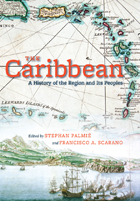
Combining fertile soils, vital trade routes, and a coveted strategic location, the islands and surrounding continental lowlands of the Caribbean were one of Europe’s earliest and most desirable colonial frontiers. The region was colonized over the course of five centuries by a revolving cast of Spanish, Dutch, French, and English forces, who imported first African slaves and later Asian indentured laborers to help realize the economic promise of sugar, coffee, and tobacco. The Caribbean: A History of the Region and Its Peoples offers an authoritative one-volume survey of this complex and fascinating region.
This groundbreaking work traces the Caribbean from its pre-Columbian state through European contact and colonialism to the rise of U.S. hegemony and the economic turbulence of the twenty-first century. The volume begins with a discussion of the region’s diverse geography and challenging ecology and features an in-depth look at the transatlantic slave trade, including slave culture, resistance, and ultimately emancipation. Later sections treat Caribbean nationalist movements for independence and struggles with dictatorship and socialism, along with intractable problems of poverty, economic stagnation, and migrancy.
Written by a distinguished group of contributors, The Caribbean is an accessible yet thorough introduction to the region’s tumultuous heritage which offers enough nuance to interest scholars across disciplines. In its breadth of coverage and depth of detail, it will be the definitive guide to the region for years to come.
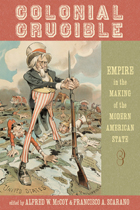
Moving well beyond theory, this volume takes the next step, adding a fine-grained, empirical texture to the study of U.S. imperialism by analyzing its specific consequences. Across a broad range of institutions—policing and prisons, education, race relations, public health, law, the military, and environmental management—this formative experience left a lasting institutional imprint. With each essay distilling years, sometimes decades, of scholarship into a concise argument, Colonial Crucible reveals the roots of a legacy evident, most recently, in Washington’s misadventures in the Middle East.

This important study of Ponce, a major sugar-producing district in Puerto Rico, examines in detail the processes by which a predominantly peasant economy an society was transformed into a plantation system. Scarano’s work, one of the first full investigations into Puerto Rico’s nineteenth-century economic history, dispels the long-held belief that slavery was an inconsequential factor in this society; indeed, he finds that the new plantation system was fully dependent on African slave labor, and that the initial stimuli for economic change came from immigrants.
READERS
Browse our collection.
PUBLISHERS
See BiblioVault's publisher services.
STUDENT SERVICES
Files for college accessibility offices.
RECENTLY PUBLISHED





UChicago Accessibility Resources
home | accessibility | search | about | contact us
BiblioVault ® 2001 - 2026
The University of Chicago Press