
 A SCHOLARLY BOOK REPOSITORY
Results by Title
3 books about Schaetzel, Kirsten
3 books about Schaetzel, Kirsten
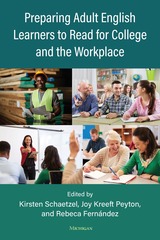
Preparing Adult English Learners to Read for College and the Workplace
Edited by Kirsten Schaetzel, Joy Kreeft Peyton, and Rebeca Fernández
University of Michigan Press, 2024
The ability to read effectively—to work with a text, understand its meaning, and talk and write about it with, and for, others—is a critical aspect of academic and workplace success. However, many adults who are learning English as a second or additional language do not have the skills needed to be successful and may drop out of college and university programs before they reach their goal. Bringing together a rich collection of topics and authors, this edited volume provides theory, research, and instructional approaches to help adult education ESL practitioners work effectively with adult learners and prepare them to be successful with reading in academic and workplace settings.
After reading this book, adult ESL practitioners will be able to
After reading this book, adult ESL practitioners will be able to
- Prepare adults learning English to apply appropriate reading strategies to a variety of academic and professional contexts and purposes
- Use instructional strategies, including digital technology, to help struggling and developing readers close gaps in skills and conceptual knowledge
- Improve reading comprehension through robust vocabulary instruction
- Enhance reading skills and comprehension through writing instruction that balances sentence-level, discourse, and interactive processes and practices
- Inspire students to become lifelong readers who engage in extensive reading outside of school and professional contexts
[more]
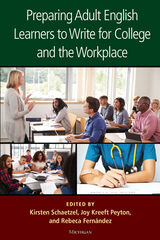
Preparing Adult English Learners to Write for College and the Workplace
Kirsten Schaetzel, Joy Kreeft Peyton, and Rebeca Fernández
University of Michigan Press, 2019
This volume has been written as a response to the new types of communicative demands that the twenty-first century has brought to the workplace. Today’s adult education programs must prepare students to understand complex operations, be problem-solvers, be computer literate, and be fluent in professional English when speaking and writing. As a result, writing has become a bigger need in the field of adult education, and writing instruction must follow suit and extend beyond transactional writing (taking notes, correcting grammar, writing narratives) to rhetorically flexible writing for multiple audiences, purposes, and contexts, whether for a college course or in the workplace. Some of the specific types of writing students need now are the ability to: write argumentative, technical, and informative texts; create, argue for, and support a thesis statement; summarize; write concisely with appropriate vocabulary; produce a well-edited piece understandable to native speakers; and use and credit sources.
The volume is organized into four parts: Setting the Stage for Teaching Writing, Supporting the Writing Process, Working with Beginning Writers, and Aligning Writing with Accountability Systems. Chapters are written by current (or former) adult educators with experience across levels. Each chapter introduces an approach based on research that can guide writing instruction and provides specific guidance and tools for implementation. Questions open and close the chapters to guide reading and frame future exploration. JoAnn (Jodi) Crandall has written the Epilogue.
Readers will discover ways to move adults into higher education and careers by helping them be college and career ready, to integrate writing into the existing curriculum in adult education programs at all levels, including content classes, and to teach writing according to national and state standards.
The volume is organized into four parts: Setting the Stage for Teaching Writing, Supporting the Writing Process, Working with Beginning Writers, and Aligning Writing with Accountability Systems. Chapters are written by current (or former) adult educators with experience across levels. Each chapter introduces an approach based on research that can guide writing instruction and provides specific guidance and tools for implementation. Questions open and close the chapters to guide reading and frame future exploration. JoAnn (Jodi) Crandall has written the Epilogue.
Readers will discover ways to move adults into higher education and careers by helping them be college and career ready, to integrate writing into the existing curriculum in adult education programs at all levels, including content classes, and to teach writing according to national and state standards.
[more]
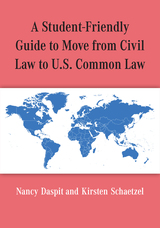
A Student-Friendly Guide to Move from Civil Law to U.S. Common Law
Nancy Daspit and Kirsten Schaetzel
University of Michigan Press, 2025
A Student-Friendly Guide to Move from Civil Law to U.S. Common Law provides an overview of the differences in the study and practice of law for international LLM students trying to transition from their home country’s civil law legal system to the U.S. common law system. The vast majority of countries in the world are civil code jurisdictions that rely almost solely on statutes (codes) to define their laws. However, common law countries—such as the US, Canada, and Great Britain—have multiple sources of law, including constitutions, statutes, regulations, and cases decided by the courts. These court cases have the same force of law as the other sources within their respective jurisdictions, and thus the resulting decisions must be followed in future cases, unless otherwise nullified.
To help students who may feel overwhelmed adjusting to a new approach to legal education, this book focuses on these key differences between civil law and common law jurisdictions. It defines and demonstrates the application of key concepts with examples, illustrations, and exercises. While relatively brief, it provides numerous references to the other texts and sources for students wanting or needing more depth for some of the topics. The book also includes numerous examples illustrating the differences, with an emphasis on common law examples, of key documents and processes used in the practice of law. Further, it includes student-focused exercises and questions on the analytical and rhetorical skills needed for a successful law practice, whether the student will continue in a common law jurisdiction or merely needs to understand the common law for continued practice in their civil law jurisdiction.
Within this book, students will find
To help students who may feel overwhelmed adjusting to a new approach to legal education, this book focuses on these key differences between civil law and common law jurisdictions. It defines and demonstrates the application of key concepts with examples, illustrations, and exercises. While relatively brief, it provides numerous references to the other texts and sources for students wanting or needing more depth for some of the topics. The book also includes numerous examples illustrating the differences, with an emphasis on common law examples, of key documents and processes used in the practice of law. Further, it includes student-focused exercises and questions on the analytical and rhetorical skills needed for a successful law practice, whether the student will continue in a common law jurisdiction or merely needs to understand the common law for continued practice in their civil law jurisdiction.
Within this book, students will find
- a brief historical background regarding the development of the common law system;
- a description of the US government structure, with an emphasis on the judicial branch;
- key rhetorical and analytical differences between civil law and common law;
- numerous examples of differences between the two systems, with an emphasis on common law requirements;
- and exercises for practice with key concepts and terminology.
[more]
READERS
Browse our collection.
PUBLISHERS
See BiblioVault's publisher services.
STUDENT SERVICES
Files for college accessibility offices.
RECENTLY PUBLISHED



UChicago Accessibility Resources
home | accessibility | search | about | contact us
BiblioVault ® 2001 - 2026
The University of Chicago Press