
 A SCHOLARLY BOOK REPOSITORY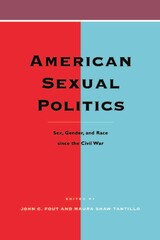
Included are Anthony S. Parent, Jr., and Susan Brown Wallace on childhood and sexual identity under slavery; Martha Hodes on white women and Black men in the South; Kevin J. Mumford on male sexual impotence and Victorian Culture; Jesse F. Battan on language, authority, and sexual desire; Joan Smith Iversen on the antipolygamy controversy, 1880-1890; Angus McLaren on sex radicalism in the Canadian Pacific Northwest, 1890-1920; Pamela S. Haag on ideologies of love, modern romance, and women's sexual subjectivity; Ann duCille on the novels of Jessie Fauset and Nella Larsen; Robyn Wiegman on the anatomy of lynching; Sonya Michel on sexuality in postwar films; Carole Joffe on abortion before legalization; Roy Cain on disclosure and secrecy among gay men; Joshua Gamson on condoms; Lillian Faderman on the return of butch and femme; Katherine Cummings on teaching AIDS; and Arthur Flannigan-Saint-Aubin on "black gay male" discourse.
This diverse overview of American sexual politics will interest students and scholars of the history of sexuality, gender studies, women's studies, and gay studies.
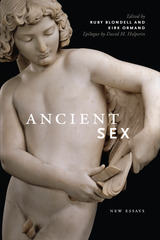
Rather than reopening old debates, Ancient Sex takes up Foucault’s call for discursive analysis and elucidates some of the ways that ancient Greek and Roman texts and visual arts articulate a culturally specific discourse about sexual matters. Each contributor presupposes that sexual and gendered identities are discursively produced, and teases out some of the ways that the Greeks and Romans spoke and thought about these issues. Comprising essays by emerging and established scholars, this volume emphasizes in particular: sexual discourses about women; the interaction between sexual identities and class status; gender as an unstable discursive category (even in antiquity); and the relationships between ancient and modern sexual categories.
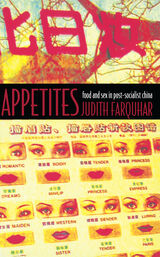
From eating well in improving economic times to memories of the late 1950s famine, from the flavors of traditional Chinese medicine to modernity’s private sexual passions, this book argues that embodiment in all its forms must be invented and sustained in public reflections about personal and national life. As much at home in science studies and social theory as in the details of life in Beijing, this account uses anthropology, cultural studies, and literary criticism to read contemporary Chinese life in a materialist and reflexive mode. For both Maoist and market reform periods, this is a story of high culture in appetites, desire in collective life, and politics in the body and its dispositions.
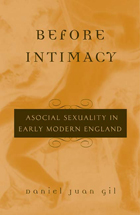
Engaging the poems of Wyatt, Sidney’s Astrophil and Stella, Spenser’s Amoretti and The Faerie Queene, and Shakespeare’s Troilus and Cressida and the Sonnets, Gil demonstrates how sexuality was conceived as a relationship system inhabited by men and women interchangeably—set apart from the “norm” and not institutionalized in a private or domestic realm. Going beyond the sodomy-as-transgression analytic, he asserts the existence of socially inconsequential sexual bonds while recognizing the pleasurable effects of violating the supposed traditional modes of bonding and ideals of universal humanity and social hierarchy.
Celebrating the ability of corporeal emotions to interpret connections between people who share nothing in terms of societal structure, Before Intimacy shows how these works of early modern literature provide a discourse of sexuality that strives to understand status differences in erotic contexts and thereby question key assumptions of modernity.
Daniel Juan Gil is assistant professor of English at TCU.
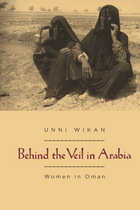
"Wikan does provide insights into the real position of these secluded and segregated women. . . . All this is interesting and valuable."—Ahdaf Soueif, Times Literary Supplement
"The book is detailed, insightful, and . . . engrossing. Anyone interested in the day-to-day triumphs and sorrows of women who live 'behind the veil' will want to read this account."—Arab Book World
"Wikan, a fine ethnographer, has an eye for everything that is distinctive about the culture and . . . builds up a wholly convincing picture. Above all, there is a sustained attempt to penetrate the inner lives of these strangely serene people."—Frank H. Stewart, Wilson Quarterly
"This book will certainly be of interest to all scholars concerned with sexual identity in the Islamic world."—Henry Munson, American Anthropologist
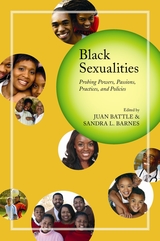
From questioning forces that have constrained sexual choices to examining how Blacks have forged healthy sexual identities in an oppressive environment, Black Sexualities acknowledges the diversity of the Black experience and the shared legacy of racism. Contributors seek resolution to Blacks' understanding of their lives as sexual beings through stories of empowerment, healing, self-awareness, victories, and other historic and contemporary life-course panoramas and provide practical information to foster more culturally relative research, tolerance, and acceptance.

This collection of essays addresses a number of questions regarding the role of consent in marriage and in sexual relations outside of marriage in ancient and medieval societies. Ranging from ancient Greece and Rome to the Byzantine Empire and Western Medieval Europe, the contributors examine rape, seduction, and the role of consent in establishing the punishment of one or both parties; the issue of marital debt and spousal rape; and the central question of what is perceived as coercion and what may be the validity or value of coerced consent. Other concepts, such as honor and shame, are also investigated.
Because of the wide range--in time and place--of societies studied, the reader is able to see many different approaches to the question of consent and coercion as well as a certain evolution, in which Christianity plays an important role.

Control and Subversion investigates the relationship of gender to the inner workings of social control, such as exposing ways in which Tajik society threatens men’s masculinity, thereby bringing them to force family members into conformity, irrespective of the suffering this may cause. It examines how masculine and feminine gender characteristics influence personal relationships and explores gender relations at their most intimate – from the secret musings of adolescent girls, through the painful experiences of young men, to the trauma of sexual initiation. Although largely concentrating on contemporary life, the book also discusses historical materials and Soviet influence on Tajik society. Control and Subversion is essential reading for anyone interested in Central Asia, Muslim societies, the lives of Muslim women, or gender in a Muslim context.
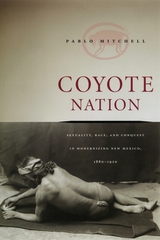
Coyote Nation considers these questions as it explores how New Mexicans evaluated and categorized racial identities through bodily practices. Where ethnic groups were numerous and—in the wake of miscegenation—often difficult to discern, the ways one dressed, bathed, spoke, gestured, or even stood were largely instrumental in conveying one's race. Even such practices as cutting one's hair, shopping, drinking alcohol, or embalming a deceased loved one could inextricably link a person to a very specific racial identity.
A fascinating history of an extraordinarily plural and polyglot region, Coyote Nation will be of value to historians of race and ethnicity in American culture.
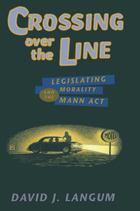
This book is the first history of the Mann Act's often bizarre career, from its passage to the amendment that finally laid it low. In David J. Langum's hands, the story of the Act becomes an entertaining cautionary tale about the folly of legislating private morality.
Langum recounts the colorful details of numerous court cases to show how enforcement of the Act mirrored changes in America's social attitudes. Federal prosecutors became masters in the selective use of the Act: against political opponents of the government, like Charlie Chaplin; against individuals who eluded other criminal charges, like the Capone mobster "Machine Gun" Jack McGurn; and against black men, like singer Chuck Berry and boxer Jack Johnson, who dared to consort with white women. The Act engendered a thriving blackmail industry and was used by women like Frank Lloyd Wright's wife to extort favorable divorce settlements.
"Crossing over the Line is a work of scholarship as wrought by a civil libertarian, and the text . . . sizzles with the passion of an ardent believer in real liberty under reasonable laws."—Jonathan Kirsch, Los Angeles Times
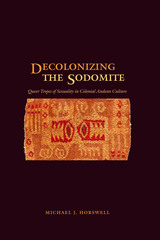
Early Andean historiography reveals a subaltern history of indigenous gender and sexuality that saw masculinity and femininity not as essential absolutes. Third-gender ritualists, Ipas, mediated between the masculine and feminine spheres of culture in important ceremonies and were recorded in fragments of myths and transcribed oral accounts. Ritual performance by cross-dressed men symbolically created a third space of mediation that invoked the mythic androgyne of the pre-Hispanic Andes. The missionaries and civil authorities colonizing the Andes deemed these performances transgressive and sodomitical.
In this book, Michael J. Horswell examines alternative gender and sexuality in the colonial Andean world, and uses the concept of the third gender to reconsider some fundamental paradigms of Andean culture. By deconstructing what literary tropes of sexuality reveal about Andean pre-Hispanic and colonial indigenous culture, he provides an alternative history and interpretation of the much-maligned aboriginal subjects the Spanish often referred to as "sodomites." Horswell traces the origin of the dominant tropes of masculinist sexuality from canonical medieval texts to early modern Spanish secular and moralist literature produced in the context of material persecution of effeminates and sodomites in Spain. These values traveled to the Andes and were used as powerful rhetorical weapons in the struggle to justify the conquest of the Incas.

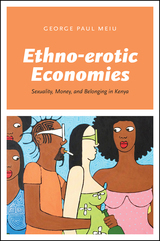
George Paul Meiu uses his deep familiarity with the communities these men come from to explore the long-term effects of markets of ethnic culture and sexuality on a wide range of aspects of life in rural Kenya, including kinship, ritual, gender, intimate affection, and conceptions of aging. What happens to these communities when young men return with such surprising wealth? And how do they use it to improve their social standing locally? By answering these questions, Ethno-erotic Economies offers a complex look at how intimacy and ethnicity come together to shape the pathways of global and local trade in the postcolonial world.
Contributors. Joseph A. Boone, Pernille Ipsen, Sidra Lawrence, Beatrix McBride, Mireille Miller-Young, Bryan Pitts, Helen Pringle, Pete Sigal, Zeb Tortorici, Neil L. Whitehead
In Evolutionary Rhetoric, scholar Wendy Hayden provides a comprehensive examination of the relationship between scientific and feminist rhetorics in free-love feminism, studying the movement from its inception in the 1850s to its dark turn toward eugenics in the early 1900s. Hayden organizes her provocative study by scientific discipline—evolution, physiology, bacteriology, embryology, and heredity. Each chapter explores how free-love feminists adopted the evidence of that discipline in their arguments for increased sex education, women’s sexual rights, reproductive freedom, and the abolition of a marriage system that repressed the rights and the sexuality of women.
Hayden takes our conventional understanding of the relationship between nineteenth-century feminism and science and expands it. The author provides examples of the powerful words of free-love feminists to show exactly how these exceptional women used science as a rhetorical platform to promote feminist, and often radical, social reforms.
Considering why the free-love movement has not yet been studied, Hayden also discusses how the recovery of this movement may impact larger goals in the recovery of women’s rhetoric. This important and timely study of a long-forgotten movement adds to our understanding of the complexities of the history of feminism.
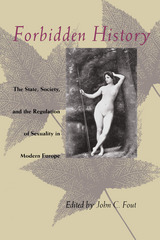
This anthology encompasses a broad range of essays on sexuality spanning European history from the fifteenth century to the present. The topics in this collection of fifteen essays have both historic importance and current relevance. All crucial issues in the regulation of sexuality are addressed, from incest to infanticide, from breast-feeding and women's sexuality to female prostitution, from pornography to reproductive politics, and from the first homosexual rights movement to AIDS.
Contributions from a diverse group of prominent scholars representing a variety of disciplines are included in this anthology. Essays by Randolph Trumbach on "Sex, Gender, and Identity in Modern Culture: Male Sodomy and Female Prostitution in Enlightenment London"; Ruth Perry on "Colonizing the Breast: Sexuality and Maternity in Eighteenth Century England"; Theo van der Meer on "Female Same-Sex Offenders in Late Eighteenth Century Amsterdam"; Robin Ann Sheets on "Pornography, Fairy Tales, and Feminism: Angela Carter's 'The Bloody Chamber'"; and James W. Jones on "Discourses on and of AIDS in West Germany, 1986-1990."
Offering the most up-to-date scholarship from a significant and growing field, this collection is essential for both students and faculty in social history, family history, women's and gender studies, gay studies, sociology and literature.


While some Brazilian elites used the issue of sexual purity to boast of their country’s moral superiority, others claimed that the veneration of such concepts as virginity actually frustrated efforts at modernization. Moreover, although individuals of all social classes invoked values they considered “traditional,” such as the confinement of women’s sexuality within marriage, these values were at odds with social practices—such as premarital sex, cohabitation, divorce, and female-headed households—that had been common throughout Brazil’s history. The persistence of these practices, together with post-World War I changes in both official and popular moral ideals, presented formidable obstacles to the Estado Novo’s renewed drive to define and enforce public morality and private family values in the late 1930s.
With sophisticated theoretical underpinnings, In Defense of Honor is written in a clear and lively manner, making it accessible to students and scholars in a variety of disciplines, including Brazilian and Latin American studies, gender studies, and legal history.
"The book John D'Emilio co-wrote with Estelle B. Freedman, Intimate Matters, was cited by Supreme Court Justice Anthony Kennedy when, writing for a majority of court on July 26, he and his colleagues struck down a Texas law criminalizing sodomy. The decision was widely hailed as a victory for gay rights—and it derived in part, according to Kennedy's written comments, from the information he gleaned from D'Emilio's book, which traces the history of American perspectives on sexual relationships from the nation's founding through the present day. The justice mentioned Intimate Matters specifically in the court's decision."—Julia Keller, Chicago Tribune
"Fascinating. . . . [D'Emilio and Freedman] marshall their material to chart a gradual but decisive shift in the way Americans have understood sex and its meaning in their lives." —Barbara Ehrenreich, New York Times Book Review
"With comprehensiveness and care . . . D'Emilio and Freedman have surveyed the sexual patterns for an entire nation across four centuries." —Martin Bauml Duberman, Nation
"Intimate Matters is comprehensive, meticulous and intelligent." —Jonathan Yardley, Washington Post Book World
"This book is remarkable. . . . [Intimate Matters] is bound to become the definitive survey of American sexual history for years to come." —Roy Porter, Journal of the History of the Behavioral Sciences
“Fascinating. . . . D’Emilio and Freedman marshal their material to chart a gradual but decisive shift in the way Americans have understood sex and its meaning in their lives.” —Barbara Ehrenreich, New York Times Book Review

Kakar's sources are primarily textual, celebrating the primacy of the story in Indian life. He practices a cultural psychology that distills the psyches of individuals from the literary products and social institutions of Indian culture. These include examples of lurid contemporary Hindi novels; folktales; Sanskrit, Tamil, and Hindi proverbs; hits of the Indian cinema; Gandhi's autobiography; interviews with women from the slums of Delhi; and case studies from his own psychoanalytic practice. His attentive readings of these varied narratives from a vivid portrait of sexual fantasies and realities, reflecting the universality of sexuality as well as cultural nuances specific to India.
Moving from genre to genre, Kakar offers a brilliant reading of verses from the Laws of Manu, the original source of Hindu religious laws, to uncover their psychological foundations—male terror of the female sexual appetite that shields itself by idealizing women's maternal role. Kakar also examines the psychosexual history of Gandhi at length, though his near-lifelong celibacy makes him an atypical subject. Gandhi's story is universal, Kakar says, because "we all wage war on our wants."
In India's lore and tradition, complex symbols abound—snakes that take the shape of sensual women or handsome men, celibates sleep with naked women, gods rape their daughters, and a goddess fries a king in oil. With the analyst's "third ear," Kakar listens, decodes, and translates the psychological longings that find expression in Indian sexual relations.
Learning the details of others' sex lives is the most enticing of guilty pleasures. We measure our own practices against the "normalcy" that sex surveys seek to capture. Special interest groups use or attack survey findings (such as the claim that 10% of Americans are gay) for their own ends. Indeed, we all have some stake in these surveys, be it self-justification, recrimination, or curiosity--and this testifies to their significance in our culture.
Kiss and Tell chronicles the history of sex surveys in the United States over a century of changing social and sexual mores. Julia Ericksen and Sally Steffen reveal that the survey questions asked, more than the answers elicited, expose and shape the popular image of appropriate sexuality. We can learn as much about the history and practice of sexuality by looking at surveyors' changing concerns as we can by reading the results of their surveys. The authors show how surveys have reflected societal anxieties about adolescent development, teen sex and promiscuity, and AIDS, and have been employed in efforts to preserve marriage and to control women's sexuality.
Kiss and Tell is an important examination of the role of social science in shaping American sexual patterns. Revealing how surveys of sexual behavior help create the issues they purport merely to describe, it reminds us how malleable and imperfect our knowledge of sexual behavior is.
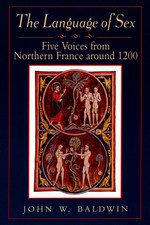
John Baldwin introduces five representative voices from the turn of the twelfth century in northern France: Pierre the Chanter speaks for the theological doctrine of Augustine; the Prose Salernitan Questions, for the medical theories of Galen; Andre the Chaplain, for the Ovidian literature of the schools; Jean Renart, for the contemporary romances; and Jean Bodel, for the emerging voices of the fabliaux. Baldwin juxtaposes their views on a range of essential subjects, including social position, the sexual body, desire and act, and procreation. The result is a fascinating dialogue of how they agreed or disagreed with, ignored, imitated, or responded to each other at a critical moment in the development of European ideas about sexual desire, fulfillment, morality, and gender.
These spokesmen allow us into the discussion of sexuality inside the church and schools of the clergy, in high and popular culture of the leity. This heterogeneous discussion also offers a startling glimpse into the construction of gender specific to this moment, when men and women enjoyed equal status in sexual matters, if nowhere else.
Taken together, these voices extend their reach, encompass their subject, and point to a center where social reality lies. By articulating reality at its varied depths, this study takes its place alongside groundbreaking works by James Brundage, John Boswell, and Leah Otis in extending our understanding of sexuality and sexual behavior in the Middle Ages.
"Superb work. . . . These five kinds of discourse are not often treated together in scholarly writing, let alone compared and contrasted so well."—Edward Collins Vacek, Theological Studies
"[Baldwin] has made the five voices speak to us in a language that is at one and the same time familiar and alien in its resonance and accents. This is a truly exceptional book, interdisciplinary in the real sense of the word, which is surely destined to become a landmark in medieval studies."—Keith Busby, Bryn Mawr Reviews
"[Baldwin's] attempt to 'listen' to these distant voices and translate their language of sex into our own raises challenging methodological questions that will be of great interest to historians and literary scholars alike."—John P. Dalton, Comitatus
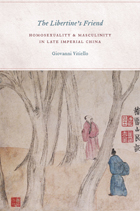
Delving into three hundred years of Chinese literature, from the mid-sixteenth century to the mid-nineteenth, The Libertine’s Friend uncovers the complex and fascinating history of male homosexual and homosocial relations in the late imperial era. Drawing particularly on overlooked works of pornographic fiction, Giovanni Vitiello offers a frank exploration of the importance of same-sex love and eroticism to the evolution of masculinity in China.
Vitiello’s story unfolds chronologically, beginning with the earliest sources on homoeroticism in pre-imperial China and concluding with a look at developments in the twentieth century. Along the way, he identifies a number of recurring characters—for example, the libertine scholar, the chivalric hero, and the lustful monk—and sheds light on a set of key issues, including the social and legal boundaries that regulated sex between men, the rise of male prostitution, and the aesthetics of male beauty. Drawing on this trove of material, Vitiello presents a historical outline of changing notions of male homosexuality in China, revealing the integral part that same-sex desire has played in its culture.
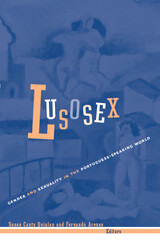
The first book to examine these essential issues in a Lusophone context.
Some of the most compelling theoretical debates in the humanities today center on representations of sexuality. This volume is the first to focus on the topic-in particular, the connections between nationhood, sex, and gender-in the lusophone, or Portuguese-speaking, world. Written by prominent scholars in Brazilian, Portuguese, and Lusophone African literary and cultural studies, the essays range across multiple discourses and cultural expressions, historical periods and theoretical approaches to offer a uniquely comprehensive perspective on the issues of sex and sexuality in the literature and culture of the Portuguese-speaking world that extends from Portugal to Brazil to Angola, Cape Verde, and Mozambique.
Through the critical lenses of gay and lesbian studies, queer theory, postcolonial studies, feminist theory, and postmodern theory, the authors consider the work of such influential literary figures as Clarice Lispector and Silviano Santiago. An important aspect of the volume is the publication of a newly discovered-and explicitly homoerotic-poem by Fernando Pessoa, published here for the first time in the original Portuguese and in English translation. Chapters take up questions of queer performativity and activism, female subjectivity and erotic desire, the sexual customs of indigenous versus European Brazilians, and the impact of popular music (as represented by Caetano Veloso and others) on interpretations of gender and sexuality. Challenging static notions of sexualities within the Portuguese-speaking world, these essays expand our understanding of the multiplicity of differences and marginalized subjectivities that fall under the intersections of sexuality, gender, and race.Contributors: Severino João Albuquerque, U of Wisconsin; Jossianna Arroyo, U of Michigan; César Braga-Pinto, Rutgers; Ana Paula Ferreira, U of California, Irvine; John Gledson, U of Liverpool; Russell G. Hamilton, Vanderbilt; André Torres Lepecki; Mário César Lugarinho, Universidade Federal Fluminense, Brazil; Phyllis Peres, U of Maryland; Ronald W. Sousa, U of Illinois; João Silvério Trevisan; Richard Zenith.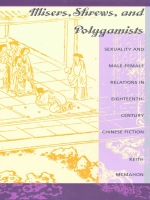
In many examples of rare erotic fiction, and in other works as well-known as Dream of the Red Chamber, Keith McMahon identifies a sexual economy defined by the figures of the "miser" and the "shrew"—caricatures of the retentive, self-containing man and the overflowing, male-enervating woman. Among these and other characters, the author explores the issues surrounding the practice of polygamy, the logic of its overvaluation of masculinity, and the nature of sexuality generally in Chinese society. How does the man with many wives manage and justify his sexual authority? Why and how might he escape or limit this presumed authority, sometimes to the point of portraying himself as abject before the shrewish woman? How do women accommodate or coddle the man, or else oppose, undermine, or remold him? And in what sense does the man place himself lower than the spiritually and morally superior woman?
The most extensive English-language study of Chinese literature from the eighteenth century, this examination of polygamy will interest not only students of Chinese history, culture, and literature but also all those concerned with histories of gender and sexuality.

Who am I? The question today haunts every society in the Western world.
Legions of people—especially the young—have become unmoored from a firm sense of self. To compensate, they join the ranks of ideological tribes spawned by identity politics and react with frenzy against any perceived threat to their group.
As identitarians track and expose the ideologically impure, other citizens face the consequences of their rancor: a litany of “isms” run amok across all levels of cultural life, the free marketplace of ideas muted by agendas shouted through megaphones, and a spirit of general goodwill warped into a state of perpetual outrage.
How did we get here? Why have we divided against one another so bitterly? In Primal Screams, acclaimed cultural critic Mary Eberstadt presents the most provocative and original theory to come along in recent years. The rise of identity politics, she argues, is a direct result of the fallout of the sexual revolution, especially the collapse and shrinkage of the family.
As Eberstadt illustrates, humans have forged their identities within the kinship structure from time immemorial. The extended family, in a real sense, is the first tribe and teacher. But with its unprecedented decline across various measures, generations of people have been set adrift and can no longer answer the question Who am I? concerning primordial ties. Desperate for solidarity and connection, they claim membership in politicized groups whose displays of frantic irrationalism amount to primal screams for familial and communal loss.
Written in her impeccable style and with empathy rarely encountered in today’s divisive discourse, Eberstadt’s theory holds immense explanatory power that no serious citizen can afford to ignore. The book concludes with three incisive essays by Rod Dreher, Mark Lilla, and Peter Thiel, each sharing their perspective on the author’s formidable argument.
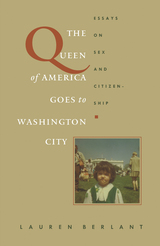
As Berlant traces the guiding images of U.S. citizenship through the process of privatization, she discusses the ideas of intimacy that have come to define national culture. From the fantasy of the American dream to the lessons of Forrest Gump, Lisa Simpson to Queer Nation, the reactionary culture of imperilled privilege to the testimony of Anita Hill, Berlant charts the landscape of American politics and culture. She examines the consequences of a shrinking and privatized concept of citizenship on increasing class, racial, sexual, and gender animosity and explores the contradictions of a conservative politics that maintains the sacredness of privacy, the virtue of the free market, and the immorality of state overregulation—except when it comes to issues of intimacy.
Drawing on literature, the law, and popular media, The Queen of America Goes to Washington City is a stunning and major statement about the nation and its citizens in an age of mass mediation. As it opens a critical space for new theory of agency, its narratives and gallery of images will challenge readers to rethink what it means to be American and to seek salvation in its promise.
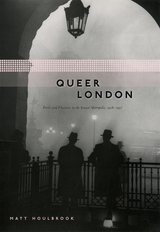
Cyril's story is Matt Houlbrook's point of entry into the queer worlds of early twentieth-century London. Drawing on previously unknown sources, from police reports and newspaper exposés to personal letters, diaries, and the first queer guidebook ever written, Houlbrook here explores the relationship between queer sexualities and modern urban culture that we take for granted today. He revisits the diverse queer lives that took hold in London's parks and streets; its restaurants, pubs, and dancehalls; and its Turkish bathhouses and hotels—as well as attempts by municipal authorities to control and crack down on those worlds. He also describes how London shaped the culture and politics of queer life—and how London was in turn shaped by the lives of queer men. Ultimately, Houlbrook unveils the complex ways in which men made sense of their desires and who they were. In so doing, he mounts a sustained challenge to conventional understandings of the city as a place of sexual liberation and a unified queer culture.
A history remarkable in its complexity yet intimate in its portraiture, Queer London is a landmark work that redefines queer urban life in England and beyond.
Winner of History Today’s Book of the Year Award, 2006
The intersection of race and sex in Latin America is a subject touched upon by many disciplines but this is the first book to deal solely with these issues.
Interracial sexual relations are often a key mythic basis for Latin American national identities, but the importance of this has been underexplored. Peter Wade provides a pioneering overview of the growing literature on race and sex in the region, covering historical aspects and contemporary debates. He includes both black and indigenous people in the frame, as well as mixed and white people, avoiding the implication that "race" means "black-white" relations.
Challenging but accessible, this book will appeal across the humanities and social sciences, particularly to students of anthropology, gender studies, history and Latin American studies.
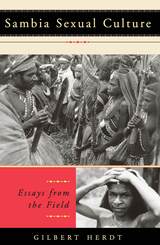
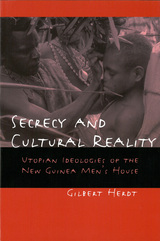
Over the course of 20 years, Herdt made 13 field trips to live with the Sambia in order to understand sexuality and ritual in the context of warfare and gender segregation. Herdt's essays examine Sambia fetish and fantasy, ritual nose-bleeding, the role of homoerotic insemination, the role of the father and mother in the process of identity formation, and the creation of a "third sex" in nature and culture. He also discusses the representation of homosexuality in cross-cultural literature on premodern societies, arguing that scholars have long viewed desires through the tropes of negative western models. Herdt asks us to reconsider the realities and subjective experiences of desires in their own context, and to rethink how the homoerotic is expressed in radically divergent sexual cultures.
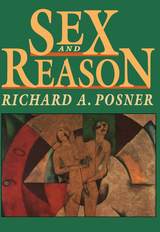
Sexual drives are rooted in biology, but we don’t act on them blindly. Indeed, as the eminently readable judge and legal scholar Richard Posner shows, we make quite rational choices about sex, based on the costs and benefits perceived.
Drawing on the fields of biology, law, history, religion, and economics, this sweeping study examines societies from ancient Greece to today’s Sweden and issues from masturbation, incest taboos, date rape, and gay marriage to Baby M. The first comprehensive approach to sexuality and its social controls, Posner’s rational choice theory surprises, explains, predicts, and totally absorbs.
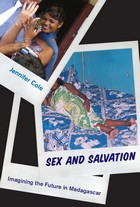
Sex and Salvation chronicles the coming of age of a generation of women in Tamatave in the years that followed Madagascar’s economic liberalization. Eager to forge a viable future amid poverty and rising consumerism, many young women have entered the sexual economy in hope of finding a European husband. Just as many Westerners believe that young people break with the past as they enter adulthood, Malagasy citizens fear that these women have severed the connection to their history and culture.
Jennifer Cole’s elegant analysis shows how this notion of generational change is both wrong and consequential. It obscures the ways young people draw on long-standing ideas of gender and sexuality, it ignores how urbanites relate to their rural counterparts, and it neglects the relationship between these husband-seeking women and their elders who join Pentecostal churches. And yet, as talk about the women circulates through the city’s neighborhoods, bars, Internet cafes, and churches, it teaches others new ways of being.
Cole’s sophisticated depiction of how a generation’s coming of age contributes to social change eschews a narrow focus on crisis. Instead, she reveals how fantasies of rupture and conceptions of the changing life course shape the everyday ways that people create the future.
In Sex and the Gender Revolution, Randolph Trumbach reconstructs the worlds of eighteenth-century prostitution, illegitimacy, sexual violence, and adultery. In those worlds the majority of men became heterosexuals by avoiding sodomy and sodomite behavior.
As men defined themselves more and more as heterosexuals, women generally experienced the new male heterosexuality as its victims. But women—as prostitutes, seduced servants, remarrying widows, and adulterous wives— also pursued passion. The seamy sexual underworld of extramarital behavior was central not only to the sexual lives of men and women, but to the very existence of marriage, the family, domesticity, and romantic love. London emerges as not only a geographical site but as an actor in its own right, mapping out domains where patriarchy, heterosexuality, domesticity, and female resistance take vivid form in our imaginations and senses.
As comprehensive and authoritative as it is eloquent and provocative, this book will become an indispensable study for social and cultural historians and delightful reading for anyone interested in taking a close look at sex and gender in eighteenth-century London.
This book is the first to offer a combined social science and psychoanalytic perspective on reproductive behavior. The author emphasizes the personal histories of his subjects within their cultural environment, and takes into account the setting of the interview and the subjective responses of both interviewee and interviewer. The study reveals how Jamaicans, particularly women, relate to their own parents, learn about sex, experience sexual maturity and first intercourse, and perceive their relations with subsequent partners. Other themes examined are the significance of pregnancy, childbirth, and parenthood and the folk context of Jamaican beliefs about reproduction and contraception.
All of these are aspects of what the author terms a “culture of motherhood.” His unique approach illuminates the many complex factors that influence this population's use or nonuse of contraceptive methods. In his concluding chapter, Eugene Brody offers suggestions for reconciling the private needs of individuals and the public goals of Jamaican population policy. Although his research centers on one Caribbean island, his ideas are applicable to other developing countries. In Sex, Contraception, and Motherhood in Jamaica, family planning professionals, psychologists, psychiatrists, and social scientists will find an intriguing new approach to reproductive policy.
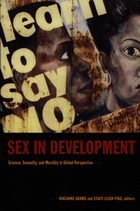
Sex in Development combines the cultural analysis of sexuality, critiques of global development, and science and technology studies. Whether considering the resistance encountered by representatives of an American pharmaceutical company attempting to teach Russian doctors a “value free” way to offer patients birth control or the tension between Tibetan Buddhist ideas of fertility and the modernization schemes of the Chinese government, these essays show that attempts to make sex a universal moral object to be managed and controlled leave a host of moral ambiguities in their wake as they are engaged, resisted, and reinvented in different ways throughout the world.
Contributors. Vincanne Adams, Leslie Butt, Lawrence Cohen, Heather Dell, Vinh-Kim Nguyen, Shanti Parikh, Heather Paxson, Stacy Leigh Pigg, Michele Rivkin-Fish
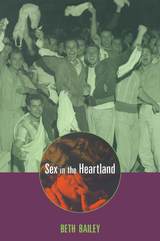
Sex in the Heartland is the story of the sexual revolution in a small university town in the quintessential heartland state of Kansas. Bypassing the oft-told tales of radicals and revolutionaries on either coast, Beth Bailey argues that the revolution was forged in towns and cities alike, as "ordinary" people struggled over the boundaries of public and private sexual behavior in postwar America.
Bailey fundamentally challenges contemporary perceptions of the revolution as simply a triumph of free love and gay lib. Rather, she explores the long-term and mainstream changes in American society, beginning in the economic and social dislocations of World War II and the explosion of mass media and communication, which aided and abetted the sexual upheaval of the 1960s. Focusing on Lawrence, Kansas, we discover the intricacies and depth of a transformation that was nurtured at the grass roots.
Americans used the concept of revolution to make sense of social and sexual changes as they lived through them. Everything from the birth control pill and counterculture to Civil Rights, was conflated into "the revolution," an accessible but deceptive simplification, too easy to both glorify and vilify. Bailey untangles the radically different origins, intentions, and outcomes of these events to help us understand their roles and meanings for sex in contemporary America. She argues that the sexual revolution challenged and partially overturned a system of sexual controls based on oppression, inequality, and exploitation, and created new models of sex and gender relations that have shaped our society in powerful and positive ways.
Sixteen researchers have contributed essays to this collection that explore controversial topics, including teenage sexuality, sexual contact between children and adults, abortion, the role of cohabitation in the sexual satisfaction of couples, and how sexual behavior has changed in response to AIDS, as well as a widely heralded examination of circumcision, reported in the New York Times, which discusses the effects of the procedure on disease transmission and the preference for certain sexual practices. In its analysis, policy recommendations, and revelations about private practices, Sex, Love, and Health in America will, like the earlier volume, have a major role in shaping the discussion about American sexual behavior.
In charting the growth of the sex radical movement, Joanne E. Passet draws on a host of documents from the period -- letters, periodicals, lectures, and pamphlets -- to establish a strong link between the rise of print culture and the freedom of citizens, especially women, to build geographically dispersed communities of ideas. She also advances models of sexuality that challenge the restrictive mores of society at large and shows that the majority of correspondents who participated in the sex radical movement resided in the Midwest and the Great Plains states, where ideas of individual freedom and sovereignty resonated particularly strongly.
Passet vividly demonstrates how this sex radical movement laid the foundations upon which later generations of women’s rights crusaders and feminists would build, placing discussions of sex and sexuality squarely in the public arena.

Sex, Sexuality, and the Anthropologist recounts the real-life experiences of anthropologists who are forced to acknowledge that their hosts in the field view them as gendered beings in a social context, not as asexual, objective observers. Far from controlling the research environment and defining the terms of interviewer-informant relationships, these researchers find they must engage in a process of negotiating their position—including their sexual position—within the communities they study.
Ranging from public baths in Austria to lesbian bars in Taiwan and from Mexico to Nigeria to Finland to Japan, Sex, Sexuality, and the Anthropologist raises critical questions about ethnographers' reflexivity, subjectivity, and detachment, confronting the challenge of a holistic approach to the anthropological enterprise.

To build on the sexual fields framework, Green has gathered a distinguished group of scholars who together make a strong case for sexual field theory as the first systematic theoretical innovation since queer theory in the sociology of sexuality. Expanding on the work of Bourdieu, Green and contributors develop this distinctively sociological approach for analyzing collective sexual life, where much of the sexual life of our society resides today. Coupling field theory with the ethnographic and theoretical expertise of some of the most important scholars of sexual life at work today, Sexual Fields offers a game-changing approach that will revolutionize how sociologists analyze and make sense of contemporary sexual life for years to come.
But in The Sexual Organization of the City, Edward Laumann and company argue that this idea is a myth. Drawing on extensive surveys and interviews with Chicago adults, they show that the city is—to the contrary—a place where sexual choices and options are constrained. From Wicker Park and Boys Town to the South Side and Pilsen, they observe that sexual behavior and partnering are significantly limited by such factors as which neighborhood you live in, your ethnicity, what your sexual preference might be, or the circle of friends to which you belong. In other words, the social and institutional networks that city dwellers occupy potentially limit their sexual options by making different types of sexual activities, relationships, or meeting places less accessible.
To explain this idea of sex in the city, the editors of this work develop a theory of sexual marketplaces—the places where people look for sexual partners. They then use this theory to consider a variety of questions about sexuality: Why do sexual partnerships rarely cross racial and ethnic lines, even in neighborhoods where relatively few same-ethnicity partners are available? Why do gay men and lesbians have few public meeting spots in some neighborhoods, but a wide variety in others? Why are African Americans less likely to marry than whites? Does having a lot of friends make you less likely to get a sexually transmitted disease? And why do public health campaigns promoting safe sex seem to change the behaviors of some, but not others?
Considering vital questions such as these, and shedding new light on the city of Chicago, this work will profoundly recast our ideas about human sexual behavior.
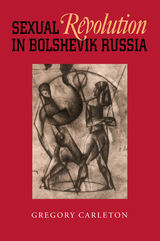
Gregory Carleton offers a comprehensive literary and cultural history of sex and society in the Soviet Union during the 1920s. The Bolshevik Revolution promised a total transformation of Russian society, down to its most intimate details. But in the years immediately following 1917, it was by no means clear how this would come about. Sex and sexuality became a crucial battleground for debates about the Soviet future, and literature emerged as a primary domain through which sex could be imagined and discussed.
Despite optimistic claims that bolshevism would overcome bourgeois depravity, the writings of the 1920s in all genres were awash in sexual adventure, promiscuity, various chauvinisms, date and gang rape, unwanted pregnancy, and sexually transmitted diseases, as well as sex-related alcohol abuse, depression, and suicide. In discussions about sex, party officials contradicted themselves, sociologists grappled with difficult social problems, and writers experimented in fictional form with modern identities and relationships.
Drawing on an uncommonly varied body of sources, including novels, journals, diaries, sociological research, public health brochures, surveys, and party documents-many examined here for the first time in English-Carleton reveals the dramatic, bizarre, and intriguing ways the sexual revolution was discussed and represented. Amidst this chaos, he discerns a historical process of codification and reaction, leading ultimately to the quelling of debate in the 1930s through the harsh dictates of Stalinism.
Sexual Revolution in Bolshevik Russia challenges Western writers who portray revolutionary Russia as either prudish or hedonistic by reconstructing a fuller picture of what circulated in Bolshevik culture and why. Carleton brings a complex human dimension to the subject, demonstrating that this controversy should not be viewed as a sideshow curiosity, but rather as a central aspect of the dramatic debates on early Soviet literature and culture.

A unique and important contribution to the study of sexuality, this book also suggests that the history of sexuality in the West was shaped by myths of the legendary Orient and the exotic "Other."
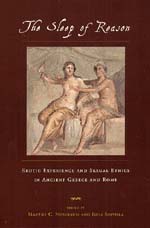
The Sleep of Reason brings together an international group of philosophers, philologists, literary critics, and historians to consider two questions normally kept separate: how is erotic experience understood in classical texts of various kinds, and what ethical judgments and philosophical arguments are made about sex? From same-sex desire to conjugal love, and from Plato and Aristotle to the Roman Stoic Musonius Rufus, the contributors demonstrate the complexity and diversity of classical sexuality. They also show that the ethics of eros, in both Greece and Rome, shared a number of commonalities: a focus not only on self-mastery, but also on reciprocity; a concern among men not just for penetration and display of their power, but also for being gentle and kind, and for being loved for themselves; and that women and even younger men felt not only gratitude and acceptance, but also joy and sexual desire.
Contributors:
* Eva Cantarella
* Kenneth Dover
* Chris Faraone
* Simon Goldhill
* Stephen Halliwell
* David M. Halperin
* J. Samuel Houser
* Maarit Kaimio
* David Konstan
* David Leitao
* Martha C. Nussbaum
* A. W. Price
* Juha Sihvola
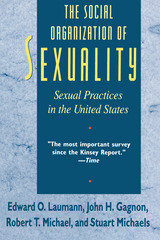
"The most comprehensive U.S. sex survey ever." —USA Today
"The findings from this survey, the first in decades to provide detailed insights about the sexual behavior of a representative sample of Americans, will have a profound impact on how policy makers tackle a number of pressing health problems." —Alison Bass, The Boston Globe
"A fat, sophisticated, and sperm-freezingly serious volume. . . . This book is not in the business of giving us a good time. It is in the business of asking three thousand four hundred and thirty-two other people whether they had a good time, and exactly what they did to make it so good." —Anthony Lane, The New Yorker
New York Times Book Review Notable Book of the Year
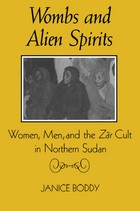
Based on nearly two years of ethnographic fieldwork in a Muslim village in northern Sudan, Wombs and Alien Spirits explores the zâr cult, the most widely practiced traditional healing cult in Africa. Adherents of the cult are usually women with marital or fertility problems, who are possessed by spirits very different from their own proscribed roles as mothers. Through the woman, the spirit makes demands upon her husband and family and makes provocative comments on village issues, such as the increasing influence of formal Islam or encroaching Western economic domination. In accommodating the spirits, the women are able metaphorically to reformulate everyday discourse to portray consciousness of their own subordination.
Janice Boddy examines the moral universe of the village, discussing female circumcision, personhood, kinship, and bodily integrity, then describes the workings of the cult and the effect of possession on the lives of men as well as women. She suggests that spirit possession is a feminist discourse, though a veiled and allegorical one, on women's objectification and subordination. Additionally, the spirit world acts as a foil for village life in the context of rapid historical change and as such provides a focus for cultural resistance that is particularly, though not exclusively, relevant to women.
READERS
Browse our collection.
PUBLISHERS
See BiblioVault's publisher services.
STUDENT SERVICES
Files for college accessibility offices.
RECENTLY PUBLISHED





UChicago Accessibility Resources
home | accessibility | search | about | contact us
BiblioVault ® 2001 - 2024
The University of Chicago Press