
 A SCHOLARLY BOOK REPOSITORY
The greatest classic of Sindhi literature presented here in an authoritative and vivid modern English translation.
Shah Abdul Latif’s Risalo is acknowledged across Pakistan and the wider diaspora as the greatest classic of Sindhi literature. In this collection of short Sufi verses, originally composed for musical performance, the poet creates a vast imaginative world of interlocking references to traditional Islamic themes of mystical and divine love and the scenery, society, and legends of the Sindh region.
Latif (1689–1752), a contemporary of the Panjabi poet Bullhe Shah, belonged to the class of Sufi saints whose shrines remain prominent features of the Sindhi landscape. The Risalo reflects Latif’s profound engagement with the fundamental literature of Islam as well as his openness to varied local traditions, including notable poems praising the spiritual devotion of local Hindu yogis.
This edition presents, alongside the original text in the Sindhi Naskh script, the first translation of the Risalo into modern English prose, offering a new readership access to the writings of one of the masters of Sufi poetry.

A landmark English translation of Sindhi literature’s most famous classic.
Shah Abdul Latif’s Risalo, loosely translated as “the message,” is widely regarded as the pinnacle of Sindhi literature, cherished across South Asia and the diaspora. This collection of Sufi verses, originally crafted for musical performance in the eighteenth century, weaves a rich tapestry of mystical and divine love, drawing on both Islamic tradition and local Sindhi culture. Latif’s poetry also immortalizes timeless love stories, such as those of Sasui Punhun, Suhini Mehar (Sohni Mahiwal), and Lila Chanesar, which continue to captivate millions.
Latif (1689–1752) is a revered Sufi saint whose shrine is a beloved pilgrimage site in present-day Pakistan. His Risalo reflects a deep commitment to bringing together Islamic as well as Hindu devotional and ascetic traditions, and includes verses celebrating the spirituality of yogis.
This first authoritative translation into modern English introduces a new generation to one of the greatest treasures of Indo-Islamic literature.
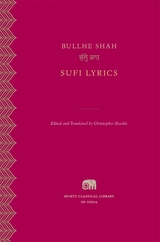
A modern translation of verses by Bullhe Shah, the iconic eighteenth-century Sufi poet, treasured by readers worldwide to this day.
The poetry of Bullhe Shah (d. 1758) is considered one of the glories of premodern Panjabi literature. Born in Uch, Panjab, in present-day Pakistan, Bullhe Shah drew profoundly upon Sufi mysticism in his writings. His lyrics, famous for their vivid style and outspoken denunciation of artificial religious divisions, have long been held in affection by Hindus, Muslims, and Sikhs, and they continue to win audiences today across national boundaries and in the global Panjabi diaspora. Indeed, many young people in South Asia are already acquainted—albeit unknowingly at times—with the iconic eighteenth-century Panjabi poet’s words through popular musical genres of the twenty-first century.
The striking new translation in English is presented alongside the Panjabi text, in the Gurmukhi script, re-edited on the basis of the best modern Pakistani and Indian editions. Bullhe Shah’s Sufi Lyrics thus offers at once the most complete and most approachable version of this great poet’s works yet available.
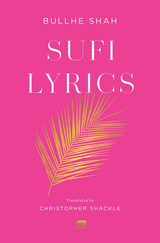
A modern translation of verses by Bullhe Shah, the iconic eighteenth-century Sufi poet, treasured by readers worldwide to this day.
Bullhe Shah’s work is among the glories of Panjabi literature, and the iconic eighteenth-century poet is widely regarded as a master of mystical Sufi poetry. His verses, famous for their vivid style and outspoken denunciation of artificial religious divisions, have long been beloved and continue to win audiences around the world. This striking new translation is the most authoritative and engaging introduction to an enduring South Asian classic.
READERS
Browse our collection.
PUBLISHERS
See BiblioVault's publisher services.
STUDENT SERVICES
Files for college accessibility offices.
RECENTLY PUBLISHED



UChicago Accessibility Resources
home | accessibility | search | about | contact us
BiblioVault ® 2001 - 2026
The University of Chicago Press